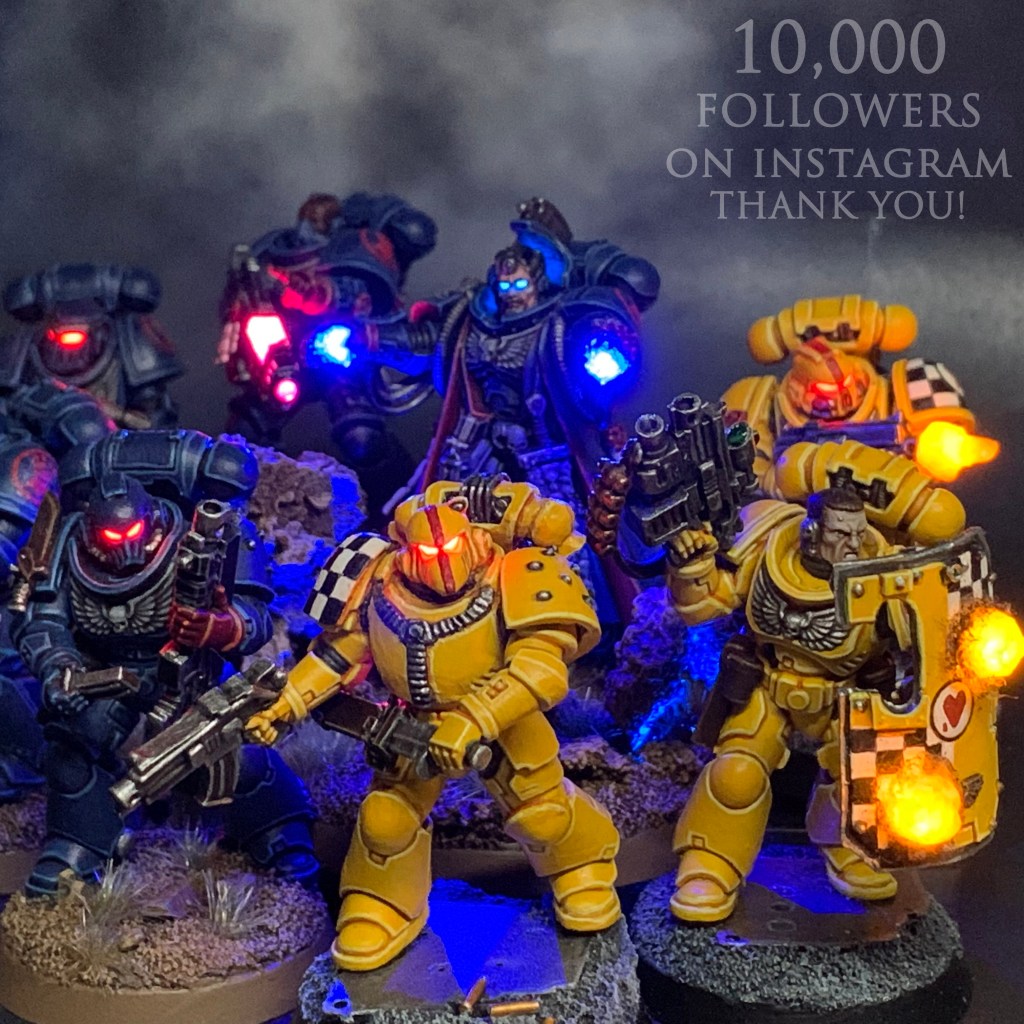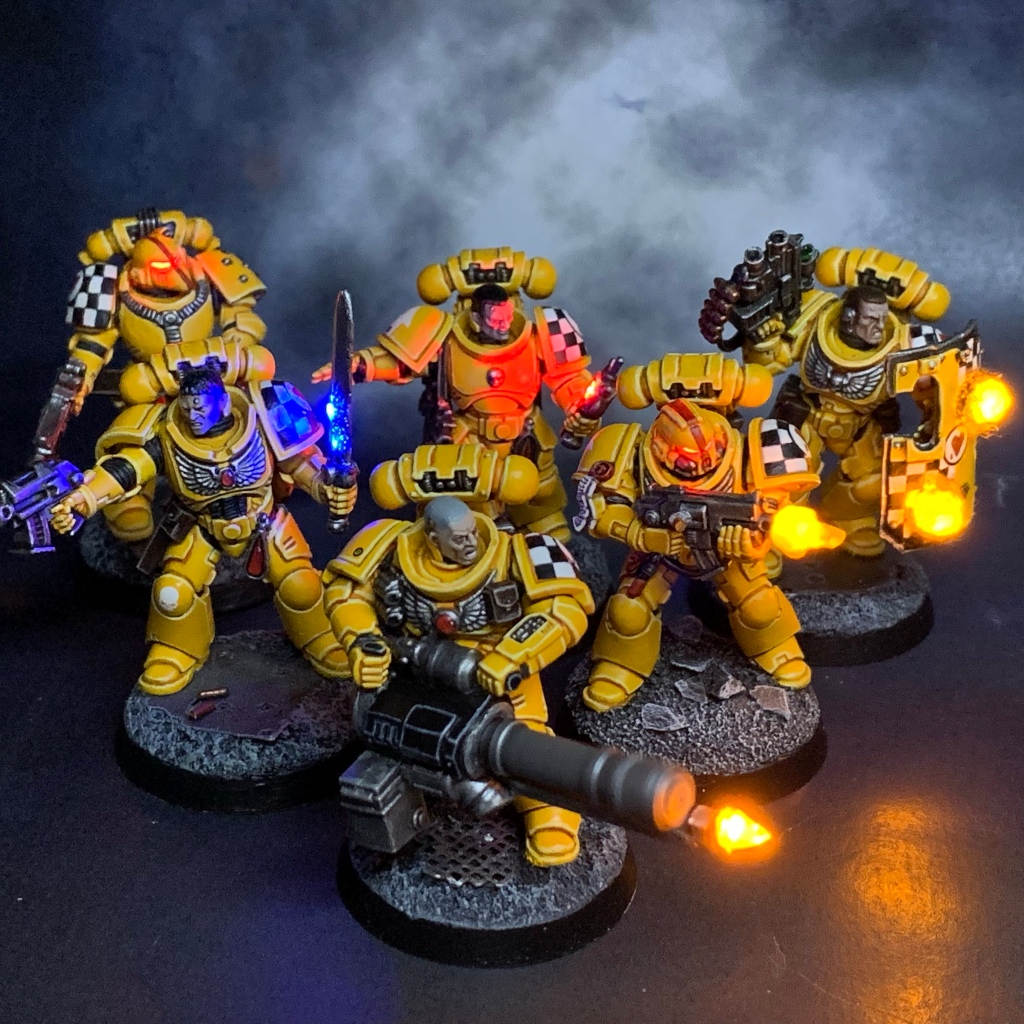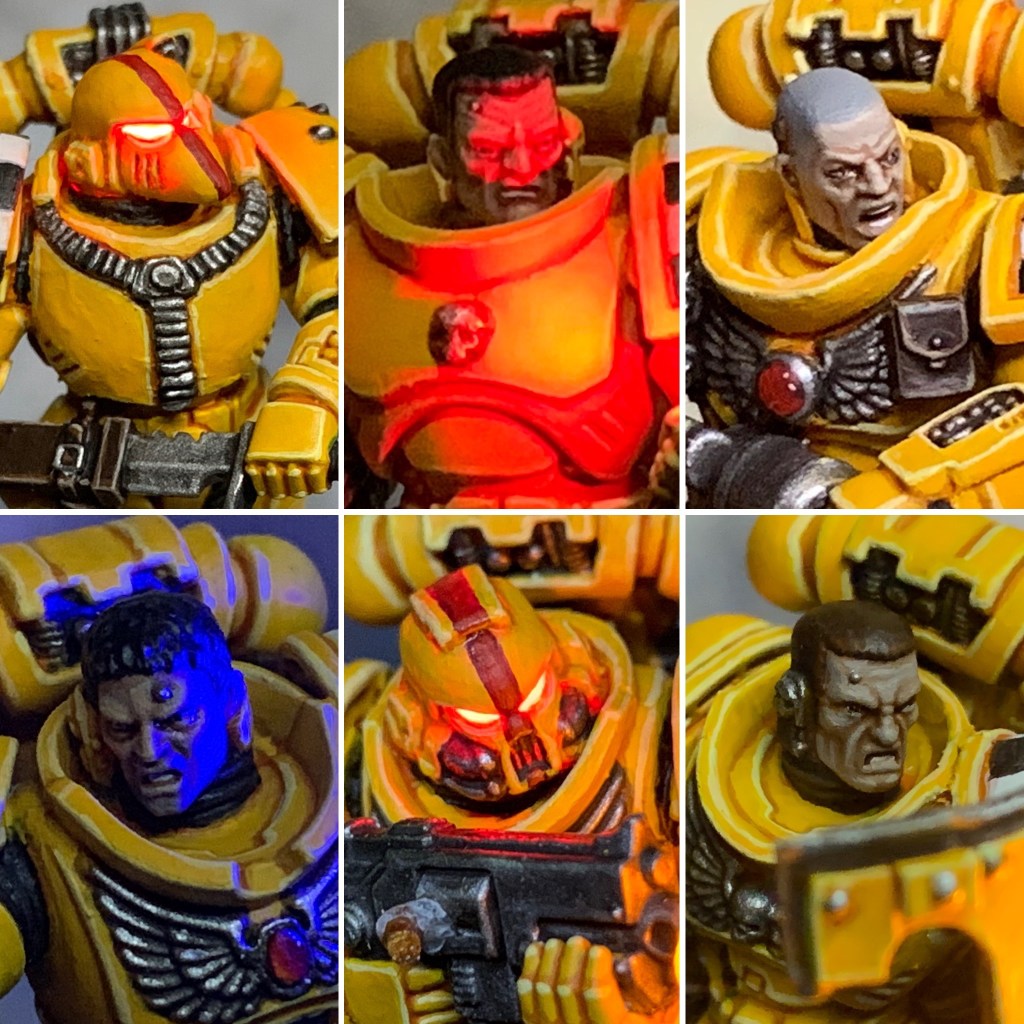
So, almost two years after starting this Badab Kill Team project, how are things looking for Kill Team Lugeo? Quite good I think! I had originally planned seven members for the squad, and the seventh is already on the workbench. But I’d like to see the upcoming new Kill Team rules and find out exactly how many models are in an Adeptus Astartes fire team and what specialists they can have before finalising the squad. Once I’ve read and understood the new rules, I might even get a game in with them!
If you’d like to read any of the previous articles about individual members of the Kill Team and how their LED effects were made, you can either search my blog for articles tagged “Lamenters” or click the links below.
Enemy contacts are inside the perimeter. Unfortunately for them, so are we.
– Brother Ardito, Comms Specialist
Another Lamenter joins my long running Badab War era Kill Team. Brother Ardito is a Comms Specialist, so let’s hope that’s still an option for Adeptus Astartes Kill Teams in the new edition of the game!
Influence
For this model I was strongly influenced by the classic metal sergeant from the old Space Marine command squad box (sorry, this was the best reference image I could find). I didn’t set out to copy it exactly, just to capture the general energy and atmosphere of the model. Brother Ardito is made from the ‘Easy to Build’ Primaris Marine with auspex, although as you can see he’s been heavily altered to change the pose, details and make it appear that he’s wearing MkVII power armour, in keeping with the Badab-era setting.
Effects
The LED effects were achieved using the principles set out in my LED Hololith tutorial, although instead of a wrist-mounted hololith, the LED is mounted in the auspex screen. The LED is a 3V Red Ultra Nano SMD Chip LEDs available from Small Scale Lights, in series with the supplied 100Ω resistor. Although green is often traditional for scanner screens, I decided to go with red to match many of the other LEDs in the team and avoid having a mixture of too many colours.
The wire to the LED runs through the arm, torso and leg to the battery and switch in the base. A more detailed description can be found in my LED Hololith tutorial, as mentioned above. If you want to have a go yourself and you need tools and supplies, you can find them here.
First I painted the auspex screen Citadel Khorne Red, trying my best not to get any paint on the LED. Once the paint was dried I filled the screen area with the ever-useful Water Splash Effect Gel, available from Green Stuff World. This goes on white but is transparent when dried. You will need to apply it slowly and patiently, and use a flat tool to flatten it down. Otherwise you may have a lumpy screen!
Once the ‘screen’ was dry I painted it with two coats of Citadel Blood Angels Red Contrast, allowing the paint to dry between each application. Finally, I painted a pattern of ‘contacts’ on the ‘screen’ with Citadel Wild Rider red. This was more for visual interest when the LED is off as the LED is so bright it has little effect when it was on.
That’s all for today, I hope you found that interesting. Come back soon for more Lamenter action as the Kill Team slowly comes together!
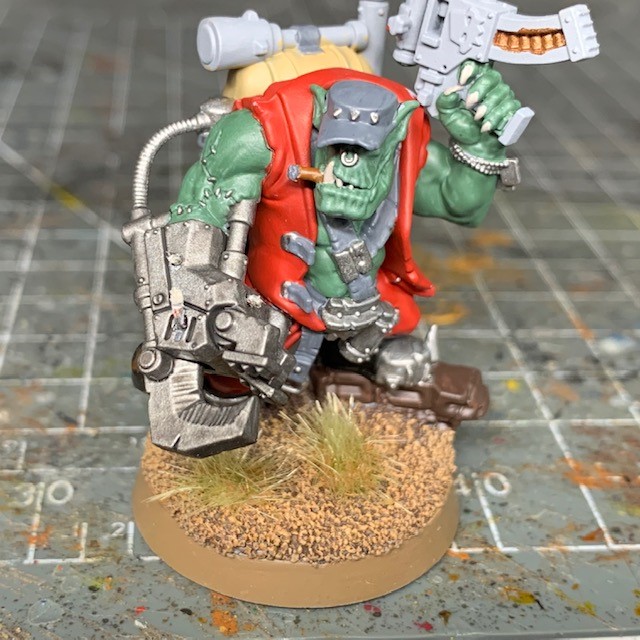
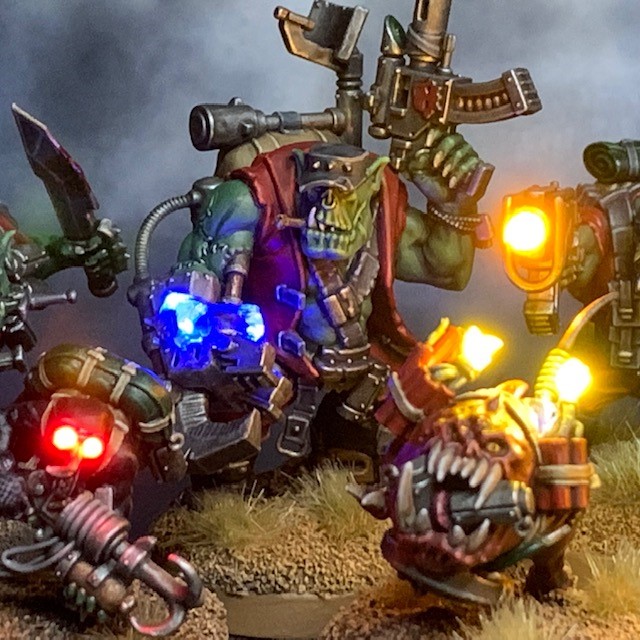
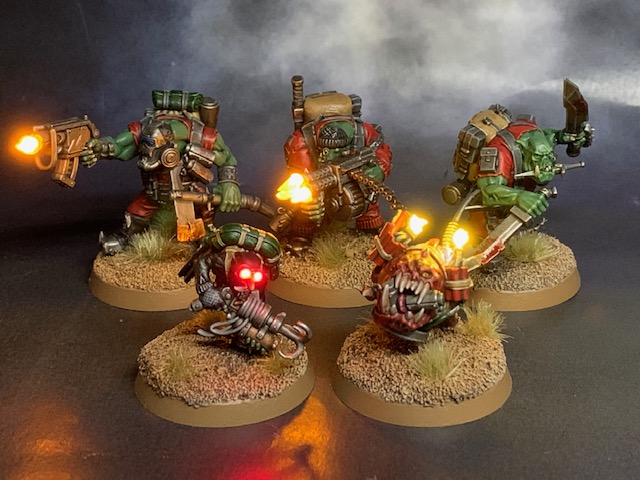
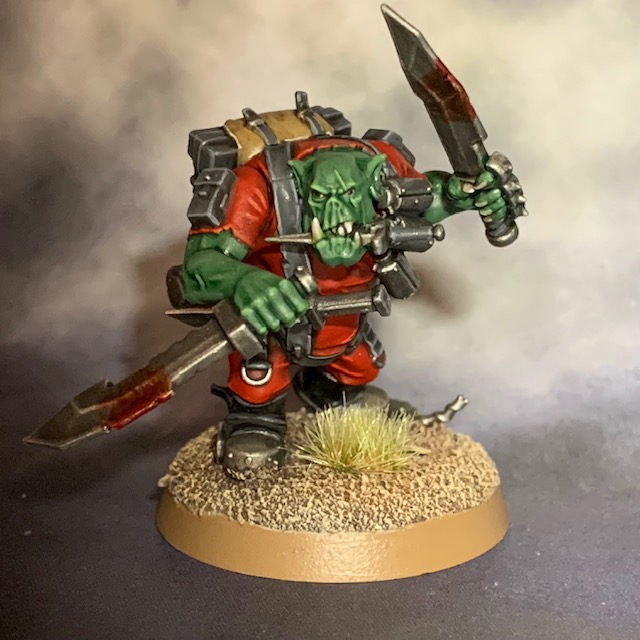
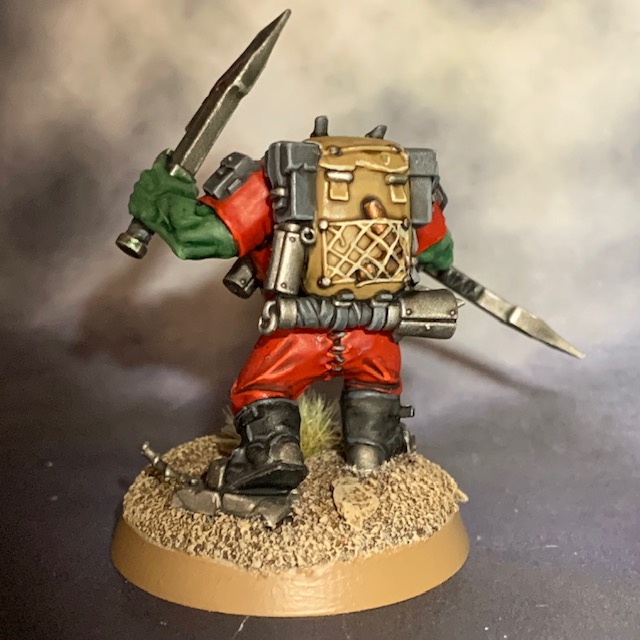
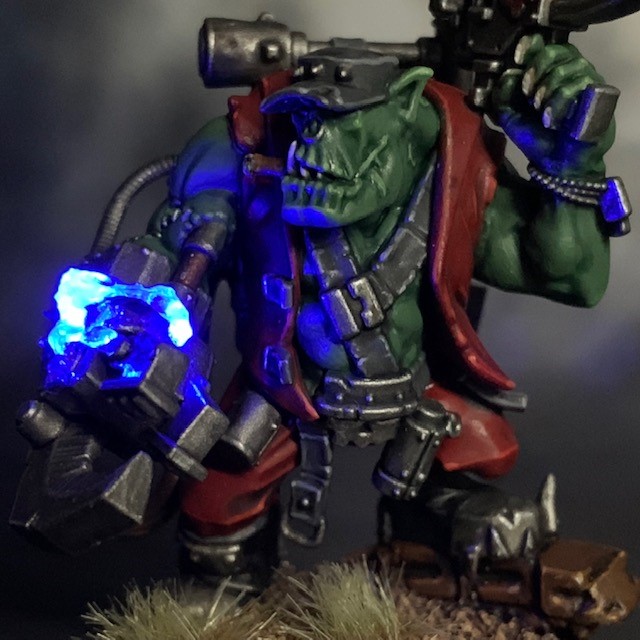
Gripped by excitement for the upcoming Kill Team: Octarius box, I decided to build a “proof of concept” model from bits box spares. Firstly, I wanted to check I could still remember how to paint Ork skin, as it’s been a while! Secondly, I wanted to test out a “new” colour scheme. Thirdly, I wanted to see if there were any LED issues I hadn’t anticipated.
Building
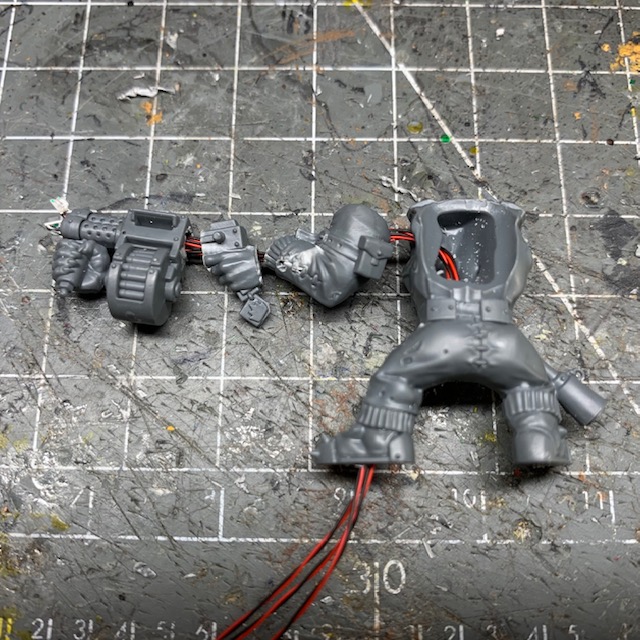
As mentioned above, this model was constructed from spare Ork components I had in my bits box. The head is metal and from an old rokkit launcha boy, with a beanie hat sculpted from modelling putty. I used the techniques described in my LED Muzzle Flare tutorial to make the LED effect. The only new problem I encountered was the squat pose of the Ork legs – compared to straight Space Marine legs this was difficult to drill without making additional cuts. I ended up making a cut at the hip to make drilling easier, as you can see in the image on the left above. Otherwise it was as per the tutorial.
Painting
The Blood Axes are my favourite Ork clan, and I have a large army of them painted in military blues and greys. However for the new kommandos I wanted to try and replicate the classic red second edition 40K kommando look, as shown above. At first I thought I’d paint the red fatigues with grey areas of camouflage pattern on them, but I wasn’t positive I could pull that off without it looking confusing for the eye – that is the point of camouflage after all! So instead I decided to paint the webbing in grey rather than the brown leather colours I normally use. Although looking again at the image from the second edition 40K Ork codex above as I type this, I’m now wondering if I should have painted the stikkbomb sack on his back a brown leather colour rather than grey? Ah well, that’s why we need to make test models sometimes!
Overall I’m pleased with how this model turned out and am looking forward to applying these techniques to the new plastic Kommando Kill Team. That’s it for today, see you again soon!
Debate the Tyrant’s cause if you like, but it’s hard to argue with 1200 rounds a minute.
Brother Salvio, Lamenter heavy weapons specialist
This is another model that has been living in my head as a nebulous idea for well over a year. In fact, I’d say my failure to settle on a way to execute this concept for my ‘Heavy’ specialist is why my seven-man Lamenters Kill Team project has currently been running for a year and a half! But now he’s done, so let’s have a big round of applause to welcome Brother Salvio!
Influence
There are a number of sources that I’m ‘riffing’ off with this member of the Kill Team, many of them from video games. The Team Fortress 2 Heavy is an obvious one, as are Halo Spartans carrying turrets (particularly Jorge-052) and even the Call of Duty Juggernaut. What is boils down to is a heavily armoured soldier carrying a large gun that you might normally expect to find on a vehicle! To help sell the theme of heavy armour, I decided on MkVIII ‘Errant’ armour for this marine, particularly as this has the enhanced face and neck protection seen in many of the characters linked above.
If you haven’t been following along with my Lamenters Kill Team project, then I should explain that it is intended to be Badab War era, so these are ‘true scale’ Marines rather than Primaris Marines. Every member of the team so far has been wearing armour appropriate to the era, which so far means MkVI, MkVII and MKVIII. So how did I go about turning MkX armour into MkVIII to match the reference images shown above?
Used modelling putty to increase the height of the neck gorget.
Selected up-armoured shoulder pads with elbow joint protection.
Replaced the skull on the chest with a jewel.
Filled in the detail on the wrist bracers to create a smoother armoured feel.
Removed the additional protection from the top of the MkX knee pads.
Left the MkX ankle joints intact – this was the first time I noticed MkVIII armour also uses them!
Replaced the Primaris backpack with a Tactical backpack.
I also added extra ammo pouches and grenades to enhance the impression of bulkiness.
That’s it for this week, I hope you found that interesting. Come back again soon to find out if I ever finish this bloody Lamenters Kill Team, haha! Hopefully I will be able to finish them soon, as it looks like we might possibly be in for a new edition of Kill Team.
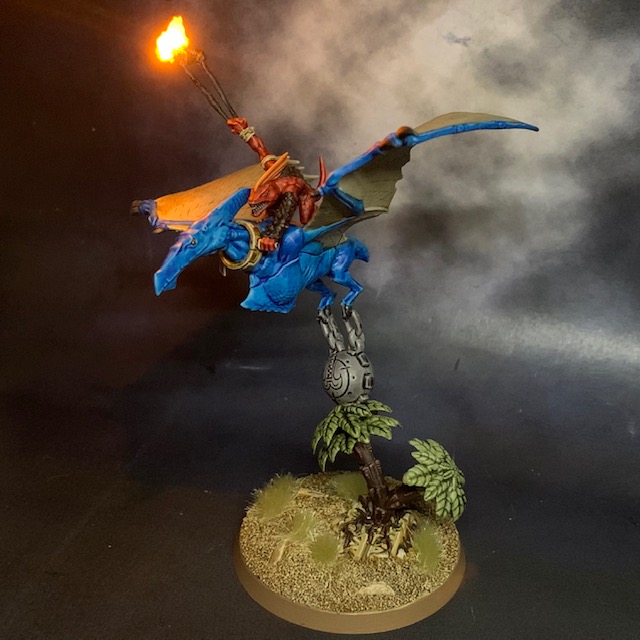
This week I took a quick break from the Crimson Fists to make a bit more progress on my Seraphon with this Terradon Rider Alpha. The Seraphon were supposed to be my #NewYearNewArmy for 2021 but I haven’t got as far as I would have liked. Five months in and so far all I have to show for it besides this guy are the Skink Starpriest and the Saurus Oldblood! Still, it’s been a lot of fun to get this far at least.
I said from the beginning that I didn’t want to go overboard with LEDs in my Seraphon. That might be a bit hard to believe when they currently have a 100% rate of LED inclusion, but that’s because I’ve started with the fun stuff. I just had to include the LEDs for the sunfire bolas as I was fairly confident it would look awesome – and hopefully you’ll agree it does!
Assembling
Once again I’ve used the same technique to create the flaming bolas as I used for the Nighthaunt Candles – this technique is just so versatile! The LEDs used are two ‘0805 Chip LED’ 3V yellow LED from Small Scale Lights connected in parallel on a single 3V CR2032 battery. I used the LED wires covered in modelling putty to form the leather straps of the bolas. The wires then run down through the Skink Alpha’s arm, body, leg and then into the Terradon. From there they run down the Terradon’s right leg, through the chain and the ball of meteoric stone, down through the tree and into the base to connect to the battery and the switch. You can see the path of the wire in the pictures below before the putty was applied to hide them.
You’ll notice that I replaced the default flying stand with a plastic tree from my bits box. There were two reasons for this – firstly I don’t really like the aesthetics of the clear plastic stands, and secondly clear plastic isn’t very good at concealing LED wires!
I decided to paint the acrylic splash gel flames just to make them look a bit nicer when the LED is switched off. Once the final layer of the gel was dry I applied a shade of Fuegan Orange to the top half of the flames, then a yellow glaze all over. You can see the ‘on’ and ‘off’ comparison pictures below.
Painting
As I’ve mentioned previously, the colour scheme for my Seraphon is heavily influenced by the 1993 Jurassic Park toy line, in this case specifically the Pteranodon. Whenever I record my painting recipes on this blog, it’s not so much to give out advice on what is a “good” colour scheme, but mainly as a reminder for myself! But I also think it’s nice to share in case anyone is interested how a particular colour was achieved. My updated Seraphon recipes are shown below. All paints referenced are Citadel paints.
Undercoat (all areas)
Grey Seer contrast undercoat
Bright Red Scales
Contrast Blood Angels Red
Wild Rider highlight
Fire Dragon Bright highlight
Dark Brown Scales / Jungle Bark
Contrast Cygor Brown
Doombull Brown highlight
Tuskgor Fur highlight
Orange Crest
Contrast Gryph-Hound Orange
Fire Dragon Bright highlight
Pink Feathers / Tongues
Screamer Pink base
Nuln Oil shade
Pink Horror highlight
Cadian Fleshtone highlight
Black Claws / Leather Straps
Contrast Black Templar
‘Gold’ Weapons / Jewellery
Contrast Aggaros Dunes
Screaming Skull highlight
Yellow Eyes
Averland Sunset base
Fuegan Orange shade
Yriel Yellow layer
Abaddon Black pupil
Wild Rider Red veins
Terradon Scales
Contrast Talassar Blue
Lothern Blue highlight
Human Skulls / Terradon Wings
Contrast Skeleton Horde
Ushabti Bone layer
Screaming Skull highlight
Ancient Stone
Contrast Skeleton Horde
Screaming Skull highlight
Meteoric Rock
Contrast Basilicanum Grey
Jungle Leaves
Contrast Militarum Green
Base Texture
Sand & PVA Glue (before undercoat)
Contrast Snakebite Leather
Zamesi Desert drybrush
Ushabti Bone drybrush
Mordheim Tufts
Steel Legion Drab rim
I’m really enjoying Contrast paints; they’re so quick to apply and give pretty good results! I’m particularly in love with Aggaros Dunes – combined with a Screaming Skull highlight it can really give a fast and passable NMM effect. I don’t think I’d use Contrast paints on the smooth surfaces of Space Marine armour, but for Seraphon and their scales they are ideal!
That’s all for this week, I hope you’ve found it interesting. Speaking of interesting, don’t forget that it’s the Warhammer Community preview of the new Age of Sigmar box set this afternoon!