Kruleboyz Gutrippaz

If you go down to the swamp today: don’t!

Traditional Tallowlands children’s song

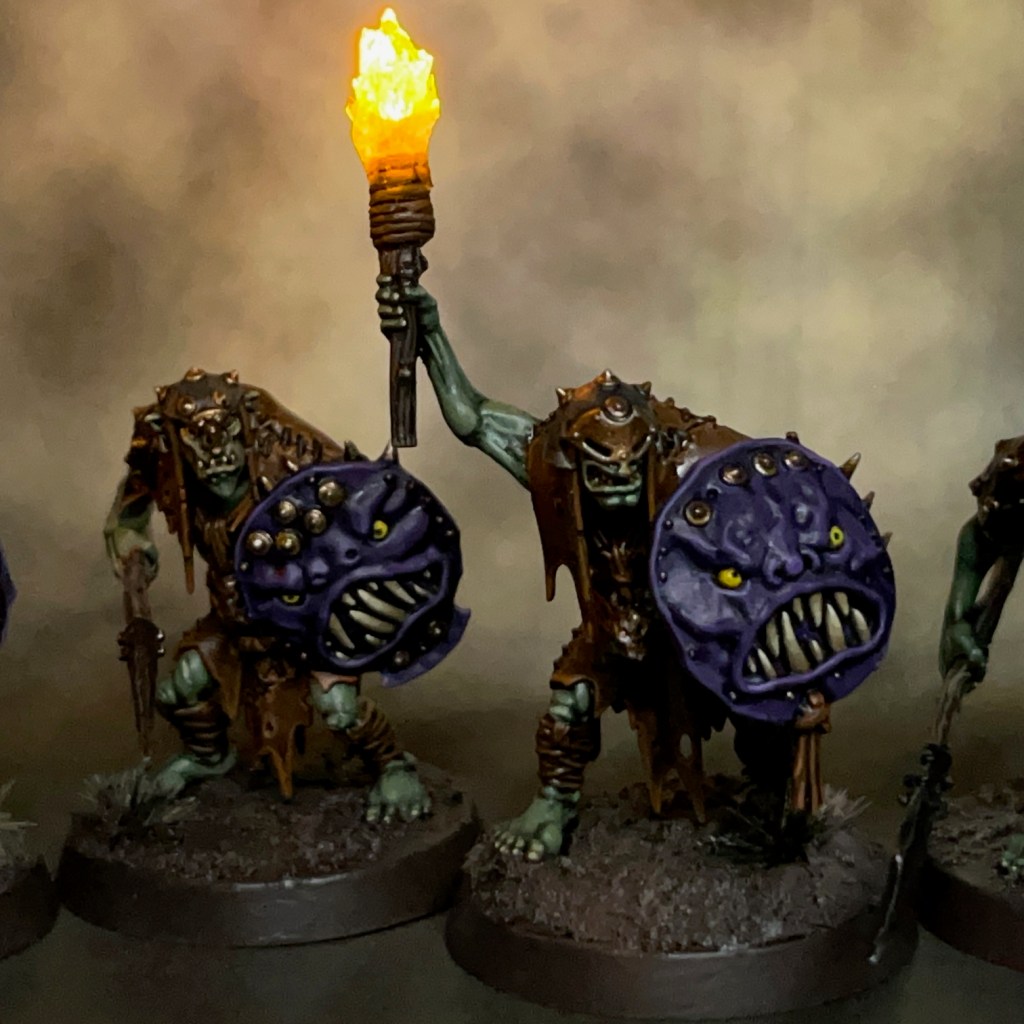
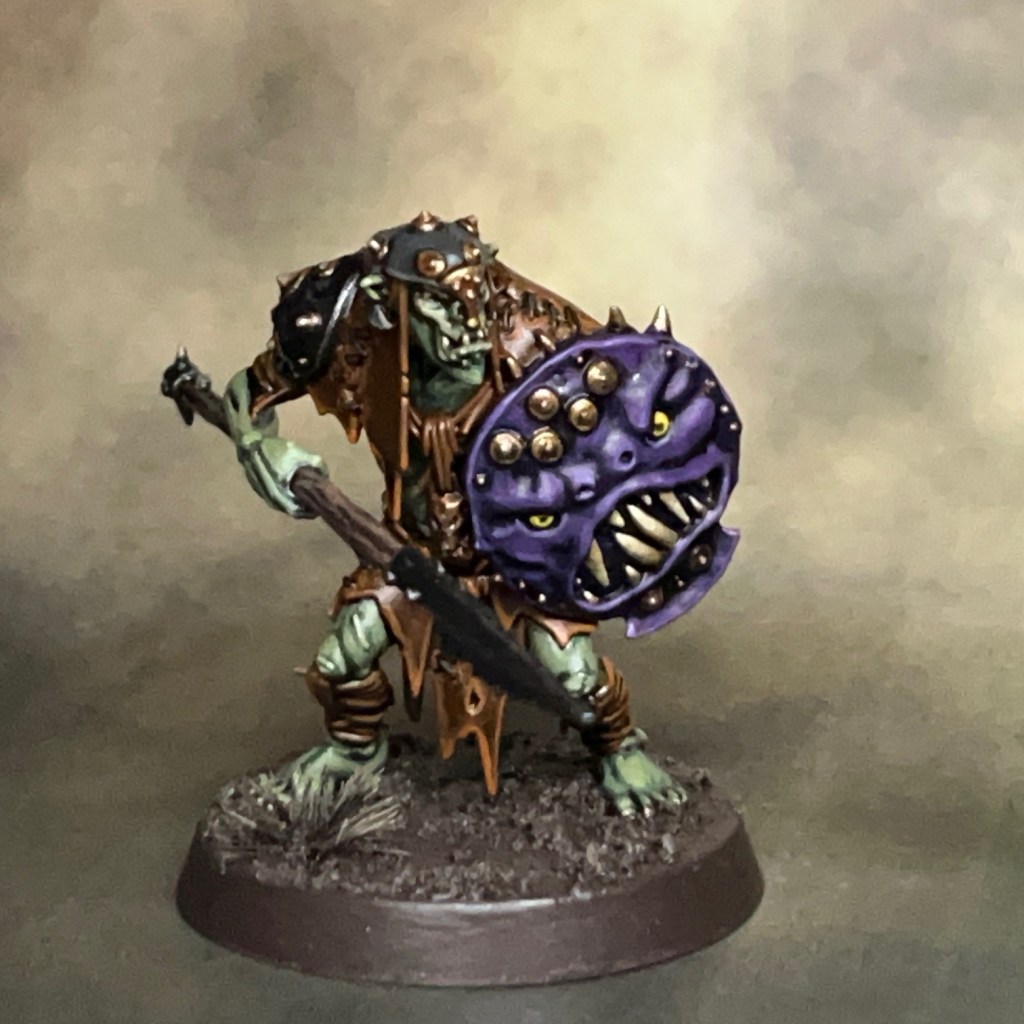
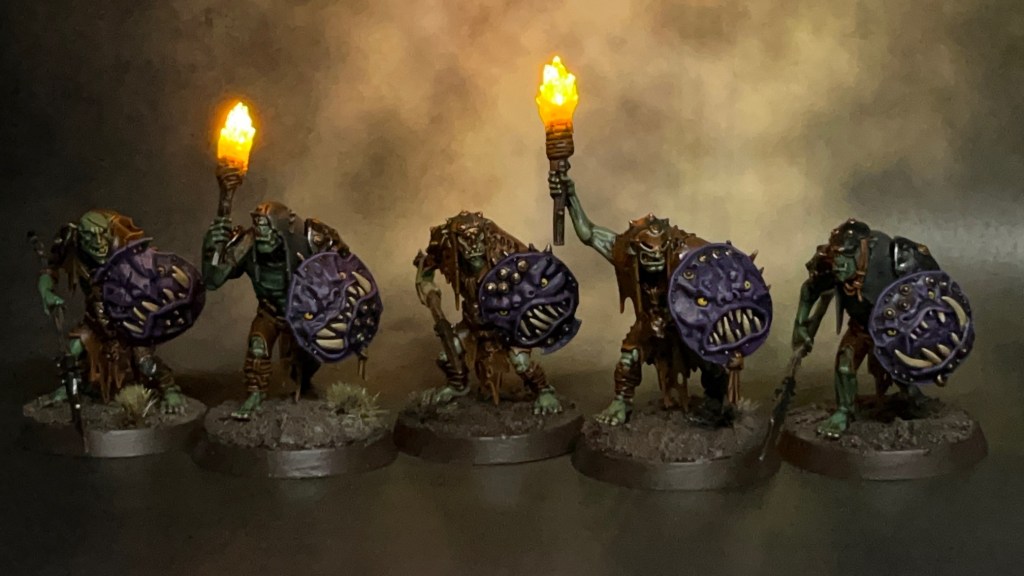
Today I’m looking at some Orruk Kruleboyz Gutrippaz for Warhammer Age of Sigmar. These are the next miniatures in my new Kruleboyz project, following on from the Swampcalla Shaman I posted earlier in the year.

The Kruleboyz Project

Earlier in the year my young son expressed an interest in having a go at the Warhammer hobby, particularly the painting, so we had a look at the starter sets. My son is more into fantasy than sci-fi at the moment, and the Stormcast leapt out at him as something he wanted to paint. I’m a fan of greenskins (as you may recall), so I thought painting some Kruleboyz might be fun. We bought an Age of Sigmar ‘Warrior Edition’ Starter Set to split. I couldn’t resist picking up a couple of other Kruleboyz bits too (like the Shaman)! Unfortunately the rule book in that set is now technically defunct, but I’m not too bothered about that as I knew a new edition was on the horizon and we were mainly interested in the models.

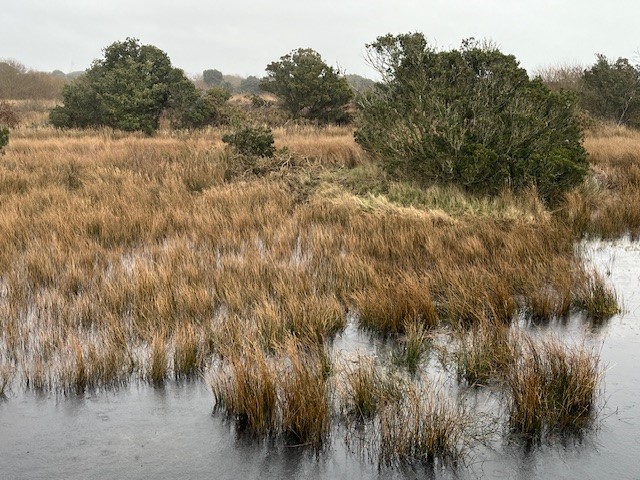
The concept of “swamp orcs” has really grown on me since they were introduced a few years ago. I used to play a lot of black decks in Magic the Gathering when I was younger, so that probably helped! There is also an area of marsh land on the edge of my childhood home town, so I took a few reference photos (see below) on a recent visit, just to give me some inspiration for basing.
Modelling

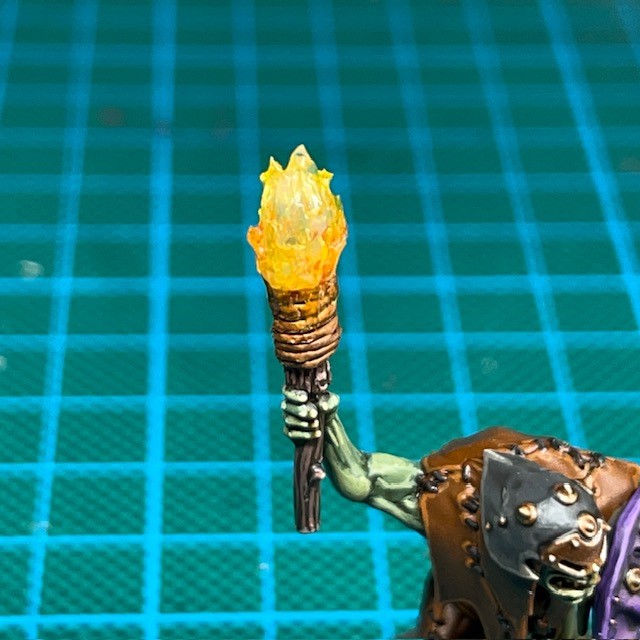
The main feature of these Gutrippaz is the LED flaming torches, so I’m going to provide a short-form tutorial below on how it was made. I don’t plan to have too many LEDs in this army – something that I always claim at the start of every project – but I’m thinking maybe around three or four flaming torches in every unit of ten.

I don’t really see the Kruleboyz using the torches to light their way through the mist. They prefer to remain concealed, after all! I imagine the Kruleboyz using them as a way to intimidate and confuse their victims; think the “Fire Dragon” in the film The 13th Warrior.

Flaming Torch Tutorial

Prepare the base, resistor (in this case a 47 ohm resistor), battery holder and switch for this miniature were prepared using the method described in Steps 1 – 6 of my LED Eye Lens Tutorial. The single LED in the torch will eventually be connected in series with the resistor, battery holder and switch, as described below.
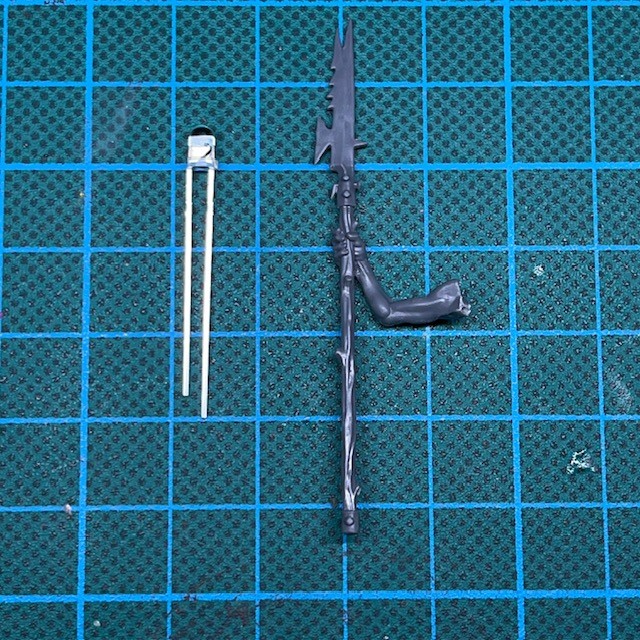
1. The LED used is a Switch Electronics 3mm Yellow Flickering 2.2V LED in series with a 47 ohm resistor (as mentioned above). Select a Gutrippa with a spear that is pointing upwards, as shown in the above left image.

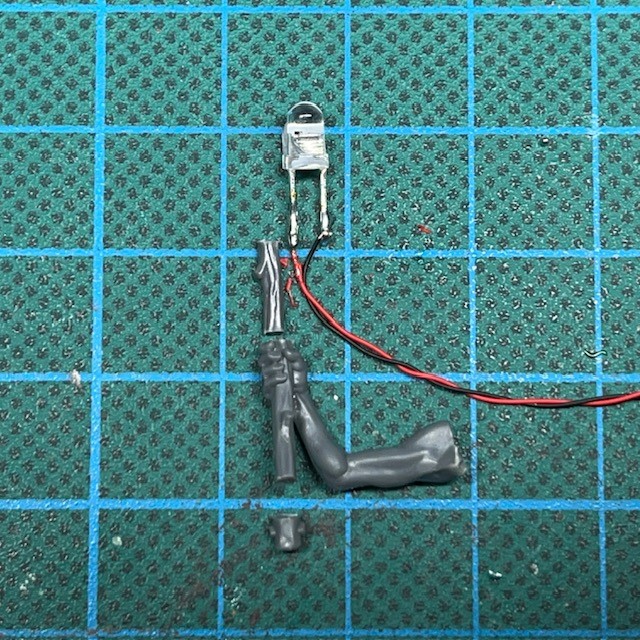
2. Cut the legs of the LED as short as possible and solder on two connecting wires that will be long enough to reach the base when passed through the miniature. It’s useful to colour code the wires to remind yourself of the LED polarity (red is normally positive and black negative). Cut the spear down so it looks like the correct length for a flaming torch. as shown in the above right image.

3. Glue the LED to the the ‘wood’ of the torch, and then drill holes to feed the wires down through the arm, torso and one leg of the miniature so they can connect to the resistor, battery holder and switch on the base. If you need additional hints on how to do this, check out Steps 7 – 9 of my LED Eye Lens Tutorial.

4. While I was working on this miniature, the upper arm pinged off and disappeared into whatever dimension dropped miniature components vanish to, so I had to use wire and putty to replace the upper arm. However – if you don’t drop it – you can just use the upper arm. Repositioning the arm to hold the torch at a realistic raised angle may introduce gaps, but these can be dealt with at the next stage.

5. Fill in any gaps around the arm and shoulder with modelling putty. You will also need to use modelling putty to sculpt the ‘burning rags’ around the top of the flaming torch, which will help to hide the legs of the LED. Finally, use modelling putty to cover up any exposed components remaining on the base. The images above show what this looks like from the front and the back.

7. Start sculpting the basic shape of the flame over the LED using Water Splash Effect Gel from Green Stuff World. This is best applied with a metal sculpting tool, thin plastic rod or stiff length of wire. When you apply it, the gel will initially appear milky white – as shown in the above left image – but once it is fully dry it will be transparent.

8. Wait for the initial application of gel to dry (this can take several hours) and then continue to apply successive layers until you are happy with the shape. Building up thin layers over time will give the best results, as show in the above centre image.

9. Once you are happy with the shape and the gel has completely dried, you can paint the flames. You only need to apply a light glaze – this will not inhibit the light of the LED and will also make the model look good when the LED is switched off. First apply a shade of Citadel Fuegan Orange to the lower third of the flames. Once this has dried apply a layer of Citadel Imperial Fist Contrast thinned down with water to a glaze consistency.

Painting

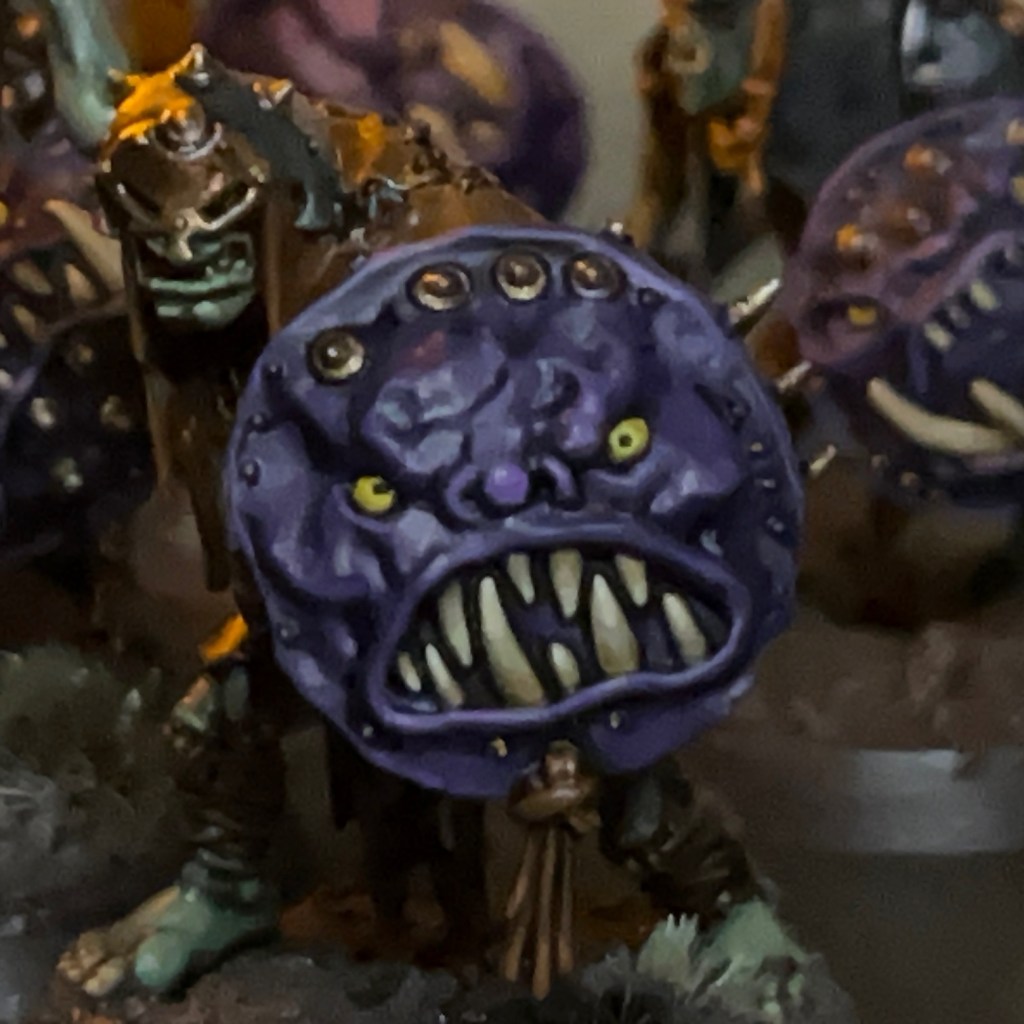
The troggoths that haunt the swamps of the Tallowlands are giant, purple-skinned brutes with great ivory tusks and beady yellow eyes. The Kruleboyz take great delight in terrifying the decent, hard working folk of the Tallowlands by fashioning their shields into leering purple faces and emerging shouting and yelling from the boggy mists to rampage through the villages built on the edge of the swamps.

Excerpt from ‘My Travels in the Tallowlands’ by renowned bard Jonathan Allen Bow.

I’ve opted for a primitive look with the Kruleboyz; leather armour, troggoth hide shields, black iron for weapons and armour, and bronze for other tools and trinkets. I was trying to give the impression of barbarian raiders emerging from their hidden villages in the swamps, rather than a well-equipped and well-supplied professional army.

I don’t normally paint in sub-assemblies, mostly because LED projects usually require the whole miniature to be assembled before painting begins. However, if I have one tip for painting the Gutrippaz, it’s to keep the shield arms separate, as this makes it a lot easier to get at all the detail.

Below are the paint recipes for my Kruleboyz project. All paints listed are from the Citadel range and are applied over an undercoat of Halfords Primer Grey (a Citadel alternative would be Grey Seer.)

  • Kruleboy Flesh
  • Waaagh Flesh base coat
  • Agrax Earthshade shade
  • 50:50 Waagh Flesh:Straken Green layer
  • Straken Green layer
  • 50:50 Straken Green:Nurgling Green highlight
  • Nurgling Green fine highlight
  • Leather Armour
  • Mournfang Brown base coat
  • Agrax Earthshade shade
  • Skrag Brown highlight
  • 50:50 Skrag Brown:Trollslayer Orange fine highlight
  • Stitching
  • Abaddon Black base coat
  • Eshin Grey highlight
  • Hoods & Cowls
  • Skavenblight Dinge base coat
  • Nuln Oil shade
  • Stormvermin Fur highlight
  • Karak Stone dot highlight
  • Wood, Wooden Tools & Corks
  • Dryad Bark base coat
  • Agrax Earthshade shade
  • Gorthor Brown highlight
  • Baneblade Brown fine highlight
  • Black Iron
  • Abaddon Black base coat
  • Nuln Oil shade
  • Ironbreaker edge highlight
  • Bronze Tools & Trinkets
  • Balthasar Gold base coat
  • Agrax Earthshade shade
  • Liberator Gold highlight
  • Runefang Steel fine highlight
  • Purple Shields & Troll Skin
  • Naggaroth Night base coat
  • Druchii Violet shade
  • 50:50 Naggaroth Night:Xereus Purple layer
  • Xereus Purple layer
  • 50:50 Xereus Purple:Genestealer Purple highlight
  • Genestealer Purple fine highlight
  • Yellow Eyes
  • Averland Sunset base coat
  • Agrax Earthshade shade
  • Yriel Yellow layer
  • Abaddon Black pupils
  • Teeth & Claws
  • Zandri Dust base coat
  • Seraphim Sepia shade
  • Ushabti Bone highlight
  • Screaming Skull fine highlight
  • Mossy Bone
  • Zandri Dust base coat
  • Athonian Camoshade shade
  • Karak Stone layer
  • 50:50 Karak Stone:Ushabti Bone highlight
  • Ushabti Bone hightlight
  • Muddy Base
  • Rhinox Hide base coat
  • Stirland Mud layer
  • Agrax Earthshade Gloss shade
  • Gothor Brown drybrush
  • Karak Stone drybrush
  • Rushes & Cattails
  • Deepkin Flesh base coat on stem
  • Rhinox Hide base coat on flower head
  • Athonian Camoshade shade on stem
  • Agrax Earthshade shade on flower head
  • White Scar highlight on stem
  • Doombull Brown hightlight on flower head
  • Tuskgor Fur highlight on flower head
  • Ancient Ruins
  • Mechanicus Standard Grey base coat
  • Nuln Oil Shade
  • Dawnstone highlight
  • Administratum Grey fine highlight

LED Palette

As I’ve mentioned before, I like to limit my LED colour palette for new projects. This is to ensure they don’t look like multi-coloured Christmas decorations when the army is fully assembled on the tabletop. My Kruleboyz will use the following very limited LED colour palette:

  • Green for magic and potions.
  • Yellow for fire and flaming torches.

As mentioned above, I don’t expect to use a lot of LEDs for this project. They will probably be limited to character models and flaming torches in units.

Future Army Plans

I’m trying not to get too carried away with this project. My first goal will be to finish the rest of the Gutrippaz and the Killaboss that came in the starter set. After that, I may look at the Kruleboyz Vanguard box and aim for my first 1000 points. I don’t want to get too carried away though, as I still have Tyranids and my Flesh Eaters space marines on the go!

That’s all for today. Thanks very much for reading, and please remember you can also find me sharing my work on InstagramThreadsTwitter/XBluesky and Mastodon.

Also, if you have time, please consider voting for me as ‘Best Mini Painter’ in the CRIT Awards! Voting closes on 7th July, so this is your last chance to vote if you intend to but haven’t done so yet.

Sergeant Khons, Sons of Horus

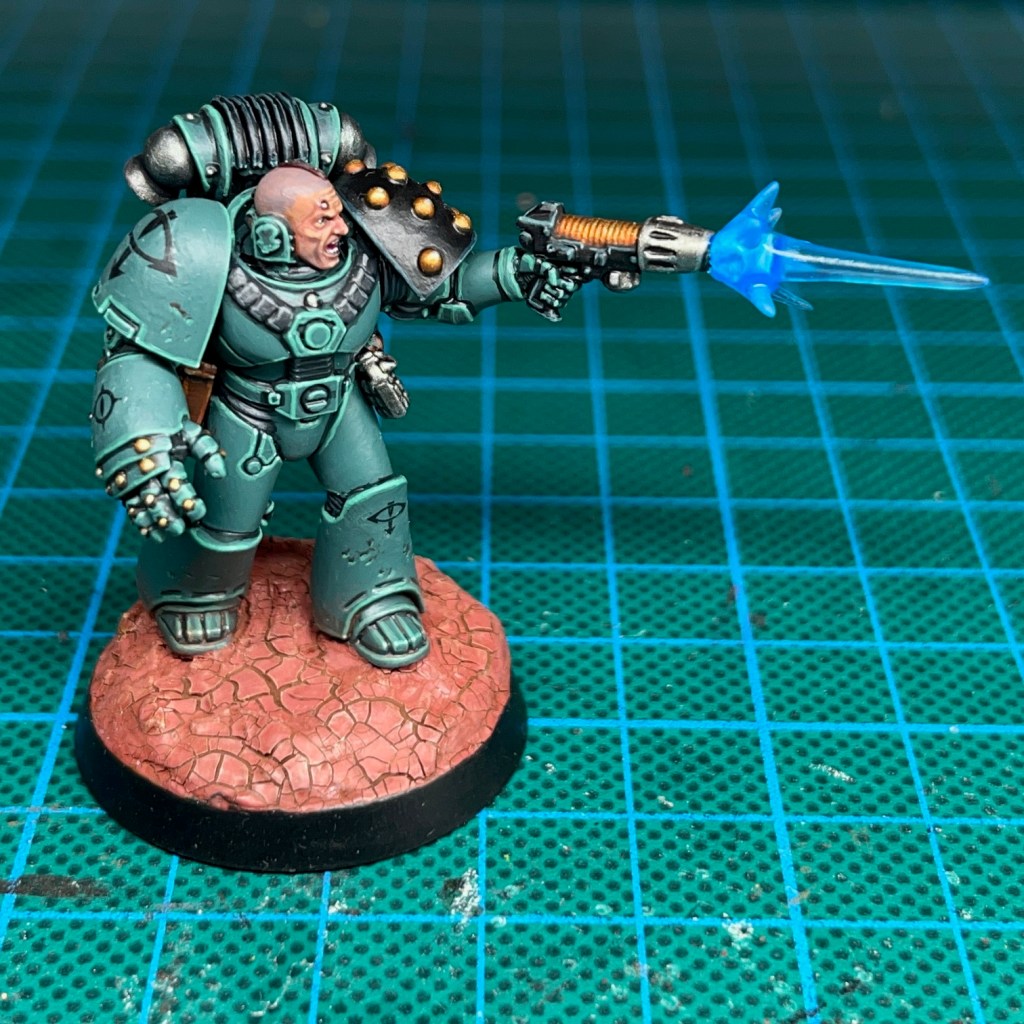
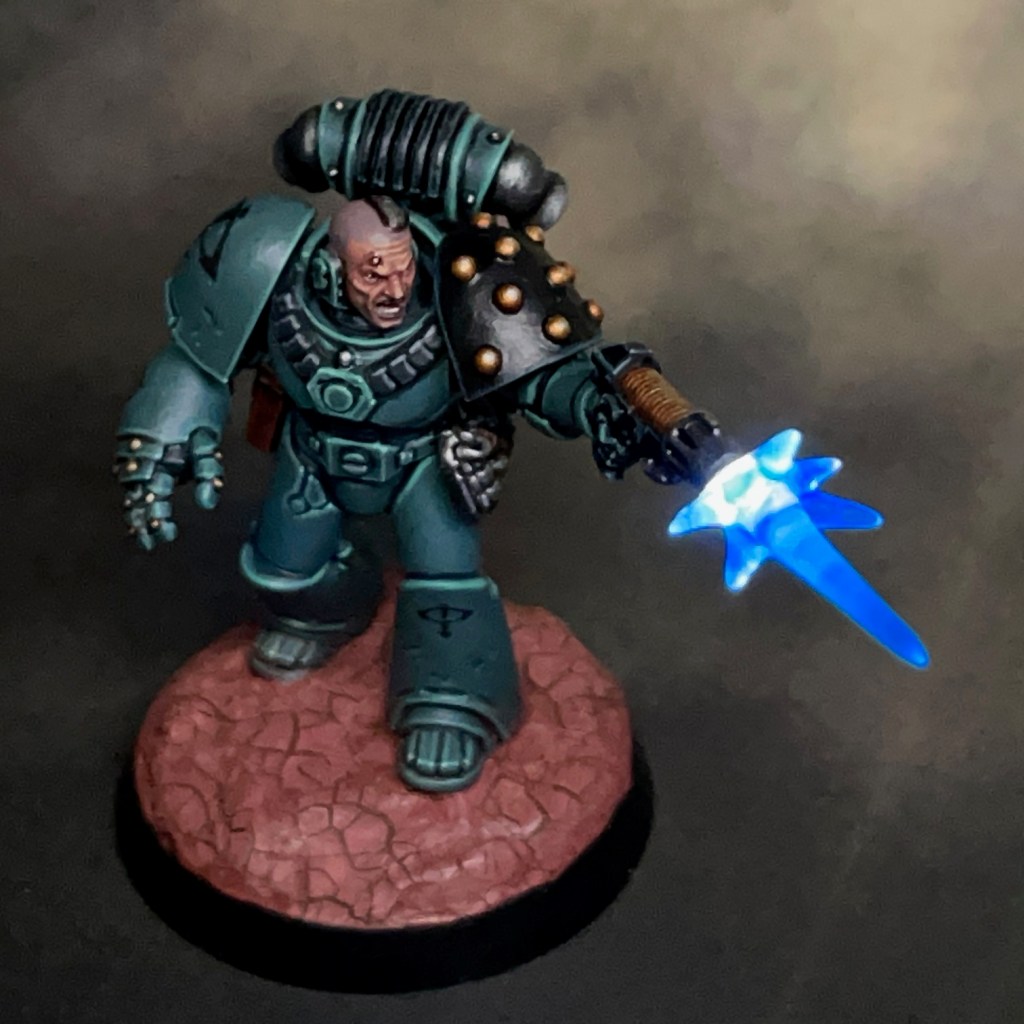
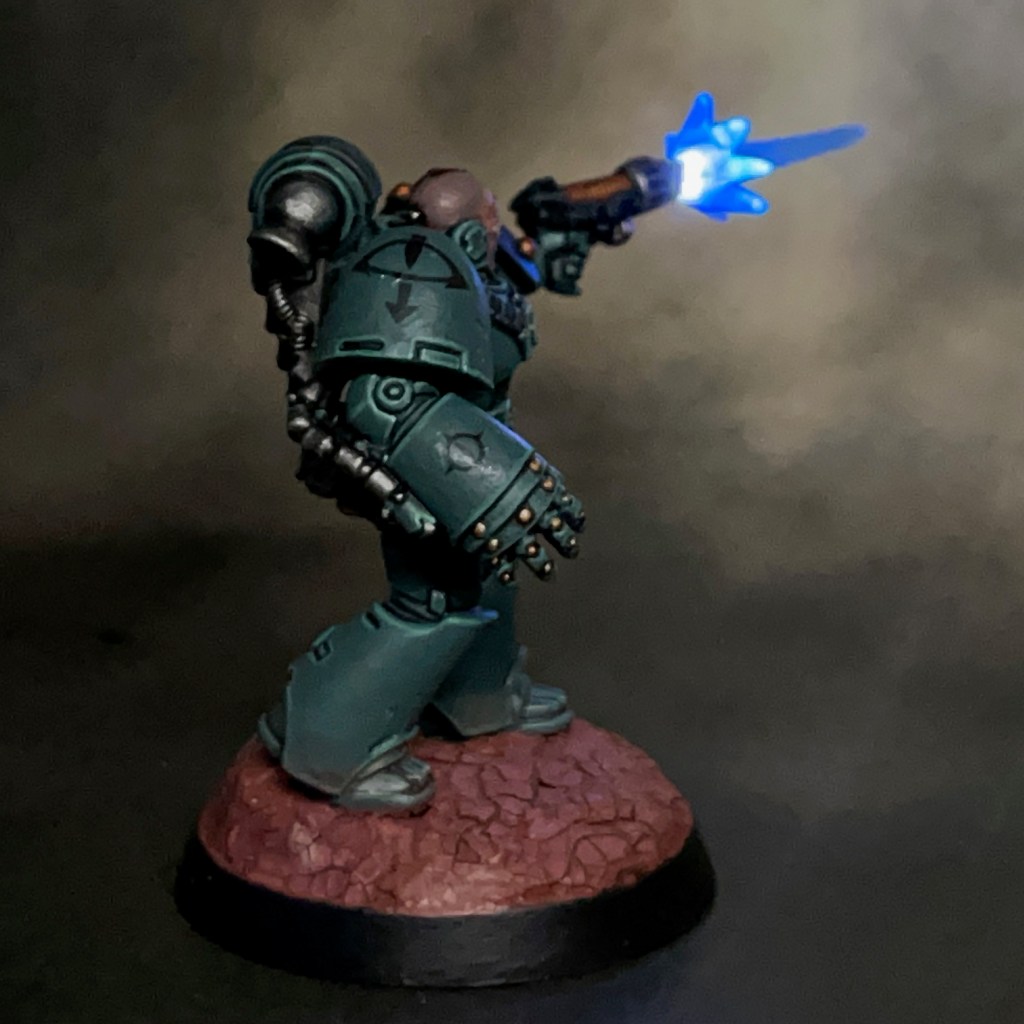
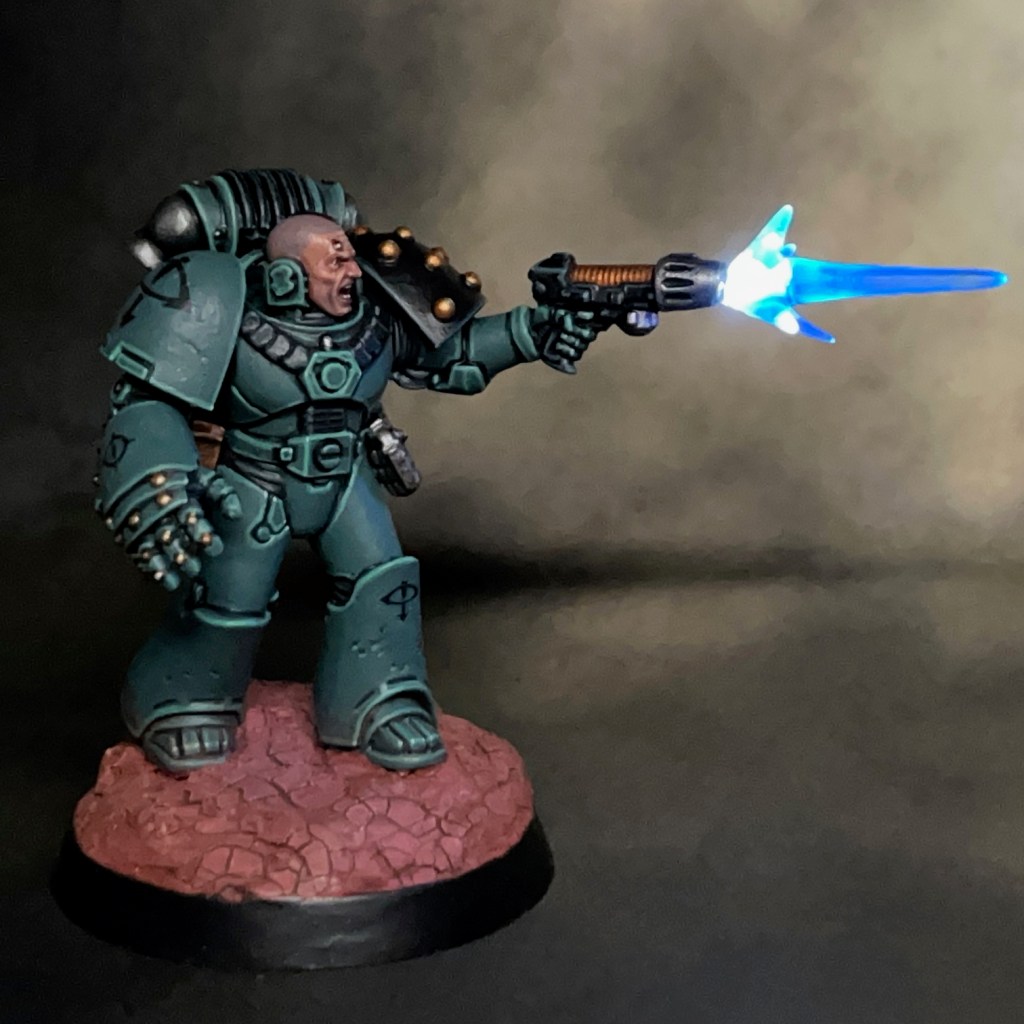
This week I’d like to present Sergeant Khons of the Sons of Horus. This miniature and its LED effects have been specially commissioned by the team at Green Stuff World to show off some of their 3D printed accessories and LED kits. This is my second Green Stuff World commission after Themistius Kalden and his energy shield that I posted last week.

Modelling

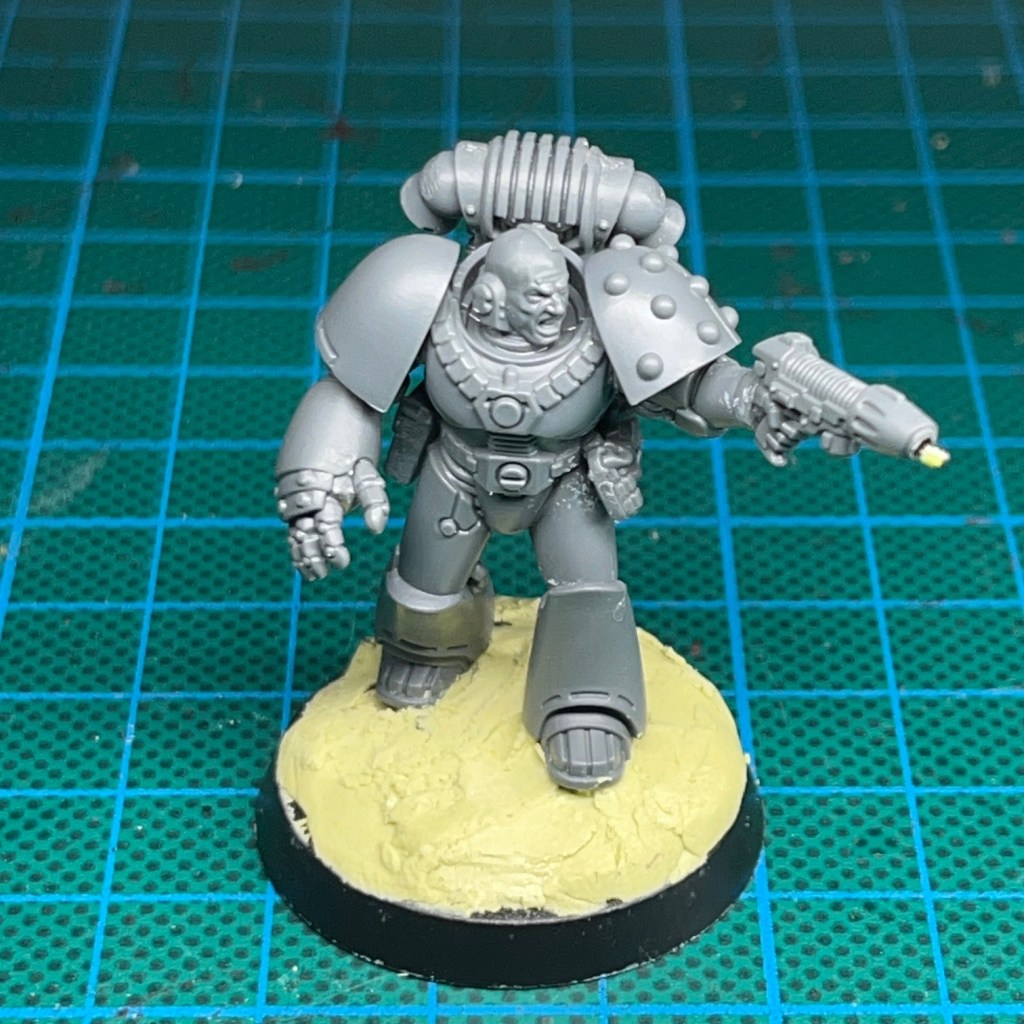
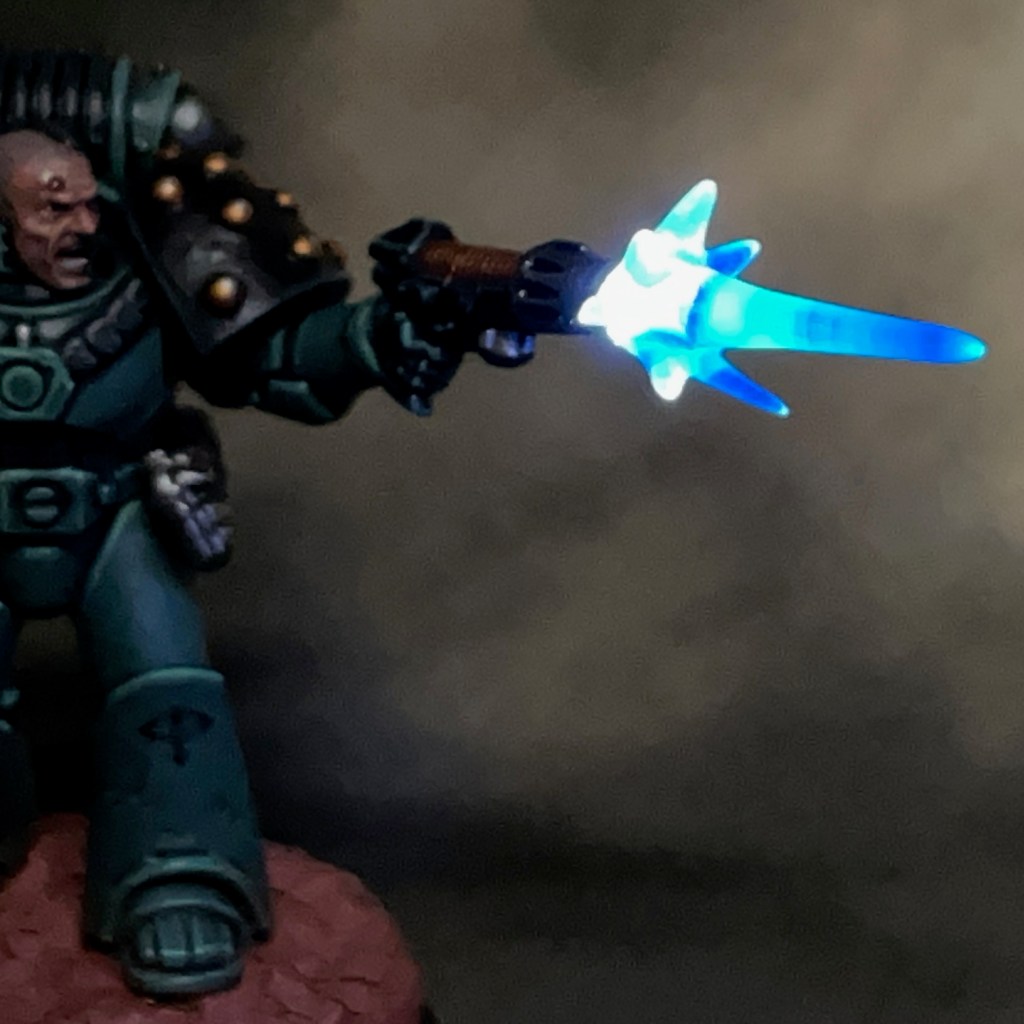
This miniature was intended to demonstrate the Green Stuff World 3D Printed Plasma Effects. When I was asked to incorporate the plasma effects into a miniature, I immediately knew this effect would look awesome on a space marine with a plasma pistol. I settled on the Sons of Horus for the paint scheme as I really I enjoyed painting Brother Amset, and I’ve been looking for an excuse to paint another Sons of Horus marine ever since.

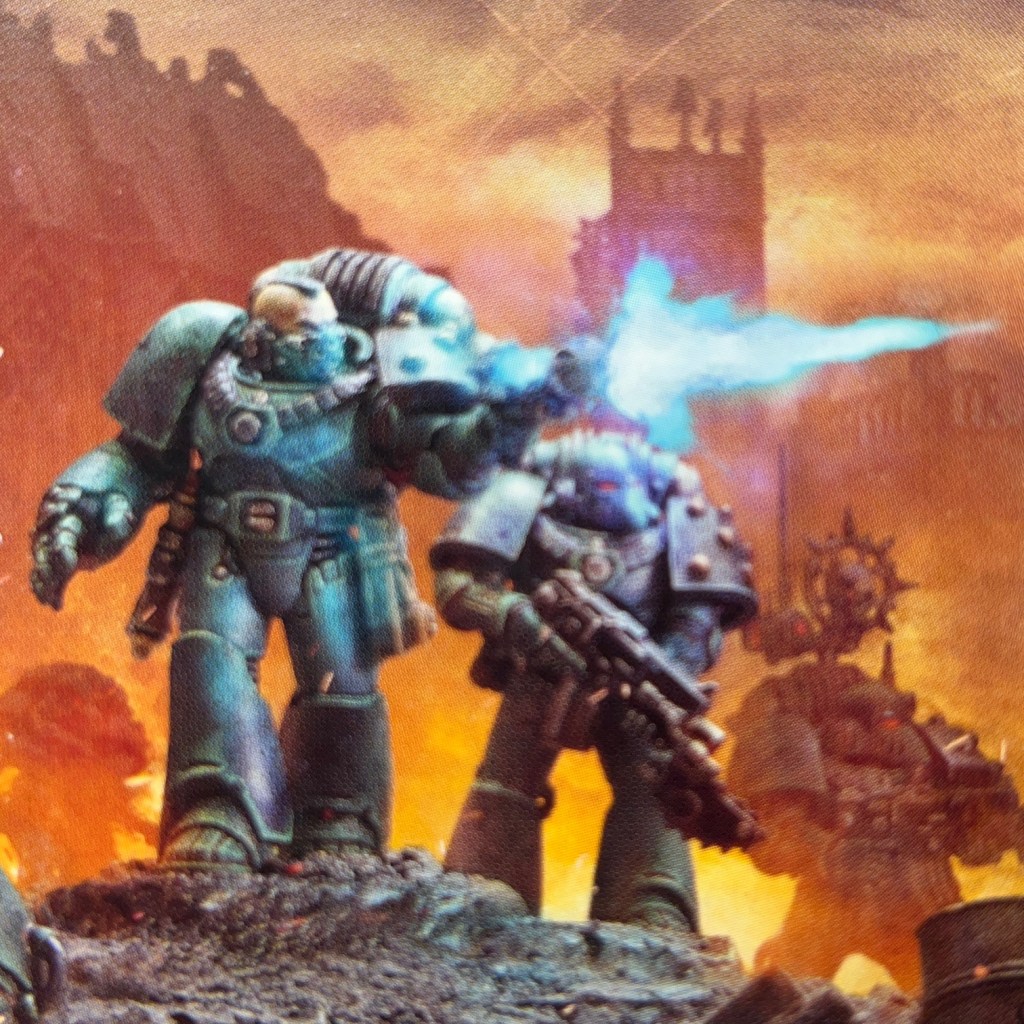
The equipment and pose of the miniature were influenced by sergeant on the Legion MKVI Tactical Squad box art, shown above. I swapped the mask for a bare head as a shouting or grimacing face combined with an LED muzzle flare really helps to sell the ‘mid-action’ pose.

As part of the commission I filmed all the stages of the build process, which you can see in the video below.

A full PDF tutorial for this build will be released via Green Stuff World soon. When it is, I’ll add it here and link to it from my tutorial section. In the meantime to get you started here’s a list of all the components and consumables I used. The miniature is from the Legion MKVI Tactical Squad kit.

Painting

My Sons of Horus armour recipe can be found in this previous post. For the face, I used my standard Pale Skin recipe. During the painting stage the plasma effect was given a thin blue glaze. This was done to help give the cool white LEDs a blue tint, and also to give the plasma effect some visual interest when the LED was switched off. The iconography on this miniature came from the transfer sheet included in the box.

LED effects aside, I’m really pleased with the paint job on this model. I think it’s one of the best space marines that I’ve painted to date – if I do say so myself!

That’s all for today, I hope you enjoyed this miniature and the demonstration of the Green Stuff World kits. Thanks very much for reading, and please remember you can also find me sharing my work on InstagramThreadsTwitter/XBluesky and Mastodon.

Oh, and if you have time, please consider voting for my miniature painting in the CRIT Awards!

Themistius Kalden, Custodian Shield Captain

I choose to interpret my title as Shield Captain literally.

Themistius Kalden, Custodes Shield Captain

Allow me to present Themistius Kalden, Shield Captain of the Shadowkeepers Shield Host of the Adeptus Custodes. This miniature and its LED effects have been specially commissioned by the team at Green Stuff World to show off some of their 3D printed accessories and LED kits.

The 3D printed Energy Shields kit was one of several I was commissioned to demonstrate. My first thoughts were a space marine with a storm shield, but after a bit more musing, I thought a Custodian with a shield might be more interesting.

Modelling

As part of the commission I filmed all the stages of the build process, which you can see in the video below.

A full PDF tutorial will be released via Green Stuff World soon. When it is, I’ll add it here and link to it from my tutorial section (EDIT: The full PDF tutorial can now be found here). In the meantime, to get you started here’s a list of all the components and consumables I used. The miniature is from the Custodian Wardens kit.

Painting

For the paint scheme, I followed a similar recipe to my previous Custodian Shadowkeeper. The only difference was I used true metallic rather than NMM, just because NMM is very time consuming and I wanted to meet my deadline. For the face, I used my normal Pale Skin recipe. The energy shield was given a red glaze and very watered down highlight to the edges, just to help give it a bit more definition without impacting the transparency.

That’s all for today. I’ll be back again soon with more LED miniatures, including more collaborations with Green Stuff World. Thanks very much for reading, and please remember you can also find me sharing my work on InstagramThreadsTwitter/XBluesky and Mastodon.

Brother Castiar, Flesh Eaters Assault Intercessor with swappable helmet

Sometimes you need to look the enemy in the eye, and sometimes you need to trust in your wargear.

Brother Castiar, Flesh Eaters

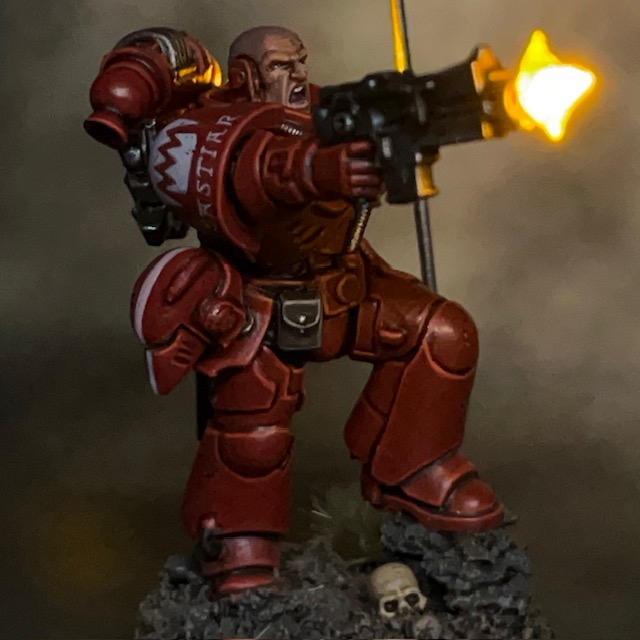
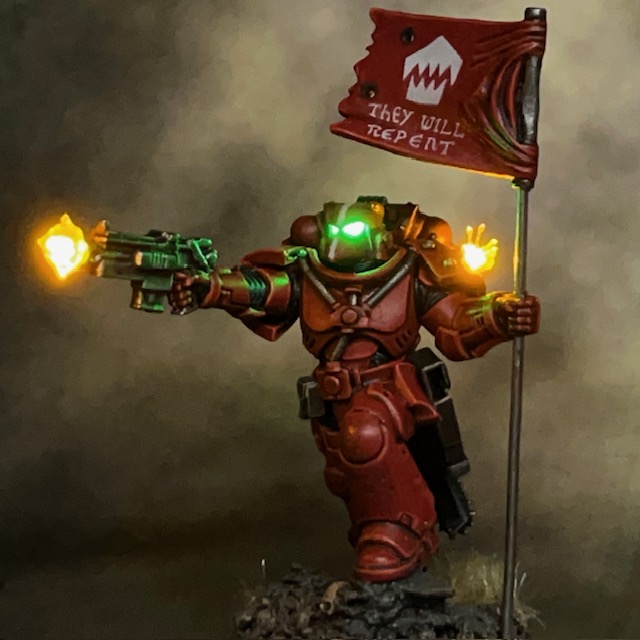
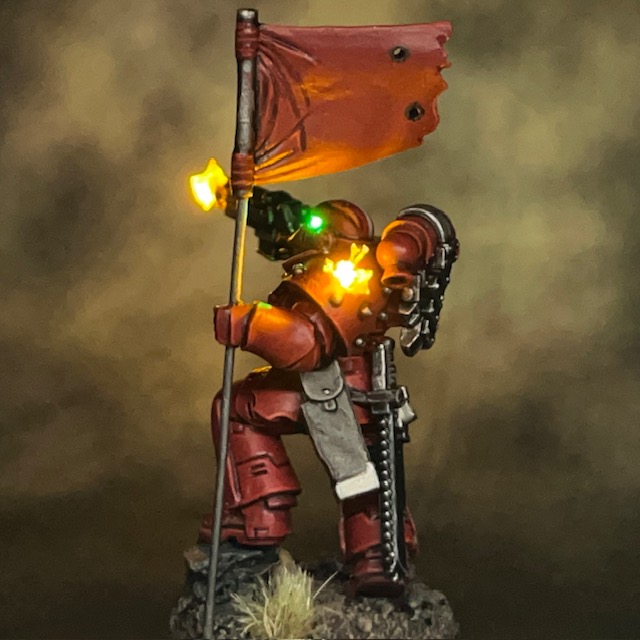
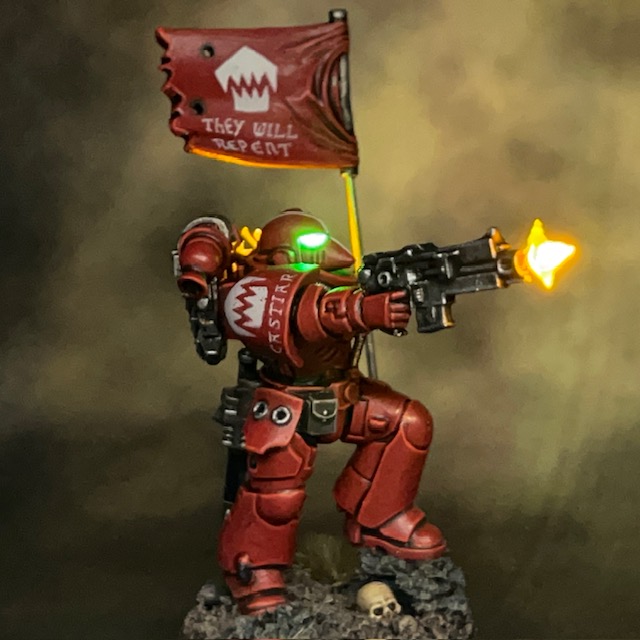
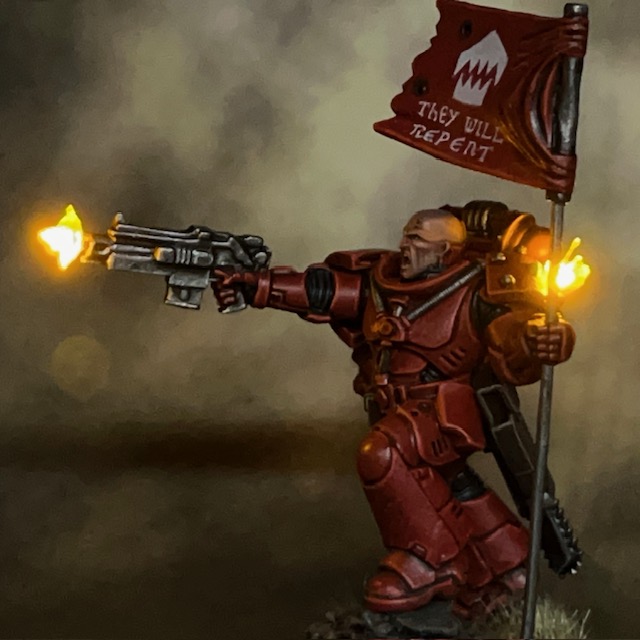
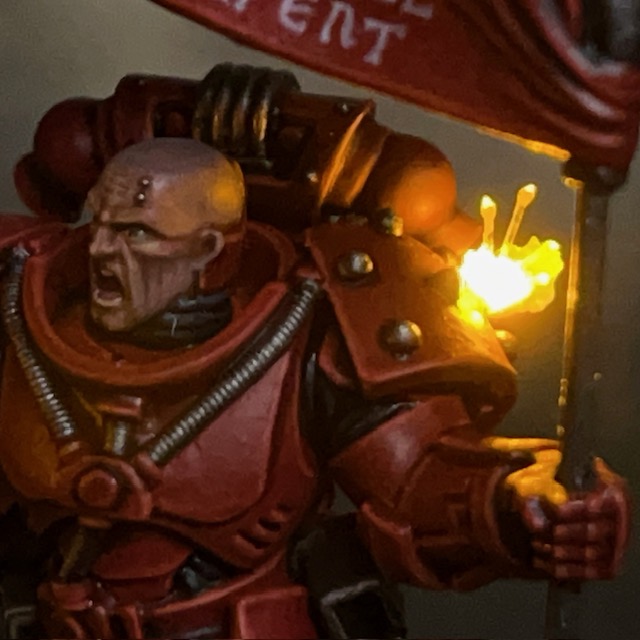
I’m back again with the next addition to my Flesh Eaters Space Marines project. Brother Castiar is the fourth member of my second Assault Intercessor squad, along with Brother Pitman, Brother Oram, and Sergeant Byrne. As well as the usual LED muzzle flare and bullet impact effects, Castiar also has a choice between a bare head or helmet that can be easily swapped during a game.

Modelling

I had built a similar effect before with my Crimson Fists Captain, although in that case he couldn’t wear the helmet ‘mag locked’ to his belt. It’s a technique I’ve been meaning to revisit for a while and refine into a short-form tutorial. The base miniature is an Assault Intercessor from the Indomitus box – yes, I’m still working my way through that!

Swappable Helmet Tutorial

1. This tutorial builds on the techniques used in my LED Eye Lens tutorial. To prepare your miniature and base, first complete Steps 1-10 of that tutorial.

2. This technique uses IC sockets (above left) as sockets for LED legs. They are just the right size for the legs of 1.8mm LEDs to easily fit in and out. IC sockets are often manufactured in long rows or squares, but you can easily cut them down into pairs but cutting in between individual sockets with a craft knife. For this tutorial you will just need a single pair of sockets. IC sockets are available on Amazon here or from electronic component suppliers like RS here.

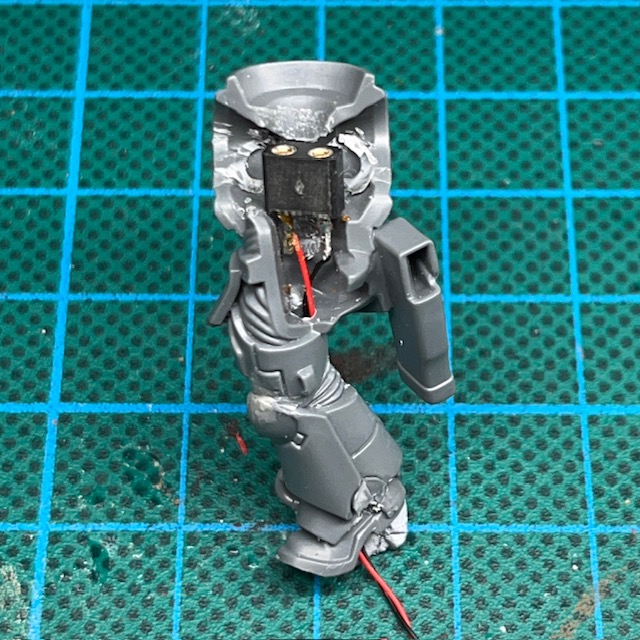
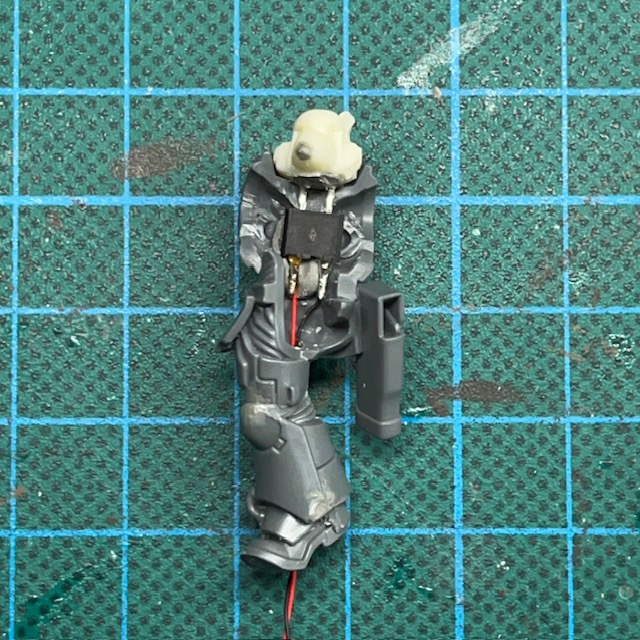
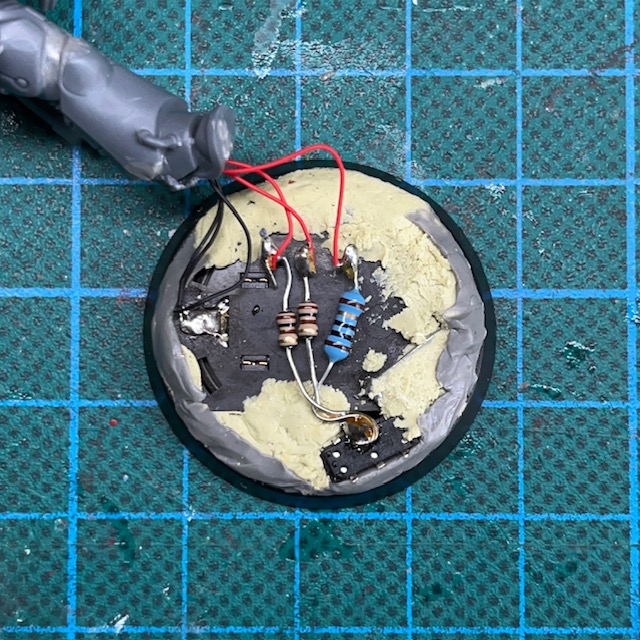
Assuming you’ve followed Steps 1-10 of my LED Eye Lens tutorial, you can now solder the two legs of the IC socket to the two wires inside the torso of your miniature (above right). Solder one wire to each leg. It doesn’t matter which way round you solder the wires, just remember which side was positive and which was negative.

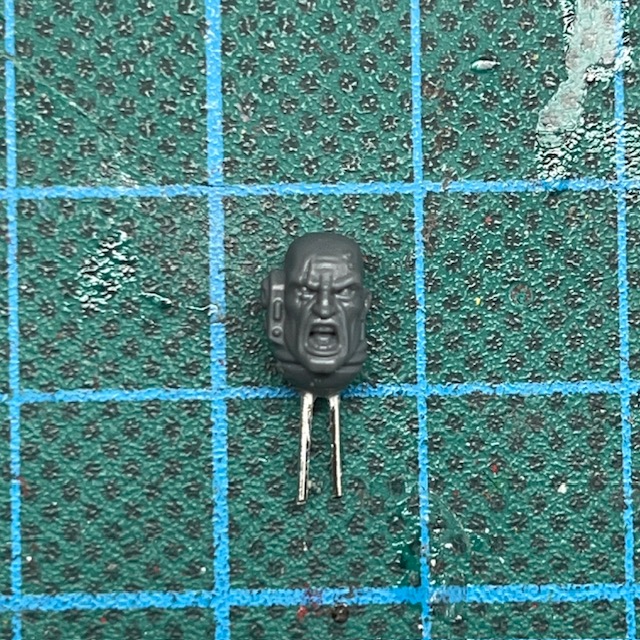
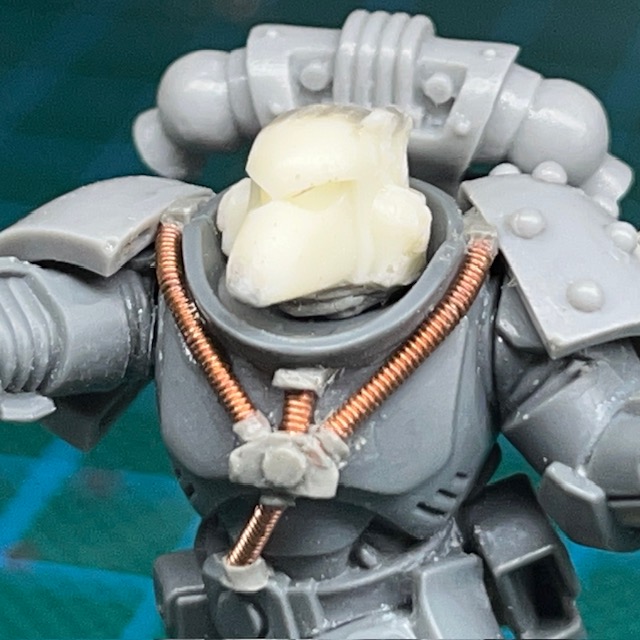
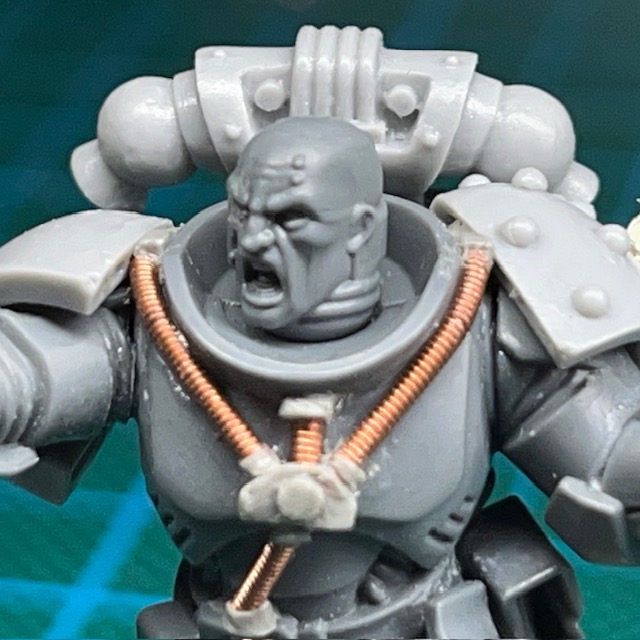
3. Now complete Step 11 – 14 of my LED Eye Lens tutorial to prepare the helmet (above left). Make sure you consider the polarity of the LED legs with respects to the polarity of the IC socket before you fix the LED into place. At this stage I’ve also started using modelling putty to sculpt the flexible ‘rubber seal’ between the helmet and the armour. If you make sure the putty covers the entire underside of the LED this also helps prevent unwanted light spilling out from the bottom of the helmet.

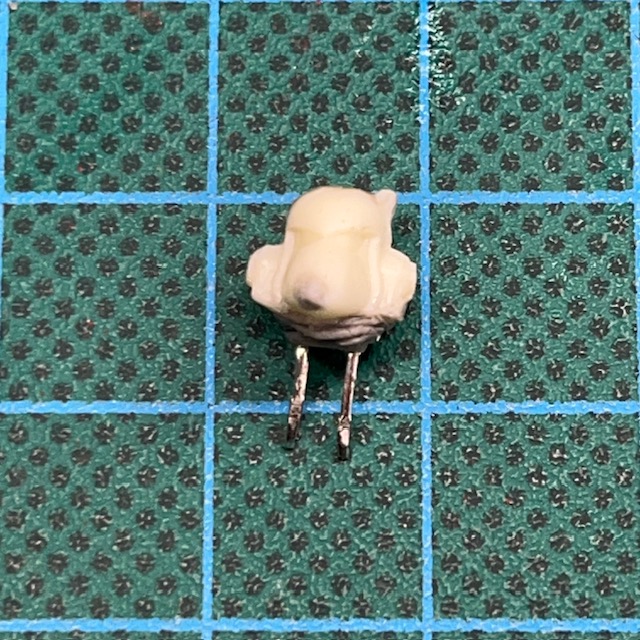
You will also need to prepare the bare head (above right). Use off-cuts from you LED legs to give the bare head legs of its own, then it can easily plug into the same IC socket. Make sure that the metal legs are not touching each other, otherwise you risk short circuiting the battery when the bare head is insert. There’s also no reason that the bare head can’t simply be a replaced with a different LED helmet instead.

4. Make sure the LED legs are the right length so they fit comfortably through the neck hole and into the IC socket, while also sitting as flush as possible with the top of the torso. Once you are satisfied with the position, fix IC socket in place with glue and/or modelling putty (above left).

You may also want to add additional LED effects, for example LED Muzzle Flares or LED Plasma Weapons. If you do, this is the point at which to do it. Additional LEDs can be connected in parallel with the connections to the IC socket on the base (above right).

5. Assemble the rest of the miniature, and then make sure the both heads have a good fit with the torso. If there are gaps, you may need to use more modelling putty to sculpt additional detail to fill the gap, like the ‘rubber seal’ around the neck. (above).

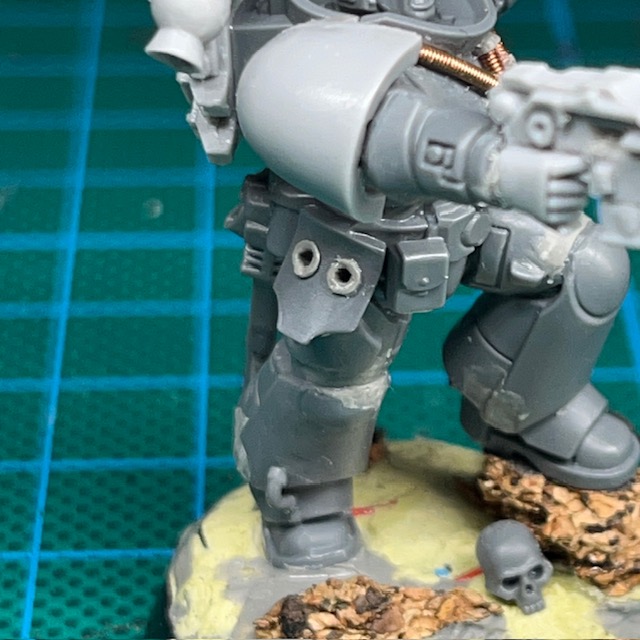
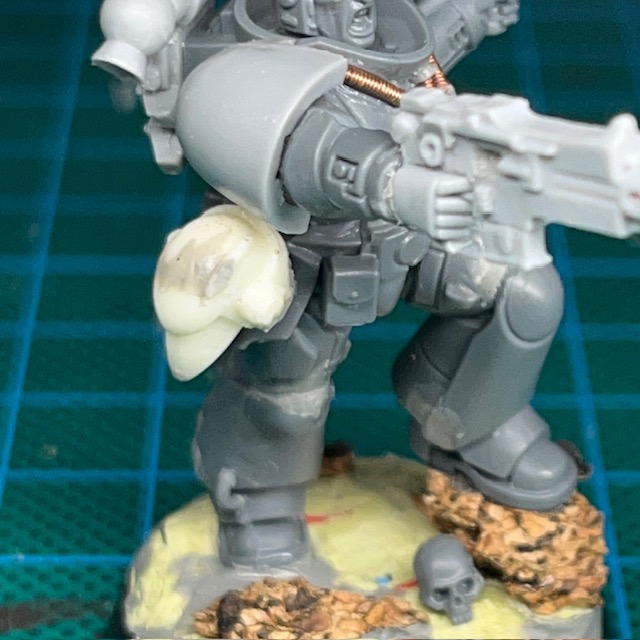
6. This step is optional, but if you want to include the ability to ‘mag lock’ the helmet on the belt, you will need to drill two holes in the waist or hip of the miniature (above left). Make sure the holes are deep enough so that the helmet sits flush with the hip (above right). A 1mm drill bit should be the ideal size for this. After drilling the holes, I added a small ring of modelling putty to make them look similar to the other sockets and access ports you sometimes find on Space Marine armour. Just be careful not to drill through any wires that may be inside the leg! These holes do not need any electrical connections as the helmet is ‘powered down’ when mag locked to the waist, so is not expected to illuminate in this postion.

Painting

When painting this miniature I stuck with my usual recipes. I used my standard recipes for Flesh Eaters red armour and my recipe for Space Marine pale skin. Something that’s worth noting, I always apply a thin glaze of Biel-Tan Green to the resin in the helmet eyes so they have a green tint even when switched off. This is especially important for this miniature, where the helmet will feasibly be on display on the waist while powered down.

There’s a minor Easter Egg in the slogan Brother Castiar’s banner. Ostensibly, ‘They Will Repent’ is a threat and a promise to his Partisan enemies in the War of the False Primarch. But also – as with the banner on the Infiltrator squad – it’s also a reference to a level in the original Doom. Of course the level name is itself a biblical reference, so I guess it’s a nested Easter Egg, if you’ll excuse the pun!

That’s all for today. It’s been a while since my last blog post, but rest assured I’ve been working on lots behind the scenes, and I have plenty more to show soon. Thanks very much for reading, and please remember you can also find me sharing my work on InstagramThreadsTwitter/XBluesky and Mastodon.

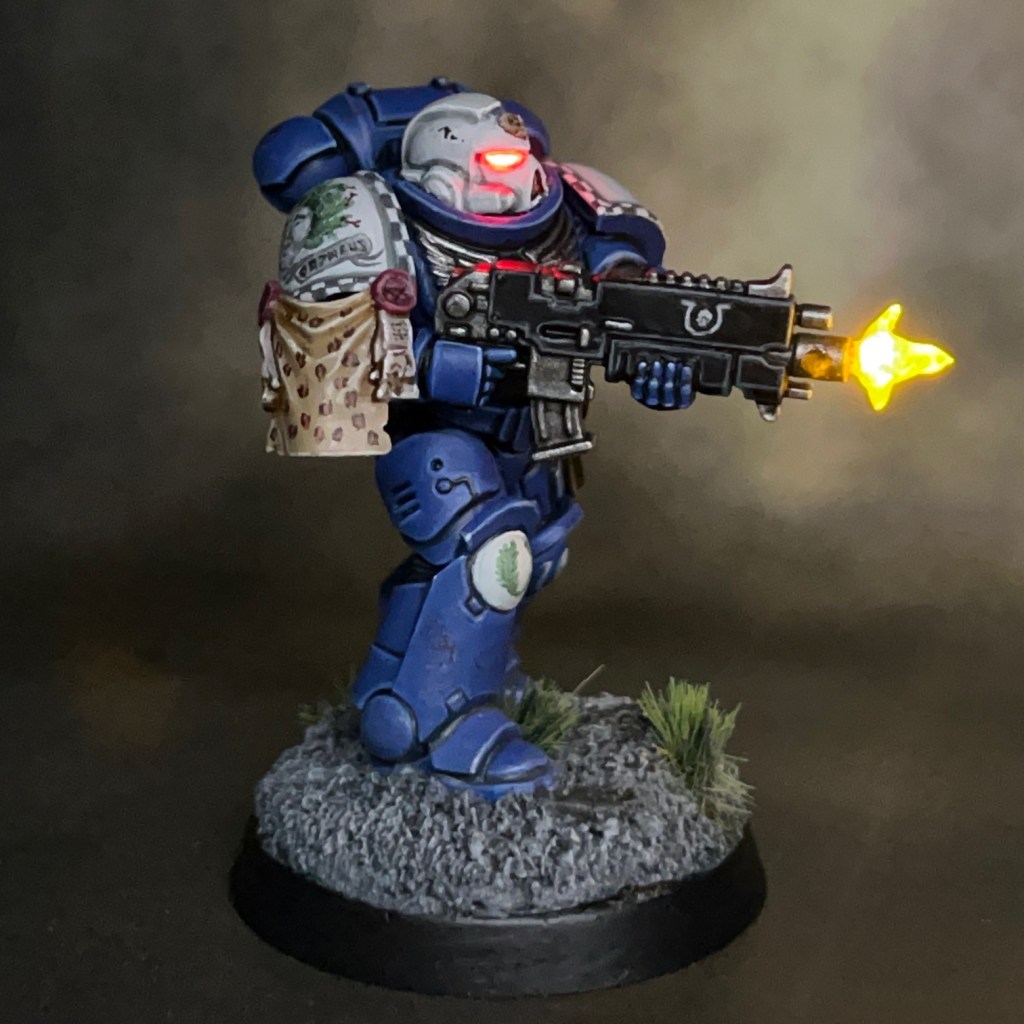
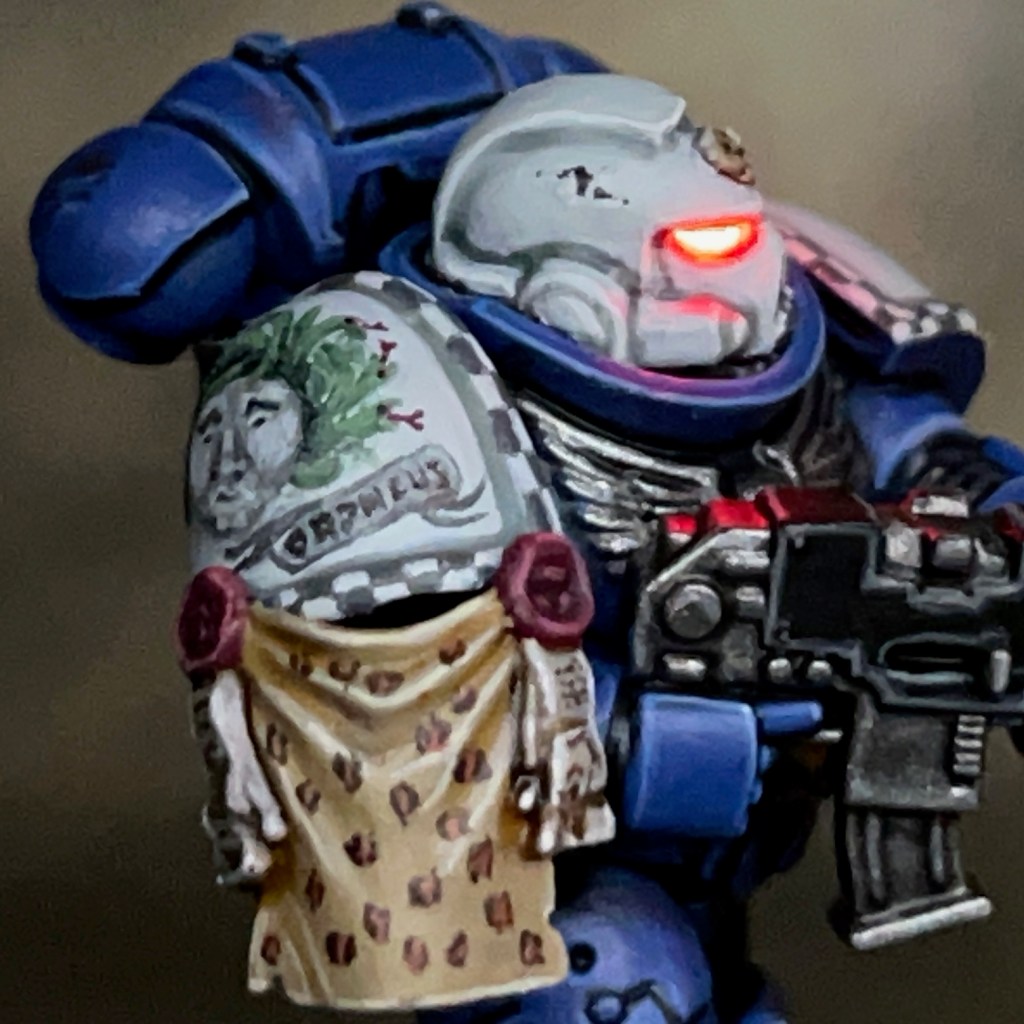
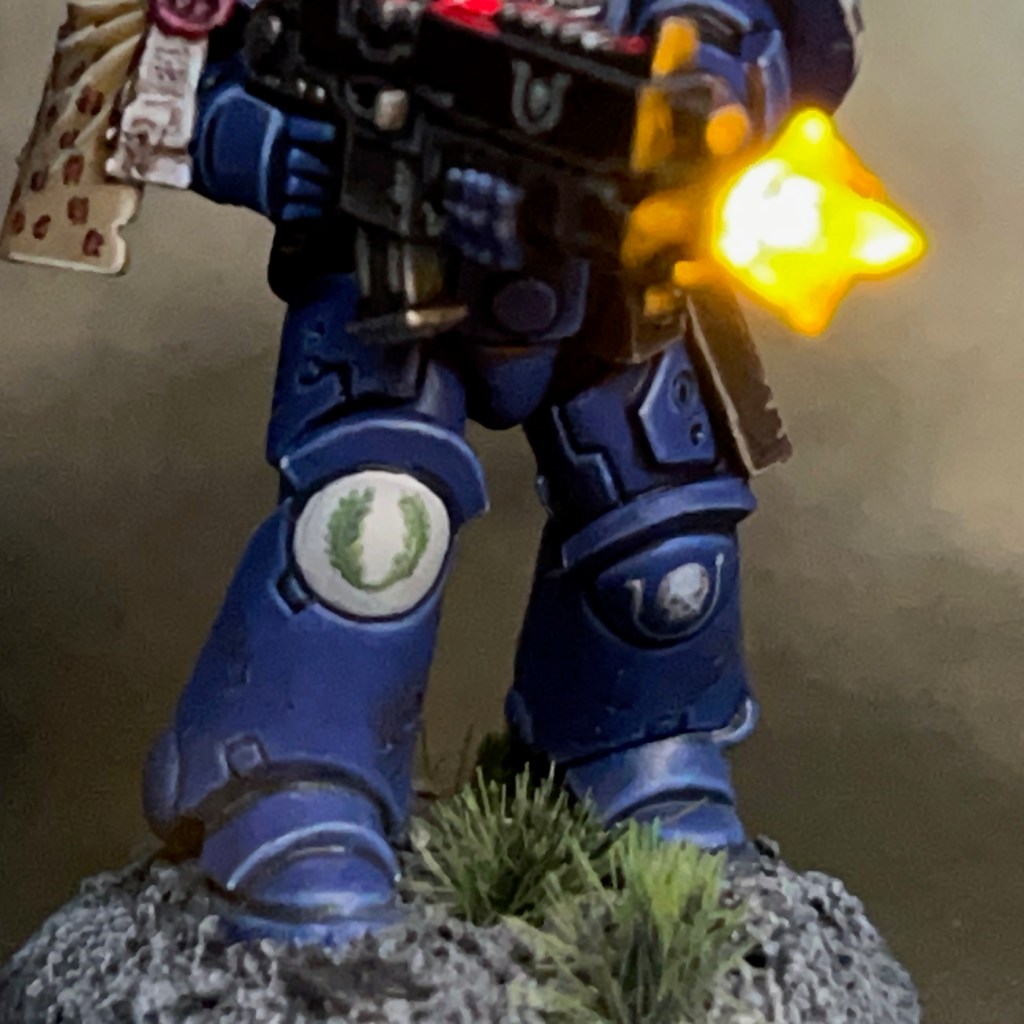
Brother Orpheus, Ultramarine Sternguard

We march for Macragge!

Ultramarine chapter battlecry

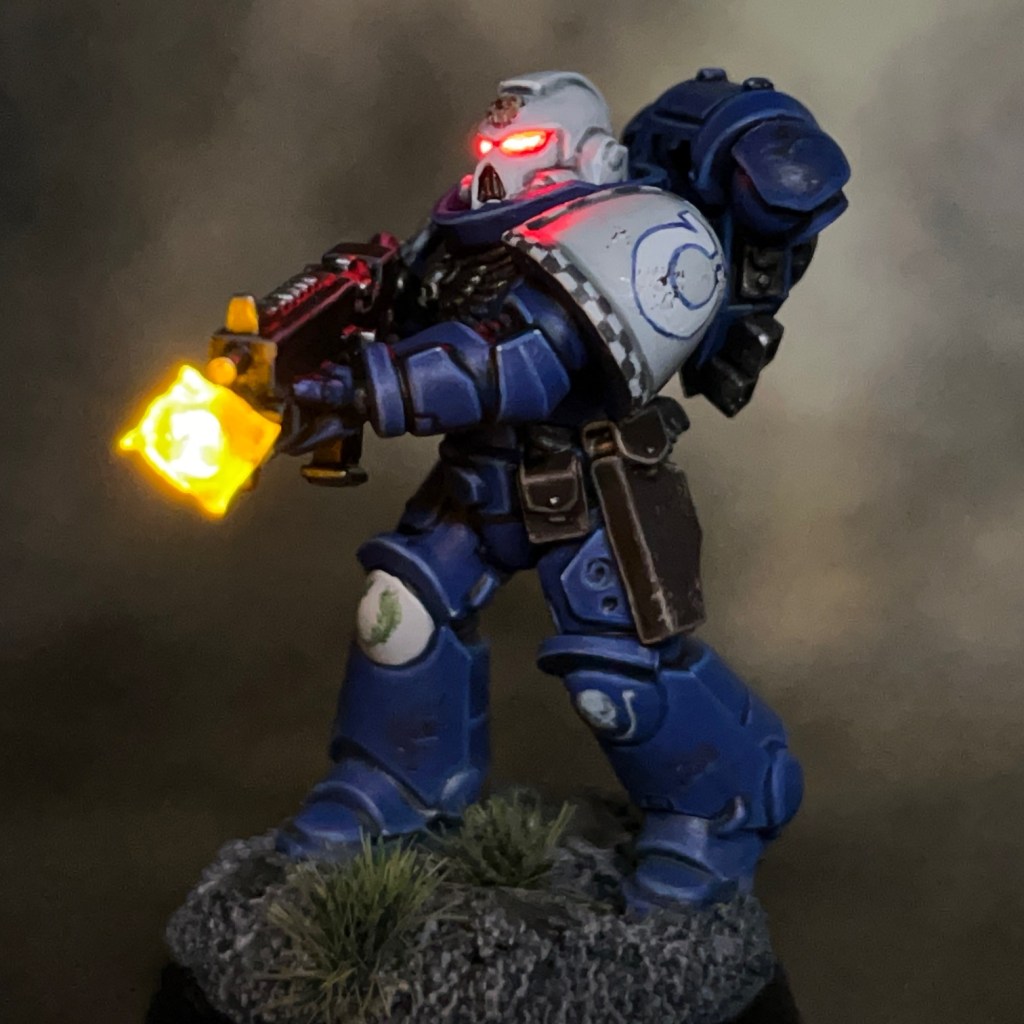
Today we’re looking at Brother Orpheus, my #MarchForMacragge project for this year. If you’re on the ‘hobby’ parts of social media then you may have seen the #MarchForMacragge hashtag being used a lot in the last few weeks. The premise is simple – paint something Ultramarine-related at some point during March and then share the results. 

Modelling

I’ll always have a soft spot for the Ultramarines, as I learnt to play 40K back in the day borrowing a friend’s Ultramarine army. For previous years #MarchForMacragge I’ve completed the Ultramarine ‘Imperial Space Marine’, Ultramarines Primaris Lieutenant, and Ultramarine Veteran Sergeant. Two of these are based on classic artwork, so I also looked to artwork for inspiration this time around.

I soon settled on the above image as the basis for this project. It’s such a cool vista with lots of exciting things happening and interesting details. This artwork appeared as a full page spread in one of the second edition 40K rulebooks, and I’ve always found it a source of inspiration (it has previously inspired the heraldry on Brother Dunn) . Rather than try to recreate Brother Orpheus exactly, I decided to bring him up-to-date with a Primaris version.

Brother Orpheus was built from spares found in my ‘bits box’, mostly left-over components from one of the 40K partworks magazines. I believe the legs and torso are originally from a Hellblaster marine.

To create the helmet eye lenses and muzzle flare, I used the techniques exactly as described in my LED Muzzle Flare tutorial.

Painting

I’ve shared my recipes for some of the key colours on this miniature below. As this is a display piece rather than a gaming piece I added a few more stages to the armour recipe. All paints listed are Citadel unless stated otherwise. The miniature was spray undercoated Chaos Black.

  • Ultramarine Armour
  • Macragge Blue basecoat (two thin coats)
  • 50:50 Kantor Blue:Abaddon Black shade
  • Altdorf Blue highlight
  • Calgar Blue fine highlight
  • Fenrisian Grey fine highlight on top edges and corners
  • Blue Horror dot highlight
  • White Armour
  • Ulthuan Grey basecoat (two thin coats)
  • Apothecary White Contrast shade
  • Ulthuan Grey layer (one thin coat)
  • Corax White highlight
  • Skull White fine highlight

For the animal pelt on the pauldron, I used the same technique as used on Brother Nikko of the Flesh Eaters.

  • Animal Pelt
  • Zandri Dust base coat
  • Seraphim Sepia shade
  • Karak Stone highlight
  • Screaming skull fine highlight
  • Tuskgor Fur small dots
  • 50:50 Abaddon Black:Rhinox Hide irregular circles around the dots

When painting freehand I use the ‘iterative’ method. I start by ‘sketching’ in the shape in a dull colour, and then slowly build up in layers to the brighter final colours, correcting mistakes as I go. If you’d like to read more about this technique, and how it can be applied to freehand checker patterns, then check out this post.

That’s all for today, I hope you’ve enjoyed reading about my #MarchForMacragge 2024 project. I’ll be back again soon with more on my regular projects. Thanks very much for reading, and please remember you can also find me sharing my work on InstagramThreadsTwitter/XBluesky and Mastodon.