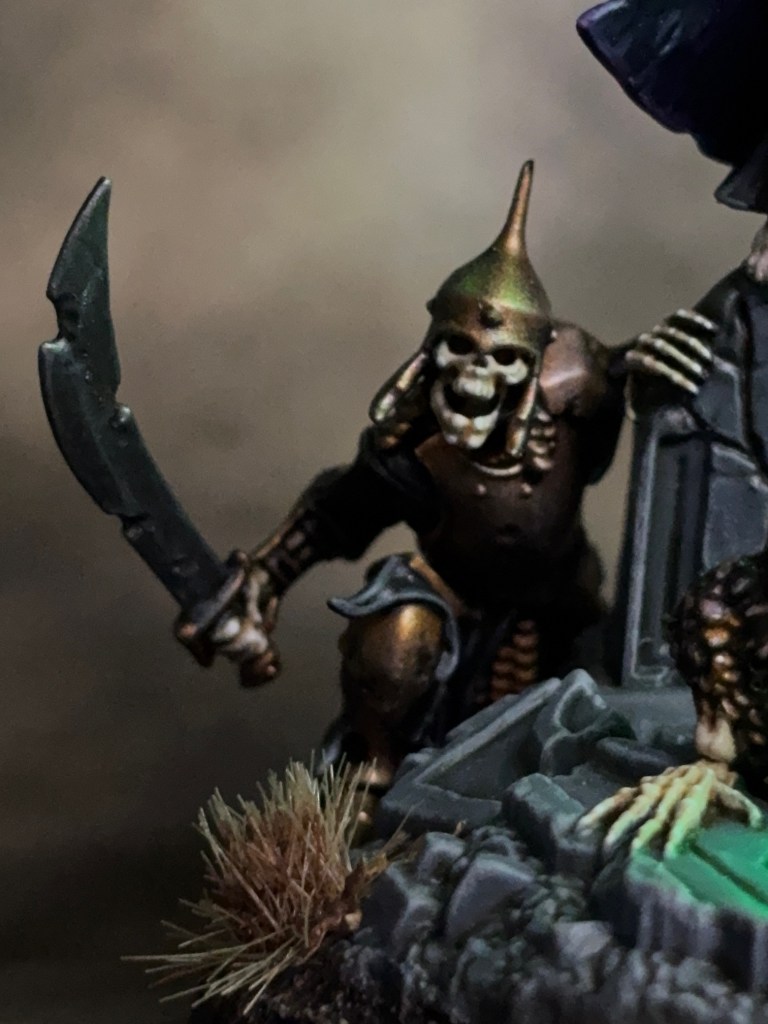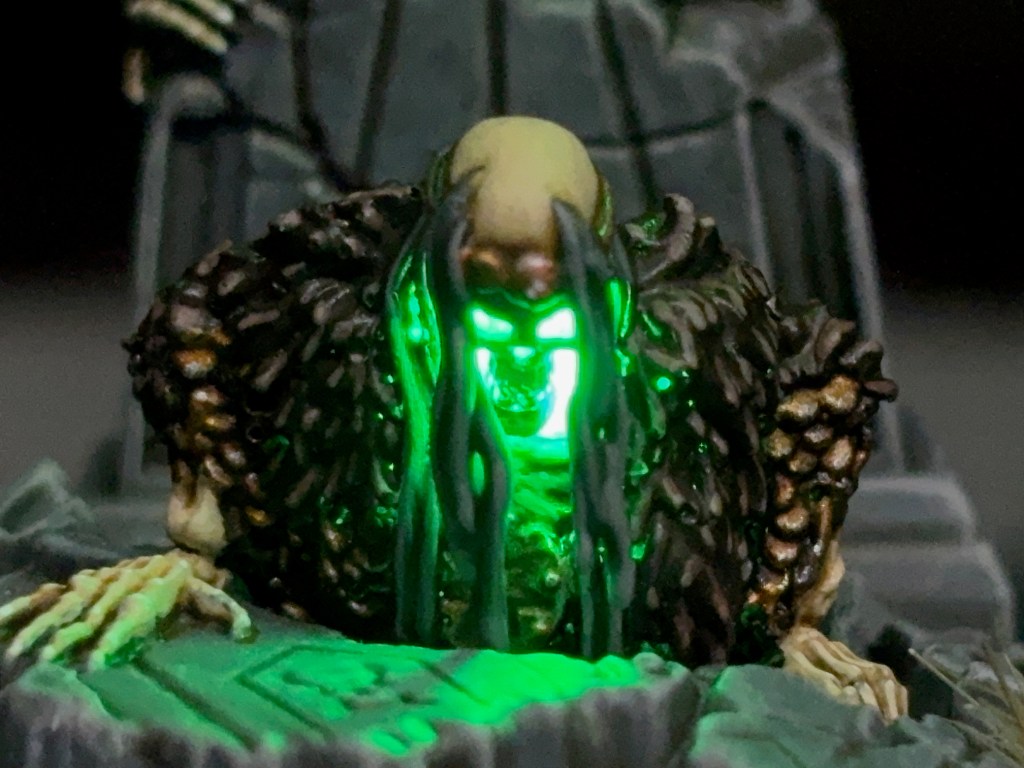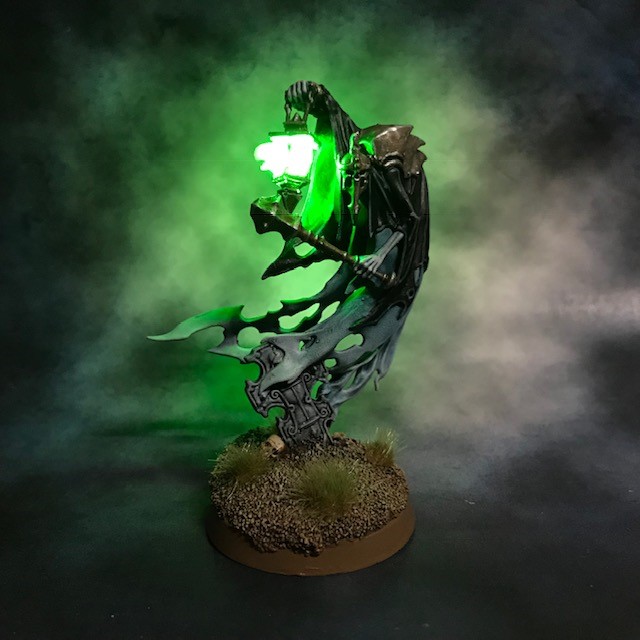
‘The Summons’

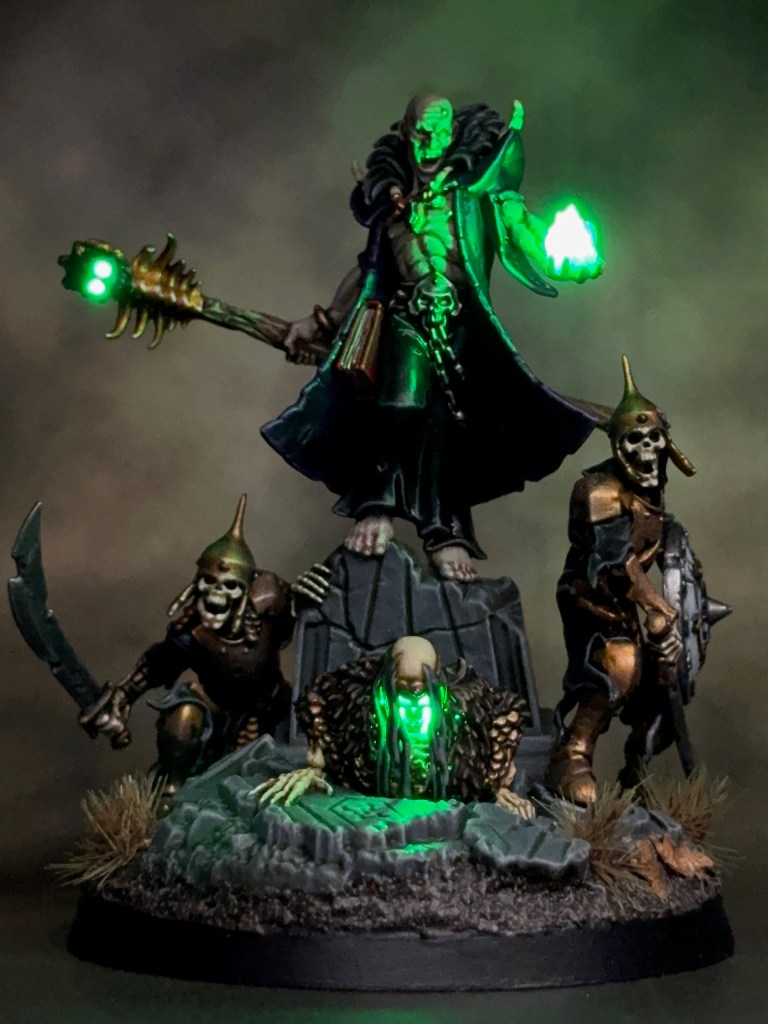
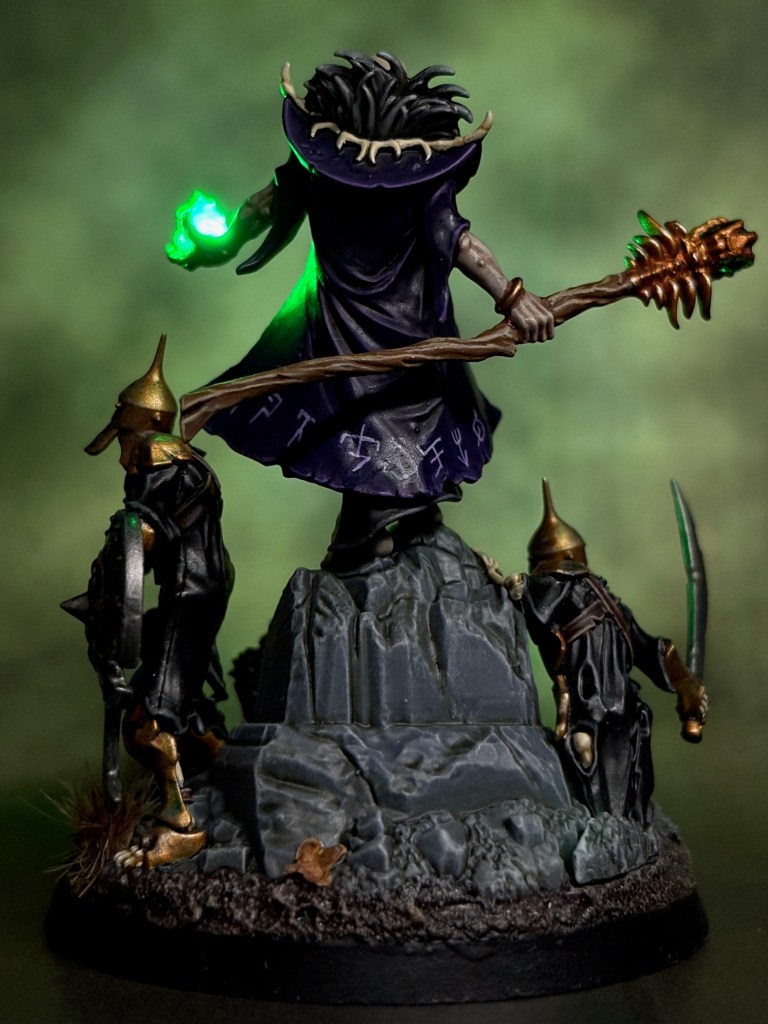
This week I’m sharing my take on the Warhammer+ Soulblight Gravelords ‘The Summons’, with some extra LED magic of course! I had hoped to finish this spooky miniature in time for Halloween, but it took a longer to paint than I’d estimated.

Modelling

I’ve been flirting with the idea of building some variety of Warhammer Undead army for many years now. So when the Warhammer+ miniatures were announced for this year, the Necromancer really leapt out at me as the clear choice. The stock miniature doesn’t feature any obvious light sources, so I had some creative freedom on which parts I chose to illuminate. I considered a number of ideas; candles, lanterns, glowing necklace gems, burning green eyes on the Necromancer, and even an unholy glow projected upwards from the open grave.

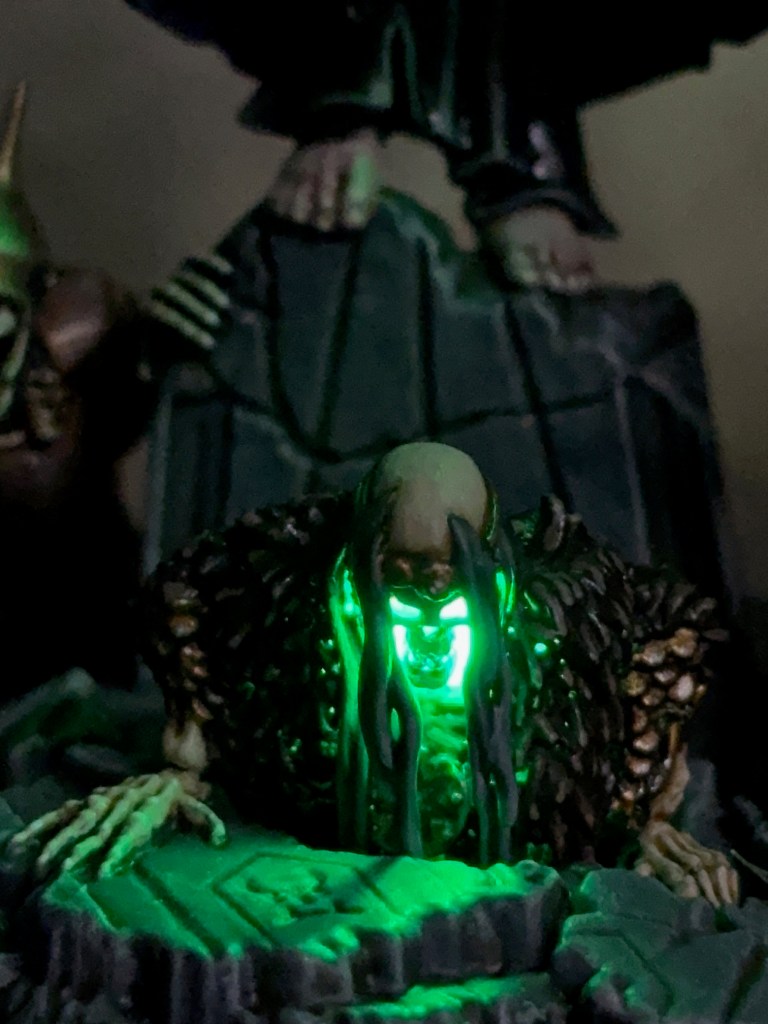
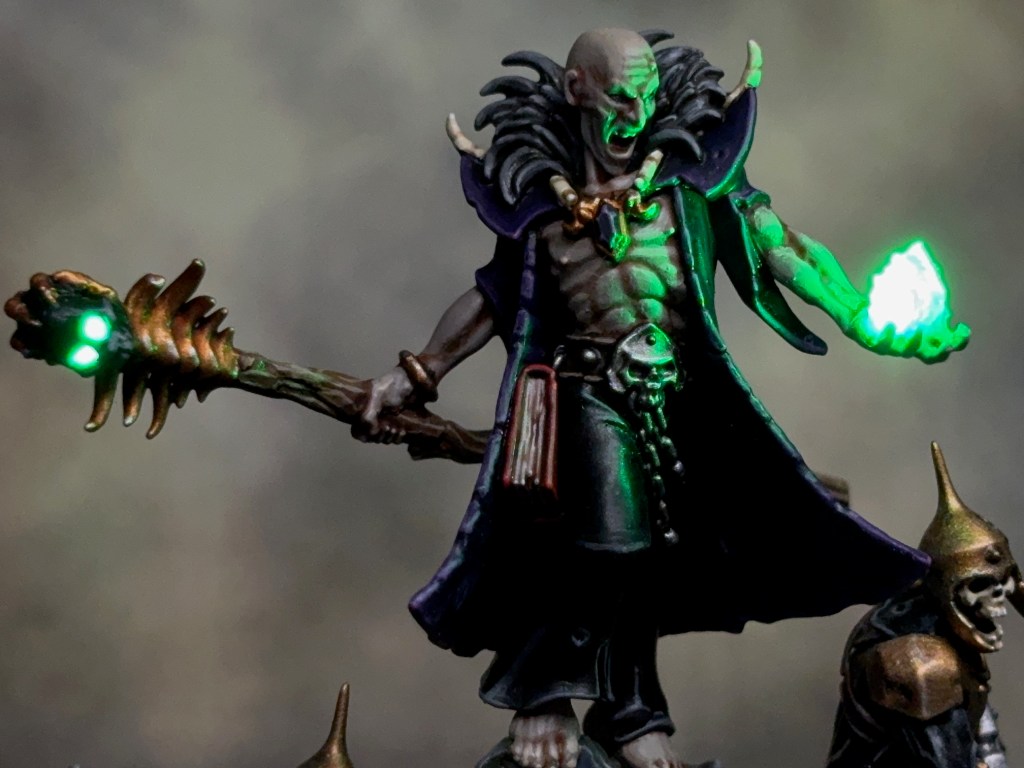
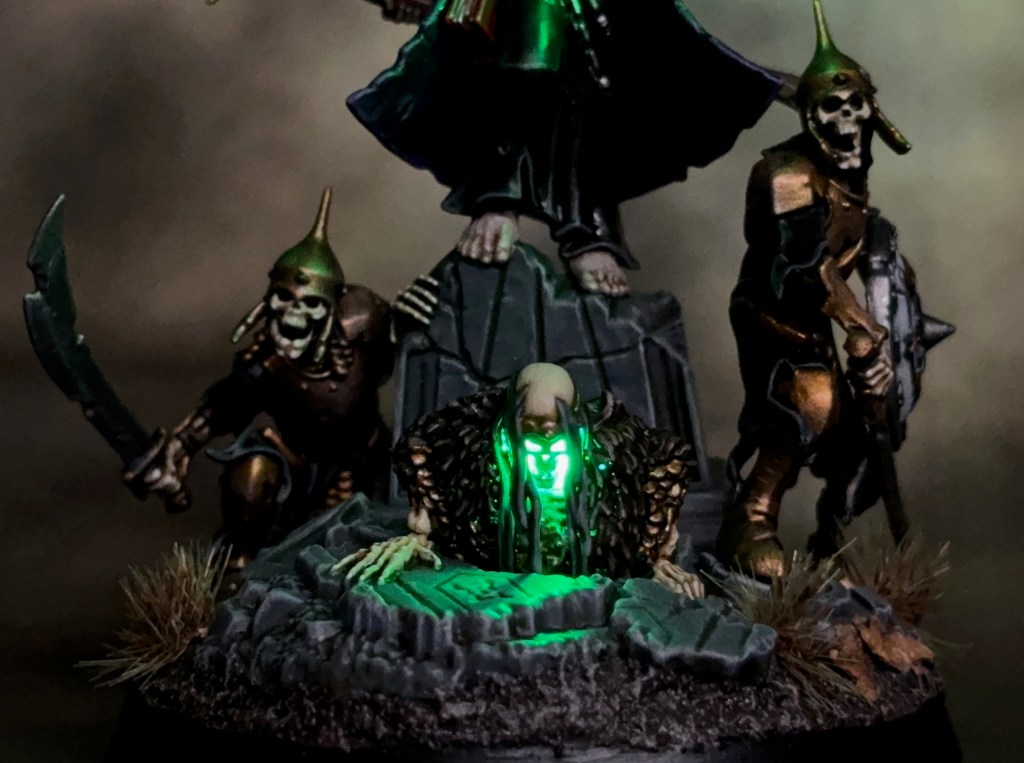
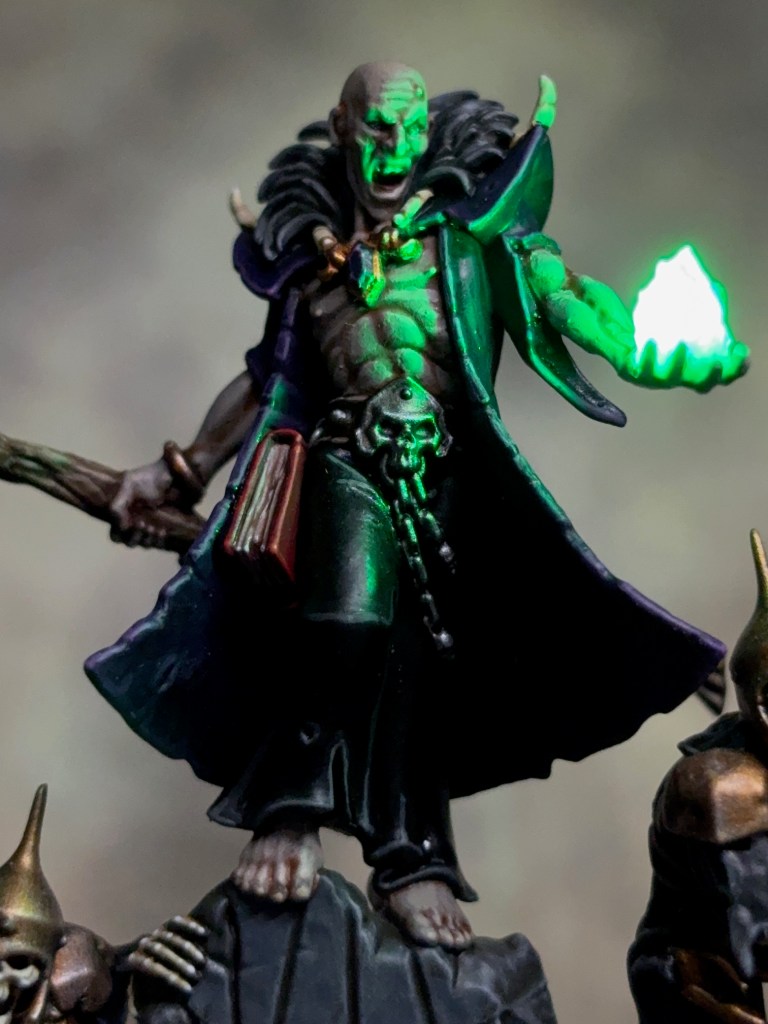
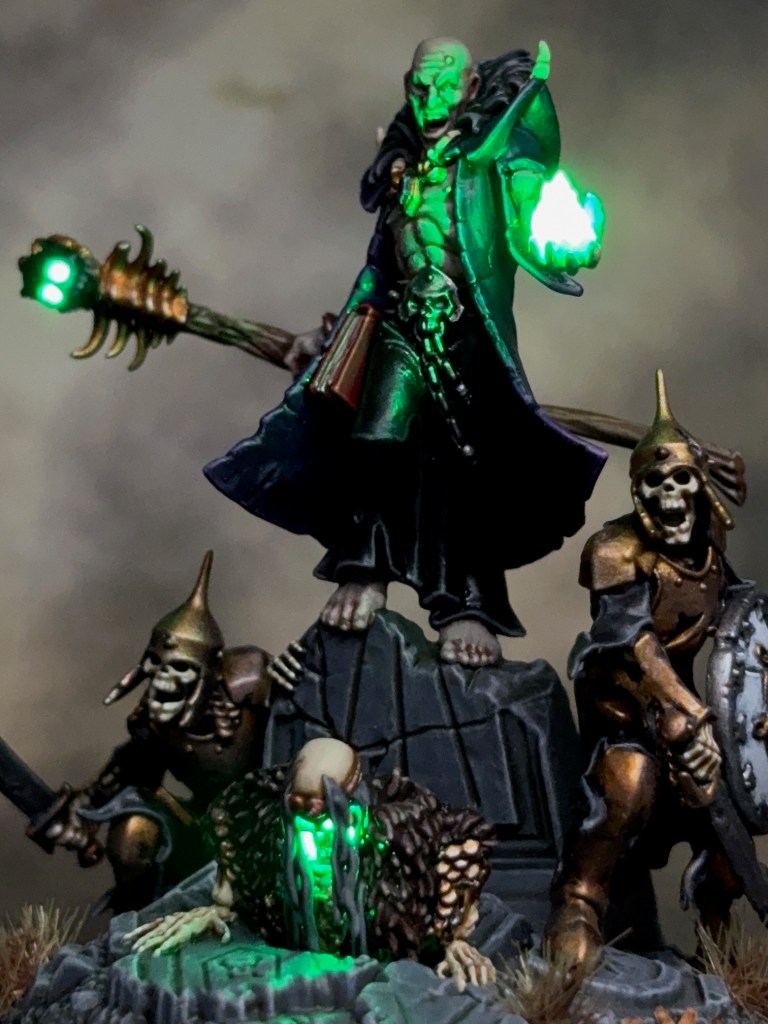
I settled on illuminating the eyes of the Skull Staff, a soulfire flame in the conveniently outstretched hand, and the skull of the skeleton who is mid-reanimation. These areas created a visually pleasing triangle of light when viewed from the front.

The Skull Staff and reanimating skeleton were illuminated followed the techniques described in my LED Eye Lens tutorial, only with skulls rather than space marine helmets. The soulfire flame was created using acrylic gel from Green Stuff World and followed the techniques described in my Simple LED Muzzle Flare tutorial.

All three of the LEDs are 3V Green 0805 SMD Chip LEDs with 10 ohm resistors. The three LEDs are connected in parallel with a single CR2032 coin cell battery and switch in the base.

Painting

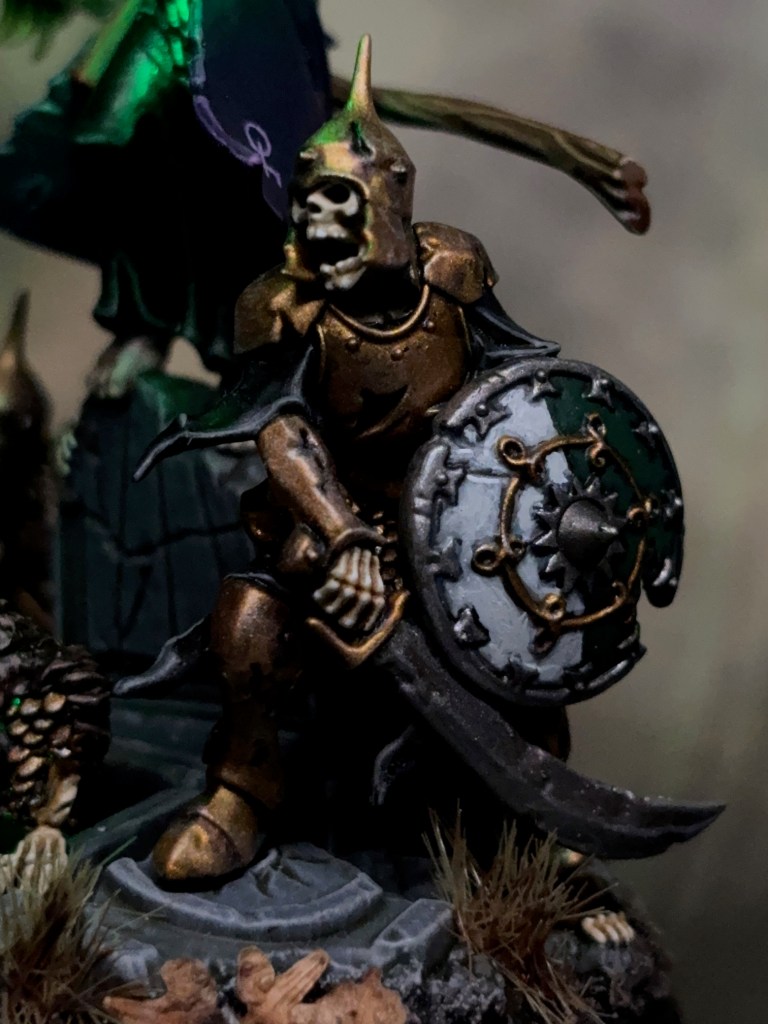
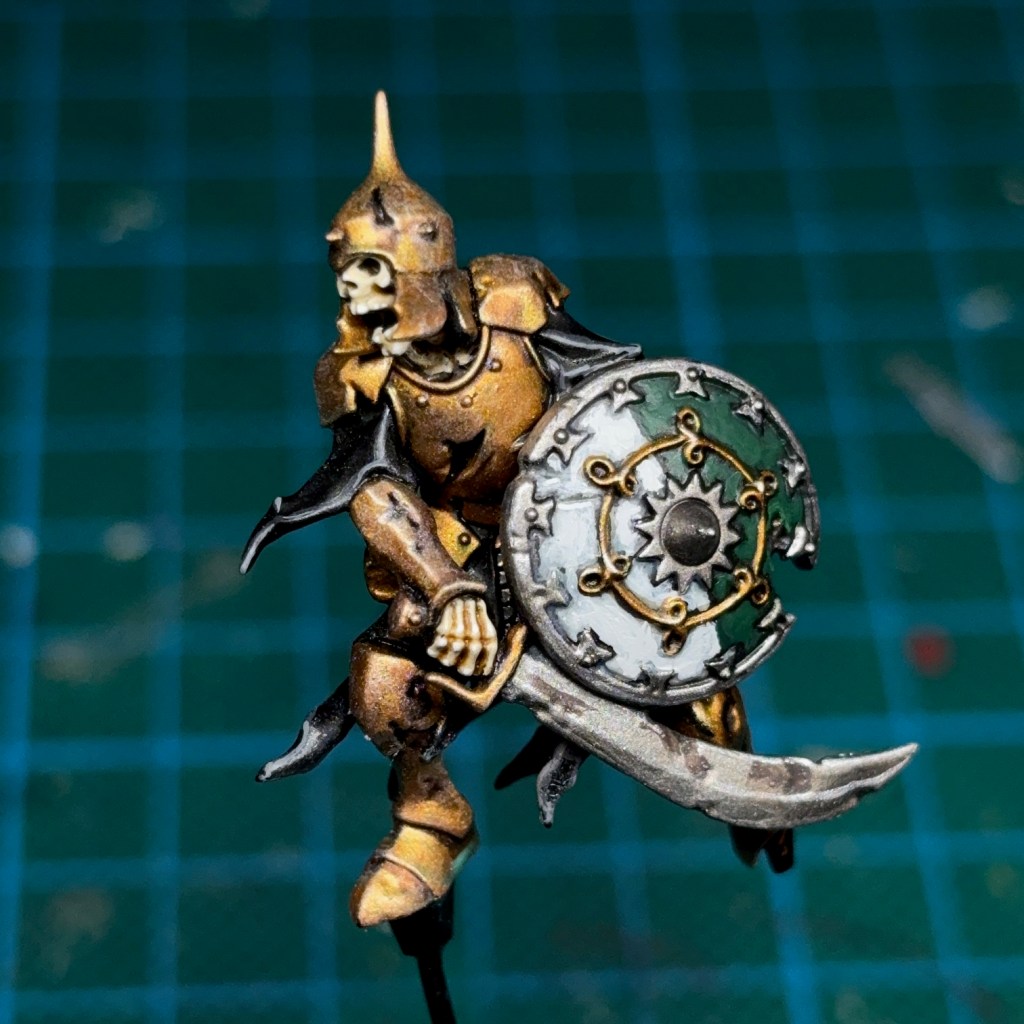
When deciding on the paint scheme, I decided to stay reasonably close to the box art as I didn’t have an existing army colour palette to match. The purple and black robes were also very evocative of the classic Warhammer Fantasy Necromancer. But I did add a few small twists of my own. In my head canon this is Wilhelm Lichtenfels, a Necromancer I created for a short lived narrative campaign ‘Shadow Over Steepacre’, that I played with with my gaming group back when Age of Sigmar was first released. The Steepacre town heraldry was white and green, which is reproduced in the skeleton’s shield. I’ve made previous versions of Wilhelm, and each version becomes a little more corrupted (and a little more buff).

R.I.P? More like ripped! Am I right, ladies?!

Helga Stormglad, Steepacre resident (burned as witch)

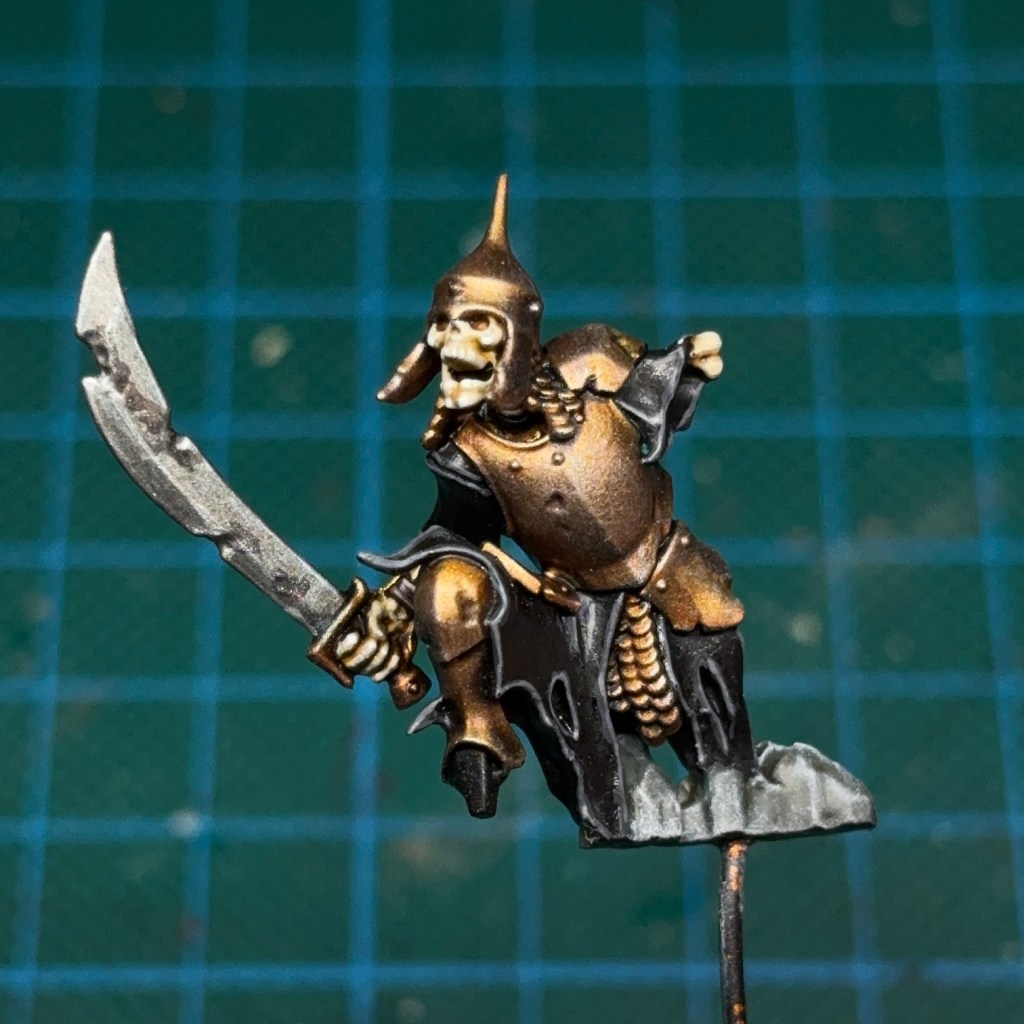
The miniature was undercoated with Citadel ‘Chaos Black’ spray. All other paints are Citadel unless specified otherwise. It’s worth noting that for ease of access to details I painted the skeletons as separate sub-assemblies.

  • Bones
  • Wraithbone basecoat
  • Skeleton Horde Contrast shade
  • Ushabti Bone highlight
  • Screaming Skull fine highlight
  • White Scar spot highlight
  • Pallid Skin
  • Rakarth Flesh basecoat
  • Reikland Fleshshade shade
  • Rakarth Flesh layer
  • Skin Tones (Pale) tutorial steps 5-11 (replacing Bugman’s Glow with Rakarth Flesh)
  • 50:50 Rakarth Flesh:Flayed One Flesh highlight
  • 33:66 Rakarth Flesh:Flayed One Flesh fine highlight
  • Flayed One Flesh spot highlight
  • Dark Purple Cape
  • Naggaroth Night basecoat
  • Druchii Violet shade
  • Xereus Purple highlight
  • Genestealer Purple fine highlight
  • Cape Runes
  • Xereus Purple layer
  • 90:10 Corax White:Xereus Purple highlight
  • Naggaroth Night thin glaze
  • Black Cloth
  • Abaddon Black basecoat
  • Agrax Earthshade shade
  • Eshin Grey highlight
  • Dawnstone fine highlight
  • Grey Fur
  • Mechanicus Standard Grey basecoat
  • Agrax Earthshade shade
  • Dawnstone layer
  • Administratum Grey layer
  • Brown Fur
  • Rhinox Hide basecoat
  • Seraphim Sepia shade
  • Gorthor Brown layer
  • Baneblade Brown layer
  • Bronze Armour
  • Retributor Gold basecoat
  • Kabalite Green thin glaze
  • Agrax Earthshade shade
  • Runefang Steel drybrush
  • Iron Weapons & Trim
  • Leadbelcher basecoat
  • Nuln Oil shade
  • Runefang Steel highlight
  • Obsidian Skull Staff
  • Abaddon Black basecoat
  • 50:50 Abaddon Black:Daemonette Hide highlight
  • Daemonette Hide fine highlight
  • Dawnstone Grey spot highlight
  • Gold Staff, Jewellery & Coins
  • Retributor Gold basecoat
  • Reikland Fleshshade shade
  • Runefang Steel highlight
  • Wooden Staff
  • Steel Legion Drab basecoat
  • Reikland Fleshshade shade
  • Tallarn Sand highlight
  • Karak Stone fine highlight
  • Red Leather Book Cover
  • Khorne Red basecoat
  • Carronburg Crimson shade
  • Wazzdakka Red highlight
  • Evil Sunz Scarlet fine highlight
  • Wild Rider Red spot highlight
  • Book Pages
  • Rakarth Flesh basecoat
  • Reikland Fleshshade shade
  • Pallid Wych Flesh highlight
  • White Scar spot highlight
  • Shield Green Heraldry
  • Caliban Green basecoat
  • Athonian Camoshade shade
  • 50:50 Caliban Green:Warpstone Glow layer
  • Warpstone Glow highlight
  • Shield White Heraldry
  • Corax White basecoat
  • Apothecary White Contrast shade
  • Corax White layer
  • White Scar highlight
  • Grave Stone (base)
  • Mechanicus Standard Grey basecoat
  • Athonian Camoshade shade
  • Dawnstone drybrush
  • Administratum Grey drybrush
  • Corax White light drybrush
  • Dark Earth (base)
  • Dryad Bark basecoat
  • Agrax Earthshade shade
  • Gorthor Brown drybrush
  • Karak Stone drybrush
  • Ushabti Bone light drybrush

The only other thing worth mentioning is that the magical flame was painted with a thin glaze of Hexwraith Flame.

That’s all for today, I hope you’ve enjoyed this (sort of) seasonal miniature! I’ll be back again soon, most likely with more space marines. As ever, thanks very much for reading, and please remember you can also find me sharing my work on InstagramThreadsBluesky and Mastodon. Or if you prefer you can subscribe to my website by entering your email in the box below to receive updates whenever I post a new blog article or tutorial.

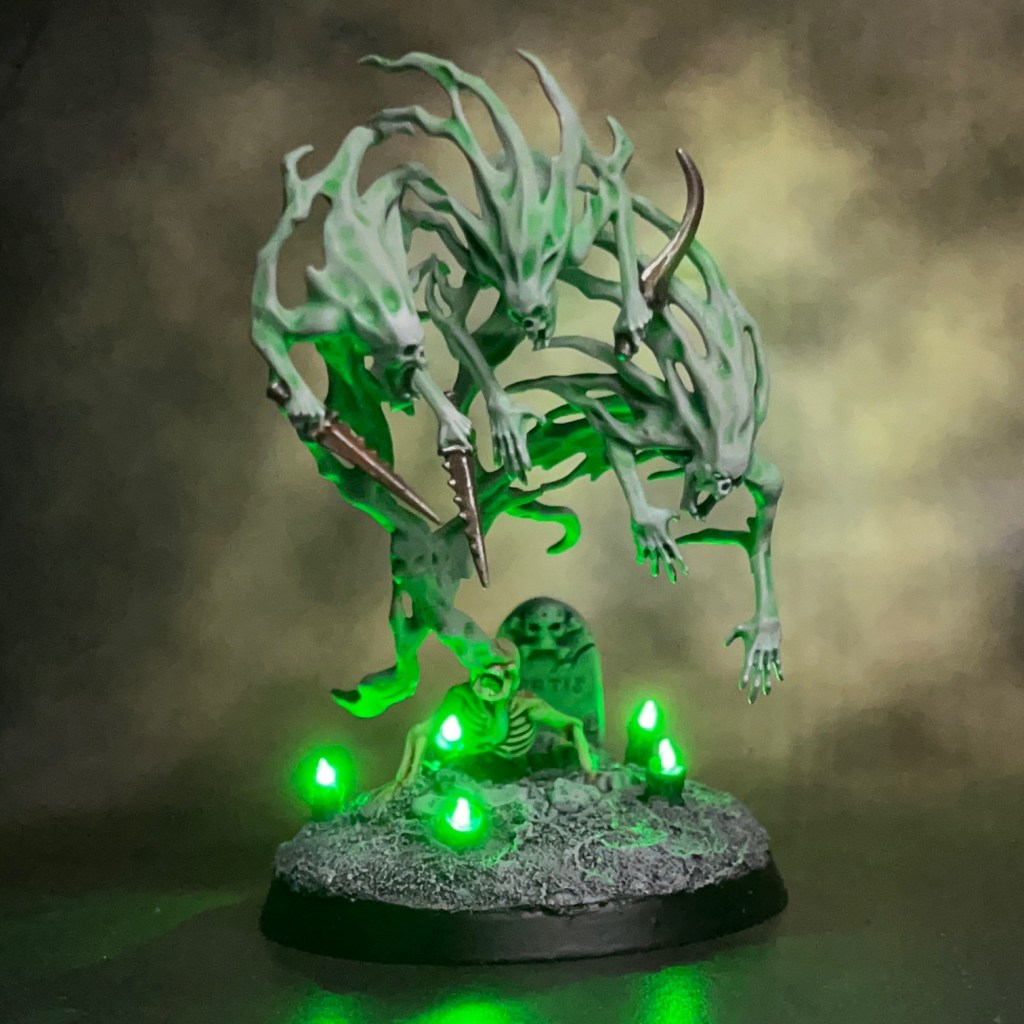
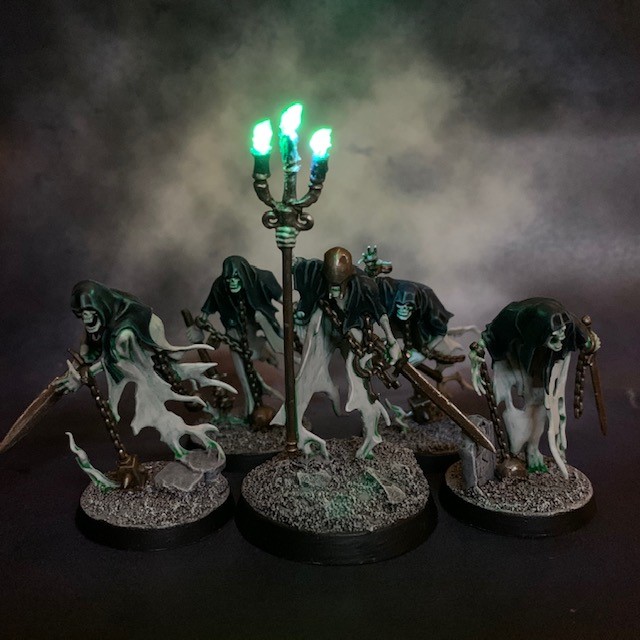
Nighthaunt Spirit Swarm

In this week’s blog post I’ll be talking about my recent Nighthaunt Spirit Host project. This miniature and its LED effects have been specially commissioned by the team at Green Stuff World to show off some of their 3D printed accessories and LED kits. This is my fourth Green Stuff World commission after Sergeant KhonsCustodian Kalden, and Genestealer Clamavus Voval Kreen that I posted earlier this year.

Modelling

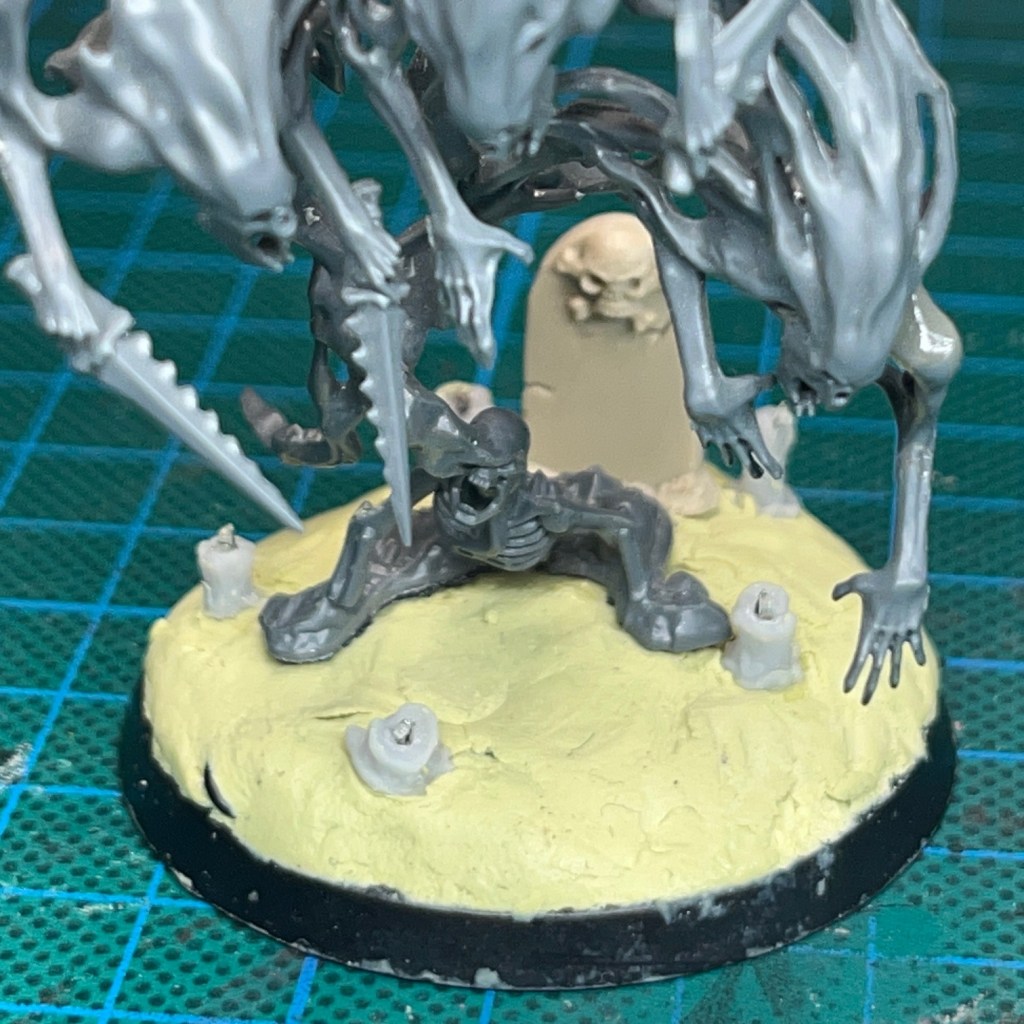
This miniature was intended to demonstrate what could be achieved by combining the Green Stuff World 3D printed Resin Candles and miniature LED sets. When brainstorming ideas for how to include these in a miniature, I went to the Nighthaunts almost straight away. I did originally consider having the ghosts holding the candles. While that is definitely possible, it makes the process a lot more complicated and I was trying to keep this tutorial as accessible as I could.

Once the idea of having the spirits holding the candles had been eliminated, I decided to have them on the base instead. At first I was going to have them sitting on and around the grave in at random as though they were memorial candles left by mourners. Then it occurred to me they might look better arranged in a circle around the grave as though they were being used in of a necromantic summoning ritual.

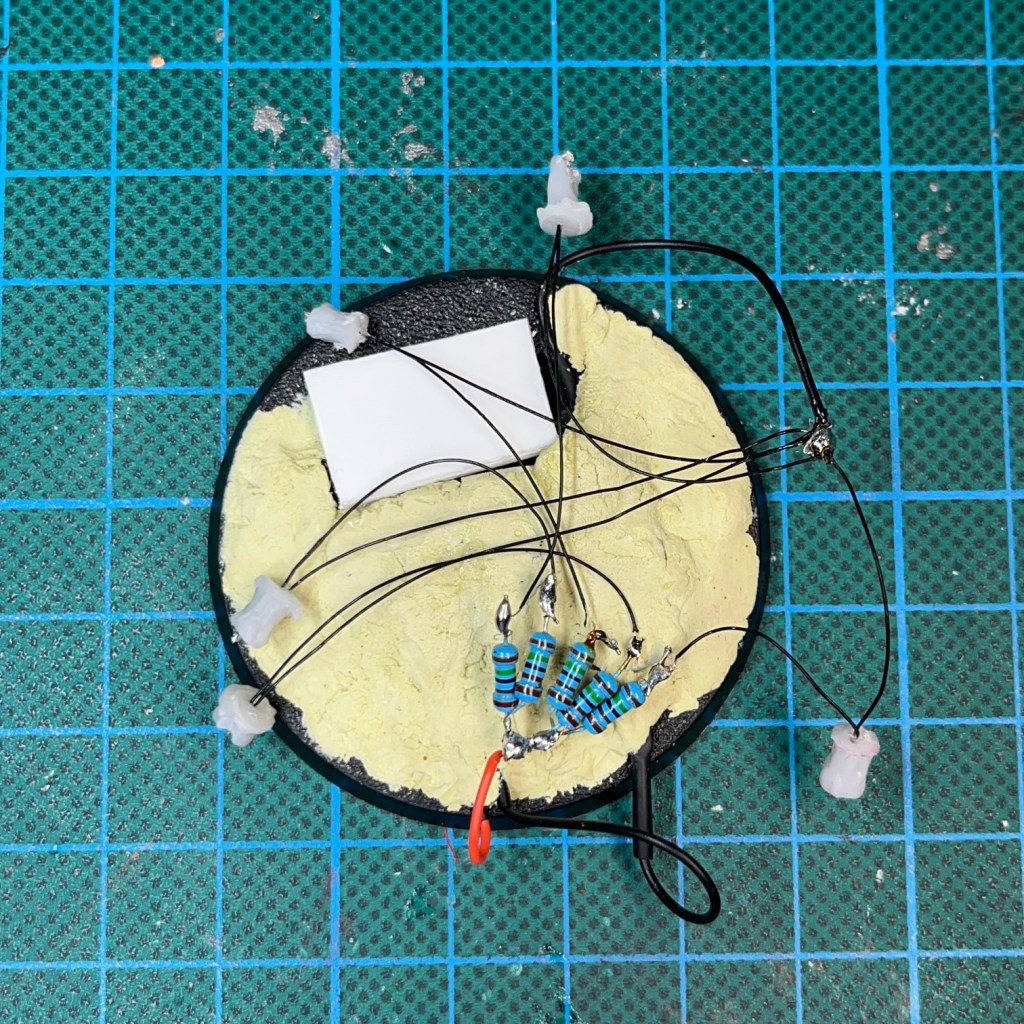
As part of the commission I filmed all the stages of the build process, some clips of which you can see in the video below.

A full PDF tutorial for this build will be released via Green Stuff World soon. When it is, I’ll add it here and link to it from my tutorial section. In the meantime to get you started here’s a list of all the components and consumables I used.

You may also find my older LED Nighthaunt Candles Short-Form Tutorial interesting, which shows a similar process applied to a Nighthaunt Chainrasp Dreadwarden using slightly different techniques and components.

Painting

The paint scheme on this miniature was very simple and (I’d like to think) quite effective. I largely followed the technique I’d used with my previous Nighthaunt. The only difference was a slight change in approach to the green ‘ectoplasm’ which dominates the Spirit Host miniature. This time I thinned the Hexwraith Flame with Contrast Medium instead of Lahmian Medium. I don’t think Contrast Medium actually existed when I painted my previous Nighthaunt! I also made the layers and highlights thinner and more subtle. The updated key colours are listed below:

  • Green Ectoplasm
  • Grey Seer undercoat
  • 50:50 Hexwraith Flame:Contrast Medium
  • Thin Ulthuan Grey glaze on raised detail areas (faces, hands, etc.)
  • White Scar dot highlight on sharp points in Ulthuan Grey glazed areas

That’s all for today, I hope you enjoyed this miniature and the demonstration of the Green Stuff World kits! Thanks very much for reading, and please remember you can also find me sharing my work on InstagramThreadsTwitter/XBluesky and Mastodon.

Nighthaunt Dreadwarden with LED Candles

Dreadwarden01

A gentle tapping downstairs in the wee small hours,

A whisper in the empty room that’s never used,

A snapping twig behind you on the lonely road,

You are never truly alone in the Tallowlands.

These are the first finished models (unless you count Darrakar) for the small Age of Sigmar Nighthaunt force I’m putting together called “The Uncharnel”.

Dreadwarden03

Who are The Uncharnel you ask? Legend tells they were a band of mercenaries who betrayed the Duardin of old. They paid a kin-traitor for knowledge of the secret tunnels and vaults deep below Hollow Mountain and sought to steal the heirloom treasure right out from under the Mountain Folk.

But a traitor’s tongue can be bought twice, and the mercenaries were betrayed. In their wrath, the Duardin collapsed the secret tunnels, burying the avaricious humans alive.

And there they remained for untold ages, as unquiet spirits consumed by greed and a hatred of the living, until the fateful day they were released by the Ghoul King of Hollow Mountain. But that’s a tale for another time…

LED Candles

When it came to LEDs in my Nighthaunt, I knew I didn’t want to have them in every model as I do with my Crimson Fists, mainly because it would be so time consuming! But that doesn’t mean I can’t have a few here and there; in lanterns and candles for example.

So how were the LED candles achieved? I’m not going to do a full tutorial, as most of the process is very similar to existing tutorials. For example, my LED Psykers tutorial covers the essentials of inserting a battery into a bases and running wires up miniature arms, so if you’re new to LEDs and want to give this a try then that is your best starting point. As for the candle flames themselves:

1. I used three 3V White Ultra Nano SMD Chip LEDs (note: ‘white’, not ‘warm white’) available from Small Scale Lights.  All three LEDs are connected in parallel to the same battery. The wires are wrapped around the candle holder. The arm was too thin to drill easily so I cut it out and replaced it with the wires, as shown in the picture below. The wires run down to the base along the back of the robes.

LEDCandles01

2. Next I built up the candles with modelling putty to hide the wires. I also rebuilt the arm around the wires using modelling putty, and re-sculpted part of the robes to hide the wires running down to the base.

LEDCandles02

3. Next I applied Water Splash Effect Gel, available from Green Stuff World, to build up a “flame” around the LEDs. You’ll need to apply it in several layers to build up a flame shape. The gel instructions recommend leaving it for 24 hours between applications to allow the previous layer to dry, but for this small amount I found 12 hours was sufficient.
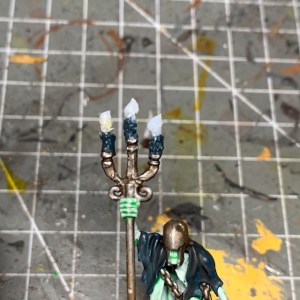
LEDCandles03

4. Continue to build-up layers of splash effect gel until you are happy with the flame shape.
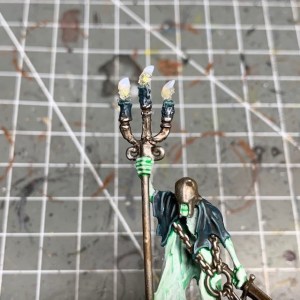
LEDCandles04

5. Once the final layer of splash gel has dried, coat each “flame” with Lahmian Medium as a basecoat, then apply two thick coats of Hexwraith Flame technical paint, waiting for each layer of paint to dry. The Hexwraith Flame acts as a filter, making the white light appear green. And yes I do mean thick coats, otherwise it won’t have any effect!
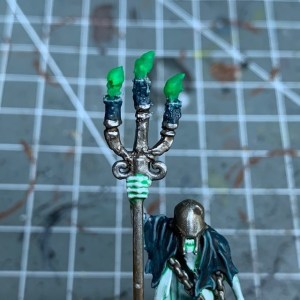
LEDCandles05

6. That’s all there is to it really. Just make sure you’re happy that the flames look green enough for your tastes when the LED is on. If not, apply as much Hexwraith Flame as required. Just make sure you don’t obscure the LED completely!

LEDCandles06

Painting

Just in case anyone is interested in the paint scheme I used, it’s closely based on the ‘Classic Style’ paint scheme shared for the Emerald Host in the December 2019 issue of White Dwarf. The ghostly ectoplasm is Grey Seer undercoat > 50:50 Hexwraith Flame:Lahmian Medium > thinned Ulthuan Grey > White Scar highlight.

With the bases, I wanted to give the impression of the ghosts being deep underground, perhaps in a crypt far below the Hollow Mountain (more on that another time). The recipe was Grey Seer undercoat > Basilicanum Grey contrast > Administratum Grey drybrush > White Scar drybrush.

I quite like the effect this creates, almost a ‘static’ or low light ‘night vision’ effect, like the only think you can see clearly is the glowing spectre as it drifts towards you, slowly reaching out a withered hand…

Dreadwarden04

More from the Tallowlands

The Tallowlands is a joint project by my gaming group, the Plastic Crack Rehab Clinic (PCRC) to create our own little narrative corner of the Mortal Realms. If you’d like to read more about the Tallowlands or see some of the other forces being created to inhabit it, you can check out the Tallowlands blog here.

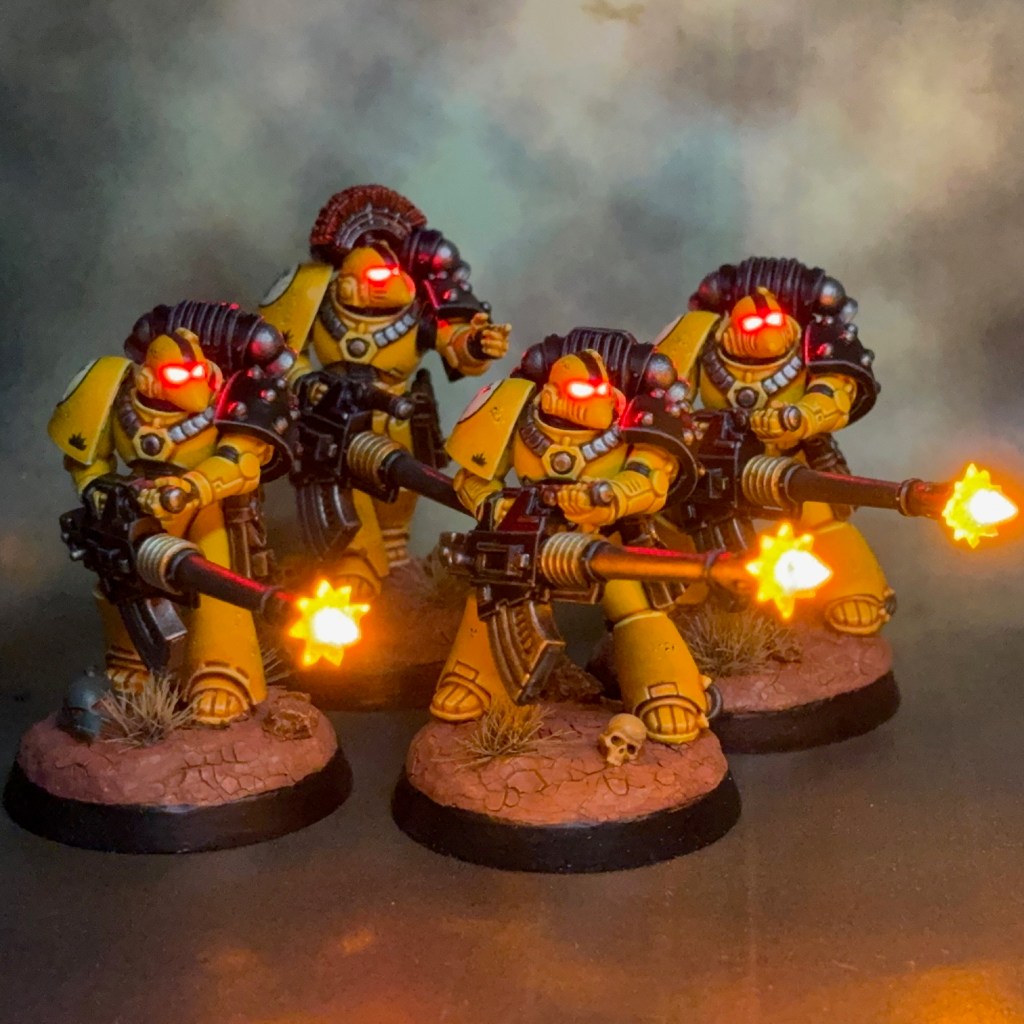
Darrakar and the Nightmare Lantern

Behold, mortals! Darrakar, Guardian of Souls is upon you! Fear his baleful Nightmare Lantern!

Darrakar01

Darrakar is one of the two special limited edition models that were released for a short time to celebrate the recent opening of 500th Games Workshop store. A friend picked him up as a present for me, and as it’s such an awesome model I had to bump him up to the front of the painting/LED queue!

As I discuss in my design tutorial, I always think that the best LED miniatures are like magic tricks. If someone can look at the miniature and it’s not immediately obvious how it’s done, then that produces the best reaction. But, like a magic trick, if it’s super-obvious then it’s less impressive. If you can see the card up the magician’s sleeve – or in this case the wires and battery – then it won’t garner much more than a shrug.

So how was Darrakar’s lantern done? Essentially the basic principles can be found in LED Eye Lens Tutorial, although in this case I was working with a ghostly lantern instead of a Space Marine helmet! The image below shows the lantern switched off so everything can be seen a little more clearly.

Darrakar04

The battery is in the base, as normal. The wires come up through a hole in the middle of the gravestone and then cling to the back of one of the wispy tails and from there run up into the torso. I didn’t try and drill the ethereal wisps. Instead, because they’re very thin wires, they’re glued to the back of the wisp and then further disguised with green stuff.

From there they run through the torso and up to the lantern arm. Darrakar’s original arm was too spindly to hide wires, so I essentially removed the arm and replaced it with the wires themselves. I then extended the sleeve of the shroud with green stuff to hide the wires – in this case the magician really did have something up his sleeve!

For the lantern, everything from the top of the flames downwards is a resin recast. I drilled a hole in this and inserted a green LED. I then cut away the handle of the lantern and made a new handle from the legs of the LED! These then connect to the wires just behind the hand.

So there we are, a little insight into the Guardian of Souls and his Nightmare Lantern. I’d encourage everyone to have a go at this themselves – the Nighthaunt model range are ripe for the use of ghostly green and blue LEDs!


Buy Me a Coffee at ko-fi.com

Necromancer with Lantern

Contrary to what the rest of my blog might suggest, I’m not just interested in Space Marines…

NecromancerNecromancer_Diorama

Here’s my Necromancer, Wilhelm Von Lichenfels, with LED lantern, for my growing Age of Sigmar Grand Alliance Death army. When complete this army will be half Deathrattle – led by the Necromancer and a Wight King – and half Flesheater Courts. I’ll show more of the army on here at a later date.