It’s that time of year again when people are talking about ‘New Year, New Army’ and drawing up their hobby plans for the months ahead, so I thought it would be fun to share some of the ideas I’m working on for 2026. I made a similar post last year, but of my four stated goals in 2025, the only one I fully achieved was completing the Silver Stars Kill Team! So this time I’m probably going to be a little more realistic with my aims.
Imperial Fists
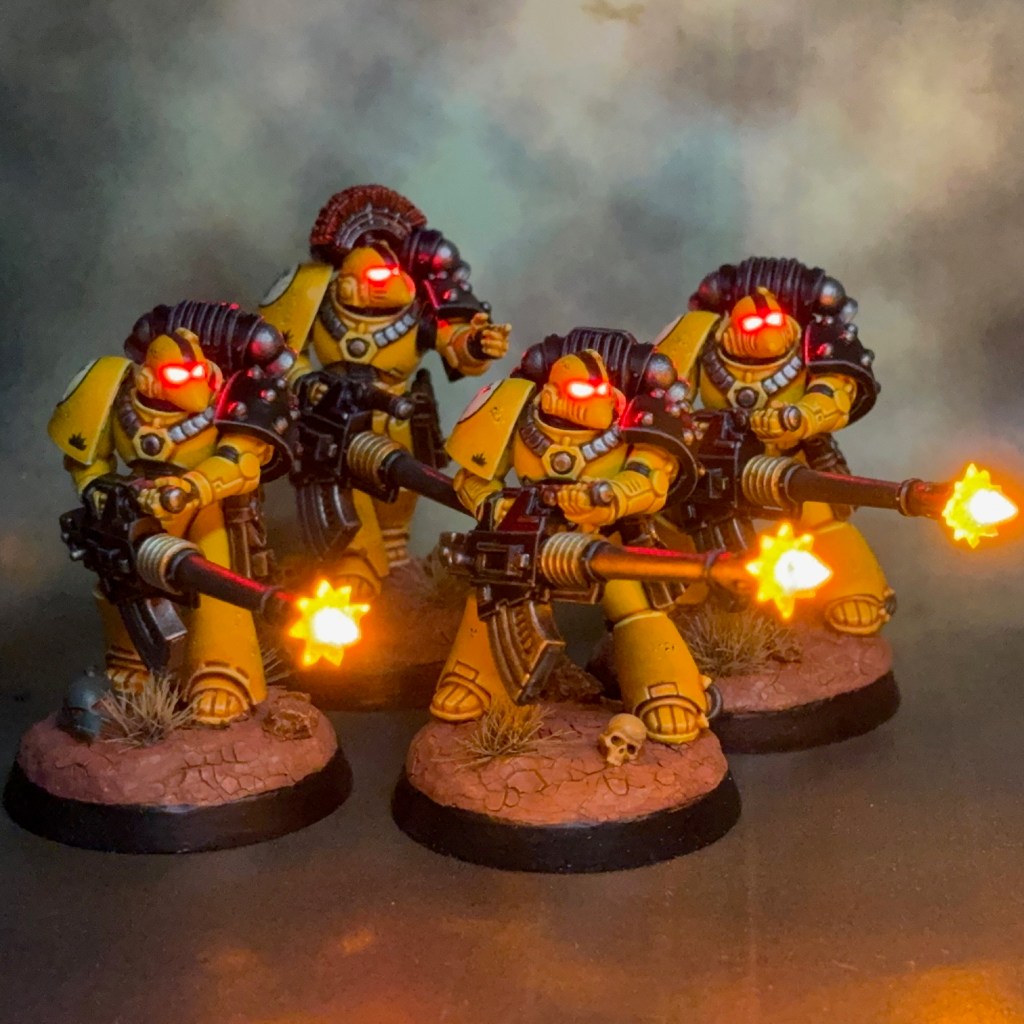
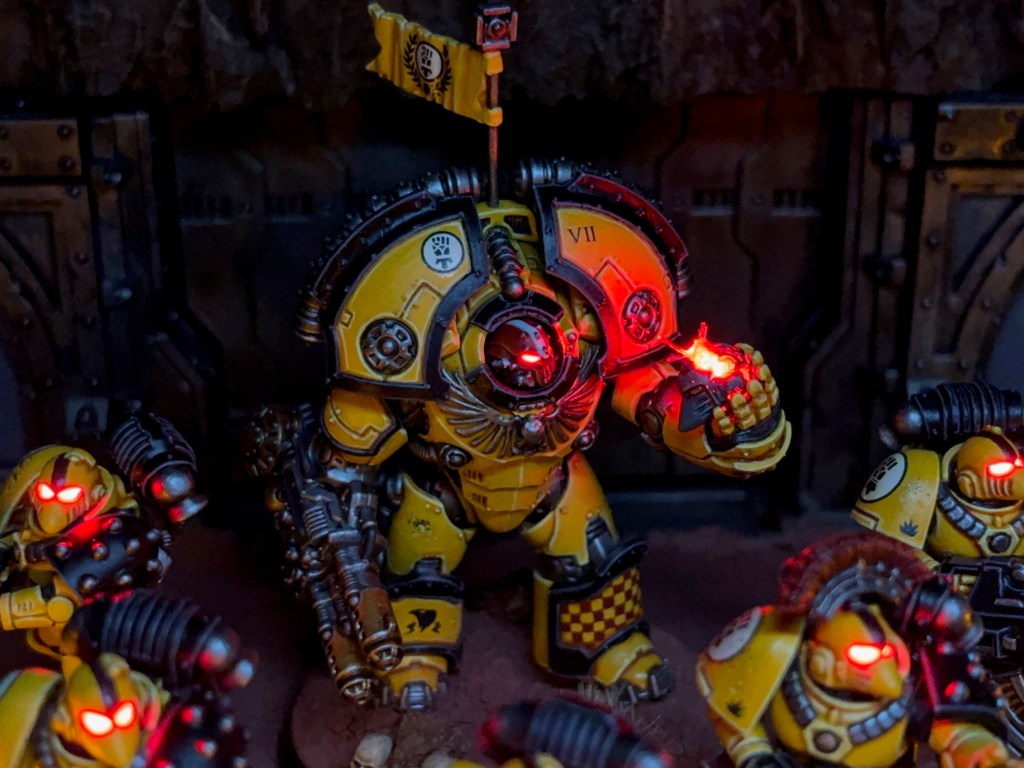
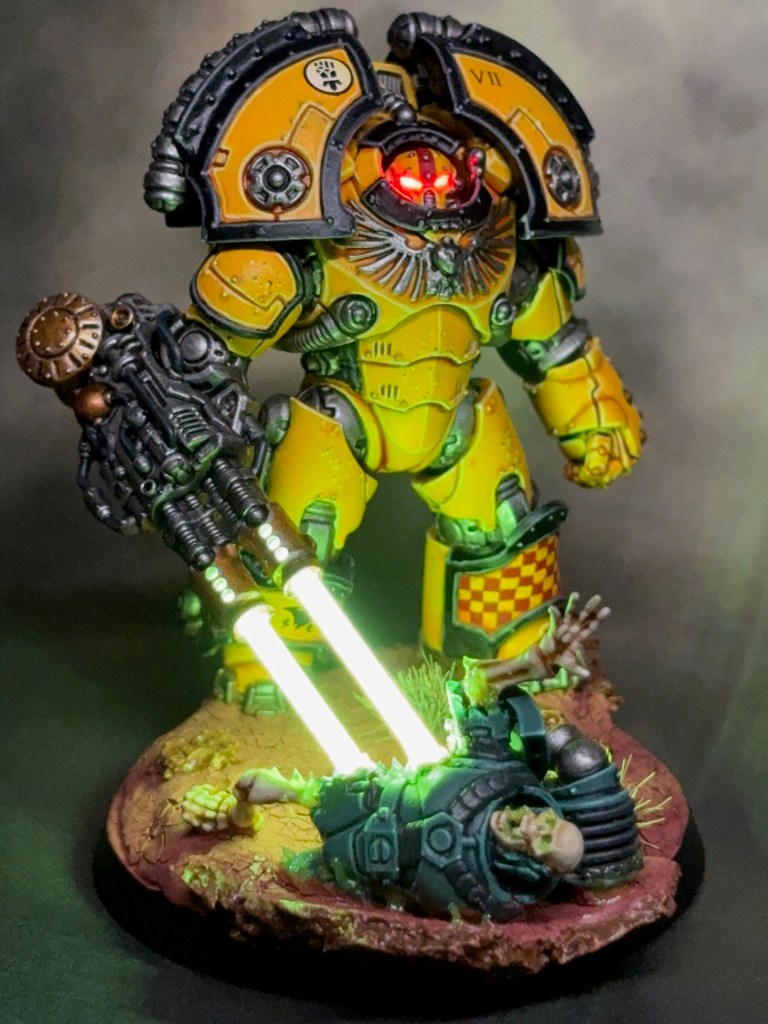
The Imperial Fists were my main hobby focus of the second half of last year, and will be the main focus of this year too. I’d like to complete a solid 1500 points in total by the end of the year, hopefully in time for Armies on Parade 2026. With many units already partially assembled on my workbench, this doesn’t seem too unrealistic for the next 9-10 months.
Undead
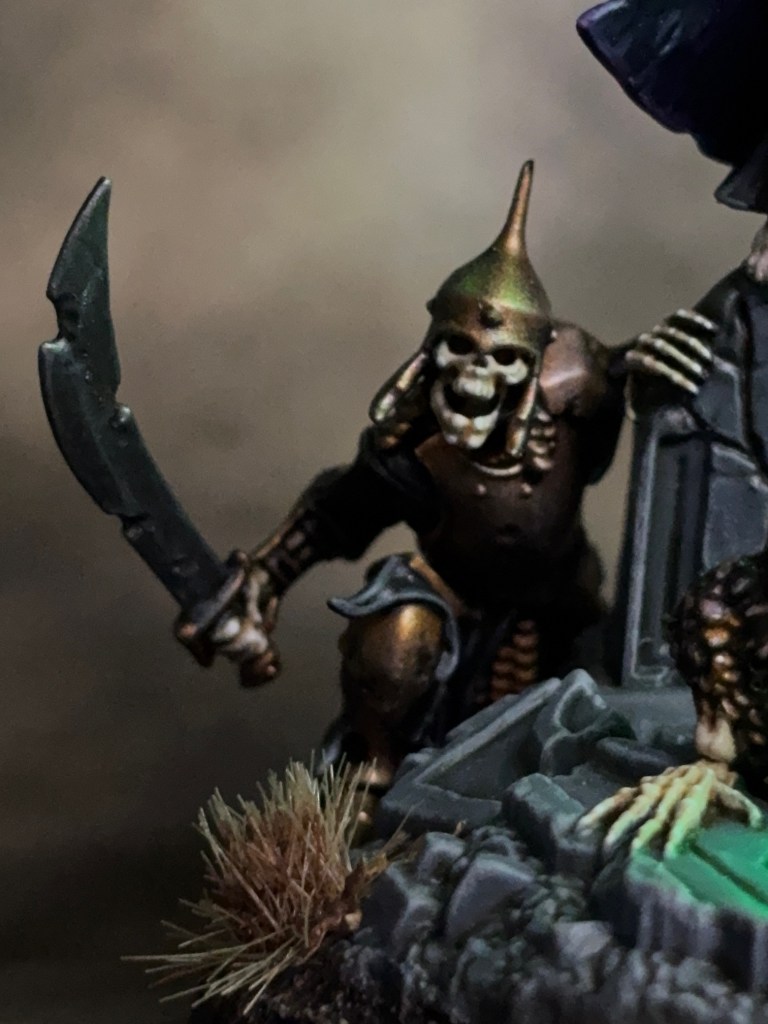
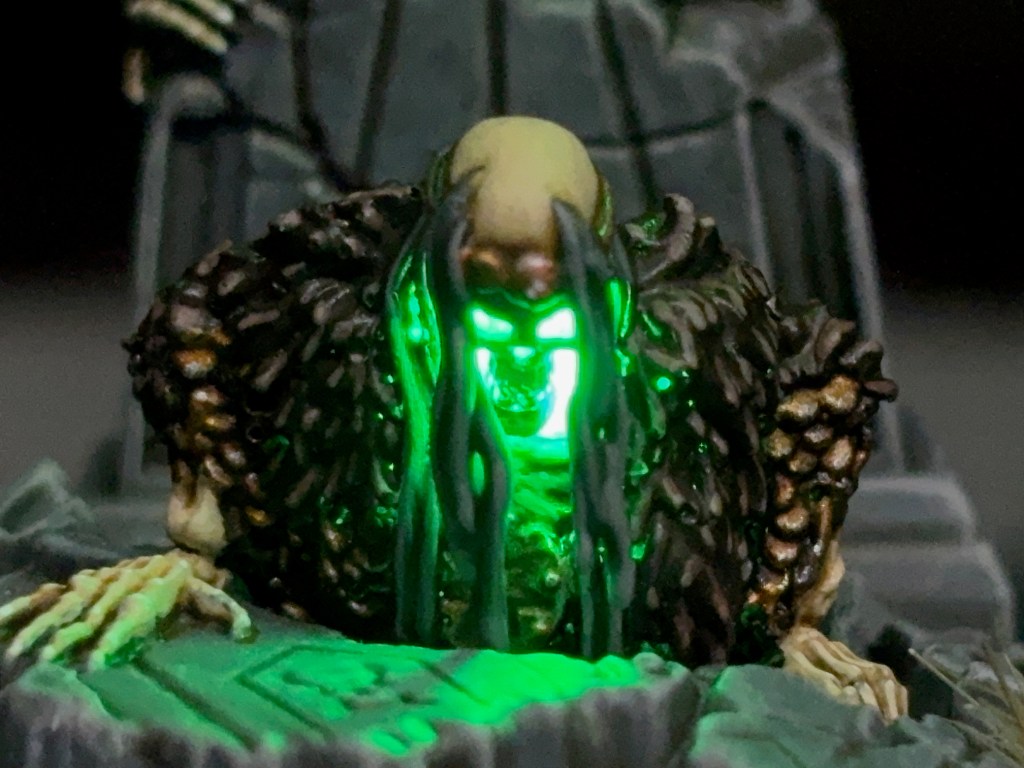
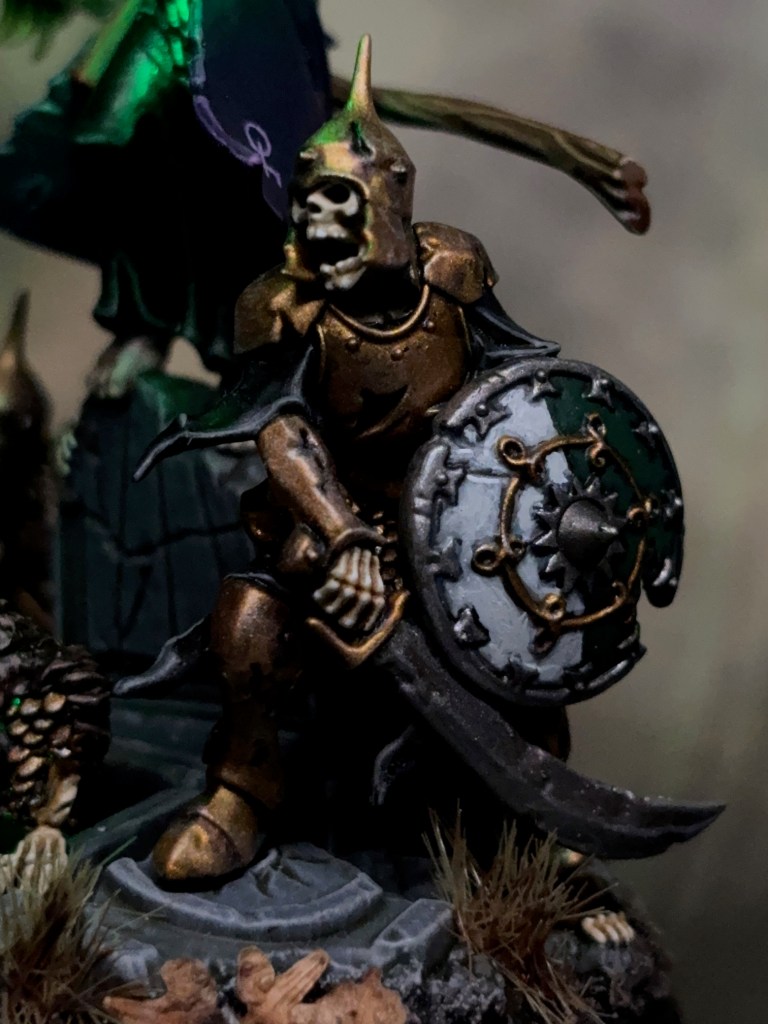
There has been a recent surge of interest in Warhammer fantasy and Age of Sigmar in my gaming group. That, combined with the fun I had recently painting The Summons, has led to me giving in to temptation and buying the Deathrattle Tomb Host Spearhead. Expect to see some more skeletons over the coming months!
Stretch Goals – Traitors, Tyranids & Tutorials!
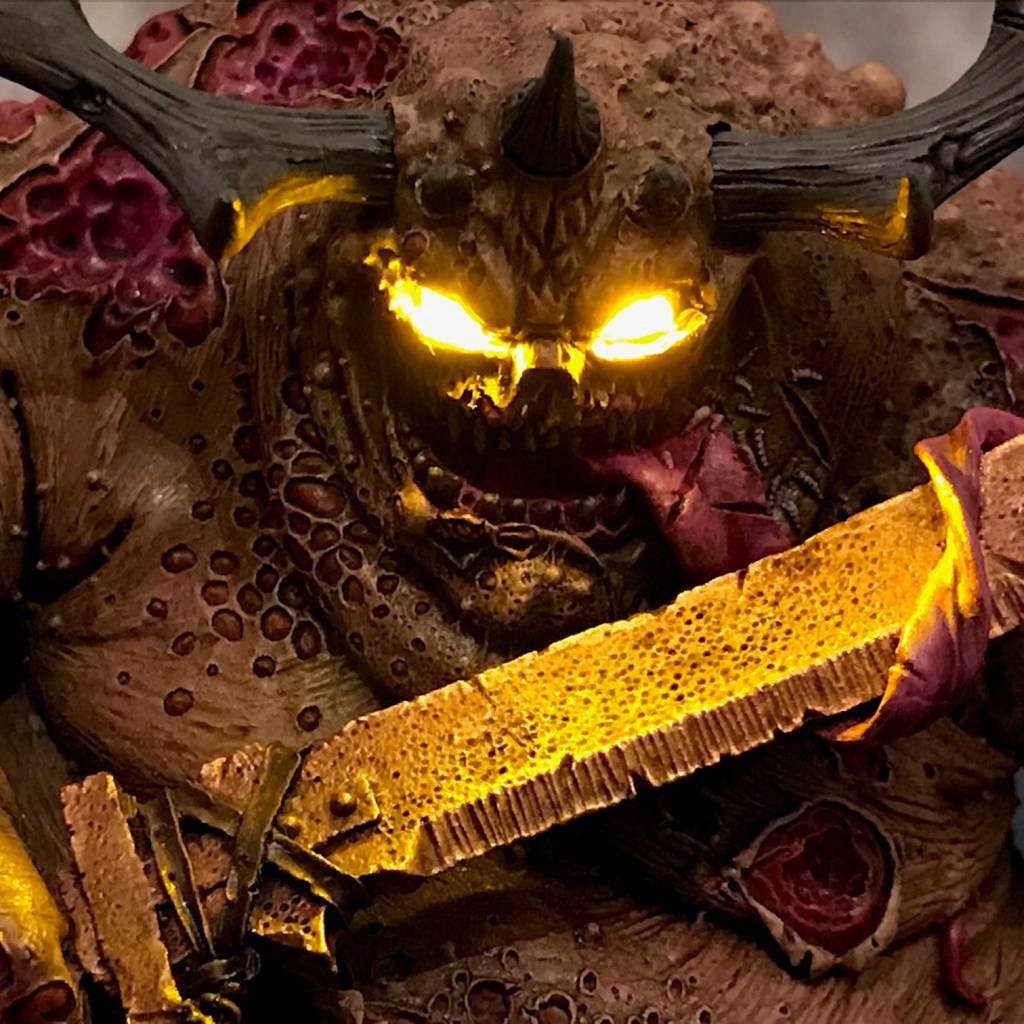
The Imperial Fists and Undead will be my main hobby focus of the year, but I also have some ‘stretch goals’ if I get ahead of schedule and have time to spare. I’d like to make some Age of Darkness Traitors – perhaps a combination of Death Guard and Daemons of the Ruinstorm. I’d also like to paint some more Tyranids for my very slow-burn Hive Fleet Cerberus project. Finally, some of my LED miniature tutorials are several years old now and could do with an update and refresh.
So those are my hobby plans for the year! I’m sure there will also be a few one-off miniatures and other hobby tangents. I hope you all have plenty of plans in mind for fun hobby too! As ever, thanks very much for reading, and please remember you can keep up to date on my hobby progress in 2026 by following me on Instagram, Threads, Bluesky and Mastodon.
It’s that time of year when hobby plans are drawn up for the months ahead, so I thought it would be a good idea to share my plans for 2025. This is not only for my benefit, but also so we can all have a chuckle when I fail to meet the ambitious targets by the end of the year!
Tyranids
In January 2024 I introduced Hive Fleet Cerberus as my next big project. That plan didn’t quite survive contact with the enemy (the enemy in this case being hobby time management), but I’m keen to press on with the Tyranids as a high priority this year. The new Warrior Bioform Onslaught detachment has particularly inspired me!
Kruleboyz
The Kruleboyz have been a back burner project for almost as long as the Tyranids, but I’d like to give them more focus and try and get a painted and playable Kruleboyz Spearhead on the table and some Age of Sigmar games under my belt. The new Orruk Battletome is also imminent at time of writing, which seems like a good time to jump in.
Kill Team
I need to get up-to-speed with the new edition of Kill Team, which includes buying the new rules and finishing my Silver Stars Astartes Kill Team.
Flesh Eaters
I plan to “finish” the Flesh Eaters this year – although can you ever really finish an army? – with a few more units, vehicles and characters. I also hope to finish the year with one final Armies on Parade entry for this army.
New Year, New Challenge
The Warhammer Community team have thrown down the gauntlet with the New Year, New Challenge bingo card. Taking part and posting your progress online gets you entered into a voucher prize draw, and completing a row can earn you a pin badge in Warhammer stores. I’ll be giving this a go!
So those are my hobby plans for the year! I also have a few other minor projects and one-off miniatures on the workbench which I’ll be posting soon. I hope you all have plenty of plans in mind for fun hobby too. As ever, thanks very much for reading, and please remember you can also find me sharing my work on Instagram, Threads, Bluesky and Mastodon.
They get in your mind. They make you see things. They make you do things!
Astra Militarum after-action report on Hive Fleet Cerberus (suppressed)
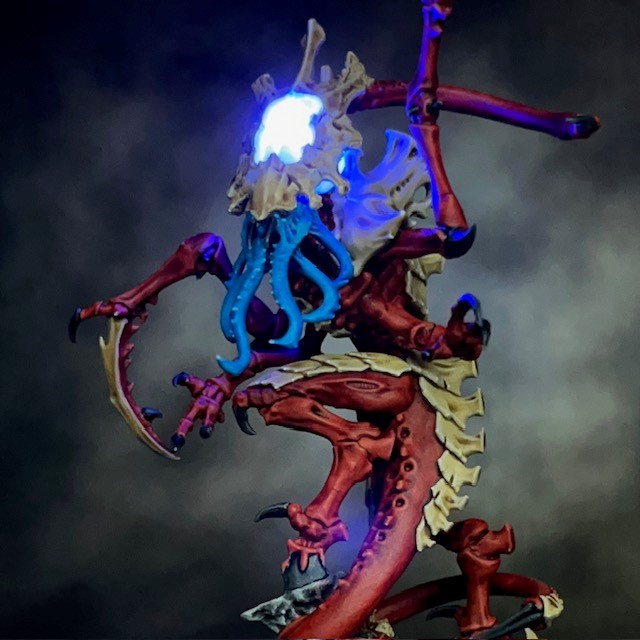
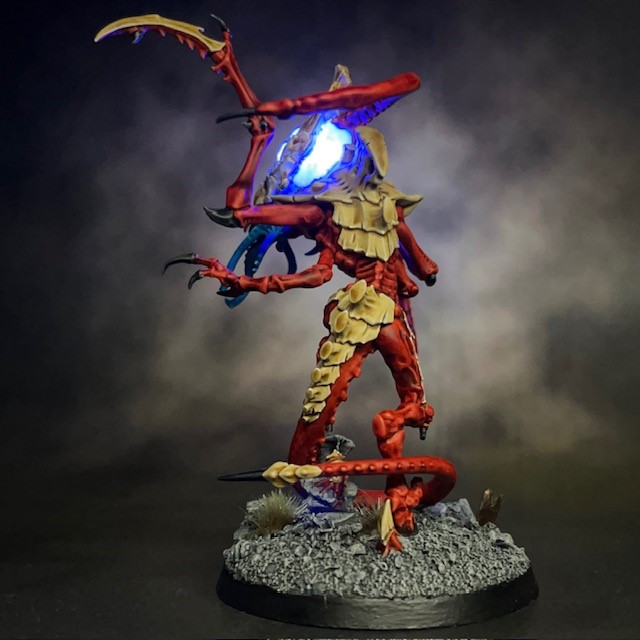
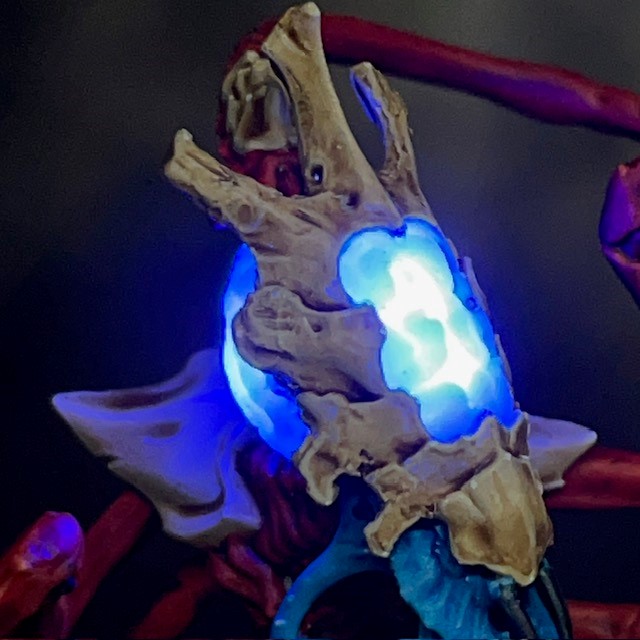
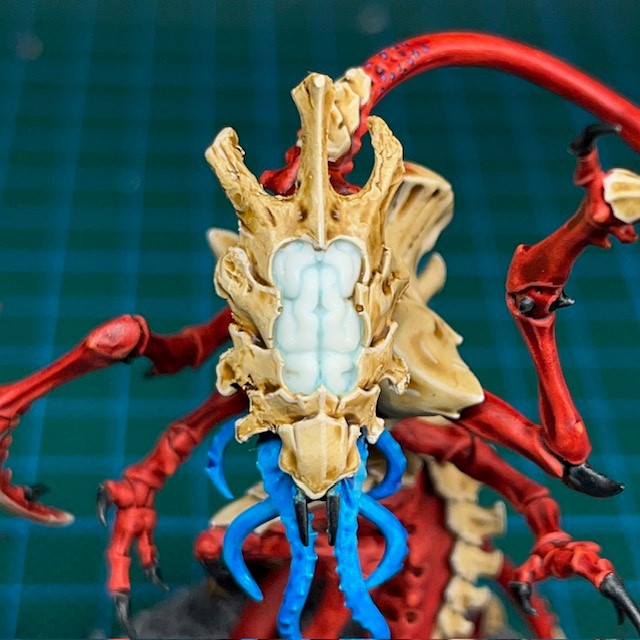
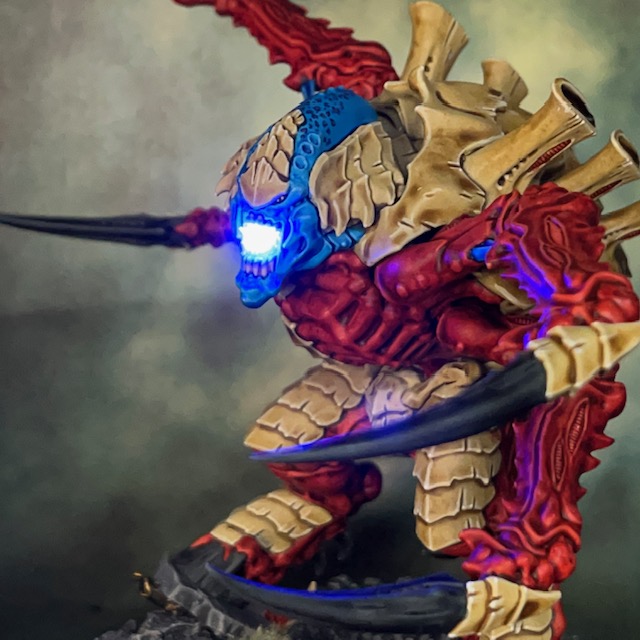
Work continues on Tyranid Hive Fleet Cerberus this week with the Neurolictor. The Neurolictor is a psychic infiltrator, able to project a neural disruption field that causes terror in its prey. I knew as soon as I saw this model that I was going to have to give it a glowing LED brain!
Modelling
I bought this model on the day it was released in September last year. I planned to start working on it immediately, but the more I thought about how I would illuminate the model, the more complex I realised that task was, which put me off making a start. In the end I didn’t begin work until January. This project has taken around four weeks of hobby time, compared to about two weeks for a standard space marine.
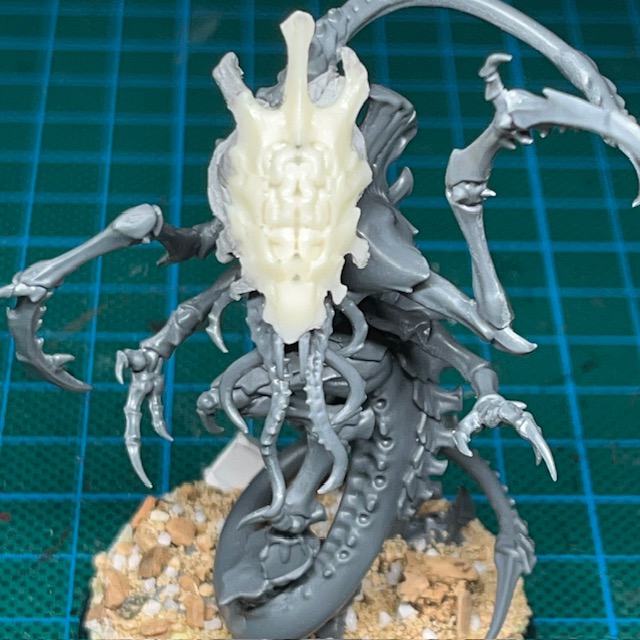
If you’d like to replicate this model yourself, then the techniques set out in my LED Psyker tutorial are probably the best starting point. I began by recasting the two parts of the head that I wanted to illuminate – the front and the rear of the brain – in polyurethane resin, as per my Resin Casting tutorial. You can see the initial test casts in the left-hand picture below.
This miniature uses four 3V Blue 0805 SMD chip LEDs, each in series with their supplied resistor. Two of the LEDs were evenly spaced under the forehead to illuminate the top and bottom of the front brain. The other two were then used to illuminate each half of the rear brain.
This miniature is powered by two CR2032 coin cell batteries in the base. Two of the LEDs are connected in parallel with each battery. In theory I could have run all four LEDs from a single battery, but as there was room in the base I decided to use two batteries. This will give the miniature more longevity on the battlefield between battery changes.
Painting
When painting the Neurolictor I used the Hive Fleet Cerberus recipe described in this post. For this colour scheme, simple weapons like claws are black, but more advanced bioweapons are blue. In the case of the Neurolictor, I decided the ‘advanced’ description applied to the feeder tendrils. This also helps them stand out against the rest of the miniature.
When it came to painting the resin brain, I wanted to give it a little texture and depth without dulling the light that was passing through. You can see the bare resin in the left-hand picture above. I played around with a few techniques, but in the end I gave the resin two very diluted glazes of Soulstone Blue, the end result of which you can see in the middle picture. Next I painted the brain with two very diluted glazes of Lothern Blue. You can see the final result in the right-hand picture above. This gives the brain area of the miniature some depth and interest even when the LED is switched off.
That’s all for today, I hope you’ve enjoyed seeing how this Neurolictor was built. I’ll be back with more LED miniatures soon. Thanks very much for reading, and please remember you can also find me sharing my work on Instagram, Threads, Twitter/X, Bluesky and Mastodon.
We’re in ‘New Year, New Army’ season, so now is the perfect time to introduce my next big project – the Tyranids of Hive Fleet Cerberus! I already have a Tyranid army that has been plaguing the galaxy for decades. In fact, they’re the only army I own that has – in some form or another – consistently seen the tabletop in every single edition of Warhammer 40,000. They took part in the global Ichar IV campaign back in the 1990s, so it has always been my ‘headcanon’ that Hive Fleet Cerberus was a splinter of Hive Fleet Kraken, skulking off to terrorise the Eastern Fringe in the aftermath of that epic conflict. The name Cerberus is intended to allude to the “multi headed” threat of the splinter fleets.
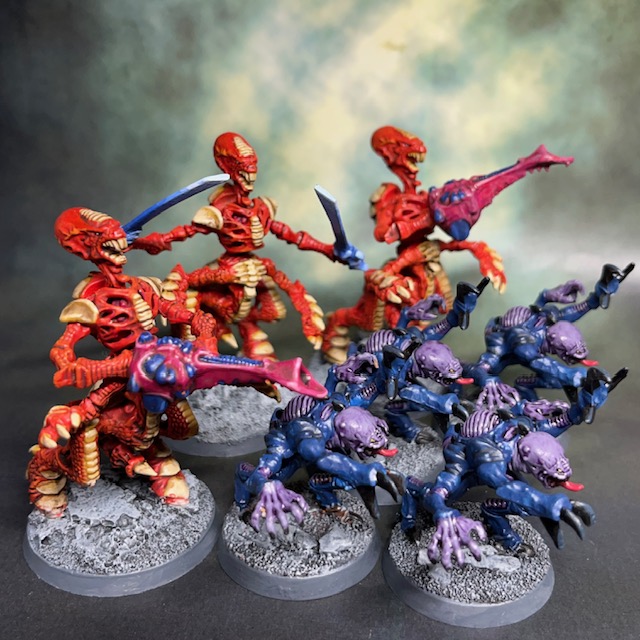
This army has soldiered on with many of the original Tyranid models for many years now, as shown above. These were among the first xenos models I ever purchased, and they will always hold a special place in my nostalgic gamer’s heart. But the arrival of the Leviathan boxed set last summer convinced me that it was time for a long-overdue revamp of this force. I will be adding the Hive Fleet Cerberus tag to my blog, if you want to follow search for any posts relating to this project as it progresses.
If you’re a regular reader, you may also recall I made a ‘soft start’ to this project back in July 2023 with my Leviathan Screamer Killer.
Paint Palette
When it came to picking the colours for this revamp project I wanted to stick fairly close to my original Hive Fleet Cerberus scheme, which was also the “official” Games Workshop scheme back in the day. So this meant red for flesh and bone for carapace. After some thought on what colour bioweapons should be I eventually settled on blue. This forms a triadic colour harmony with the red and the yellowish tint of the bone. I find this free Colour Wheel website a useful reference for choosing complementary colours schemes for painting projects.
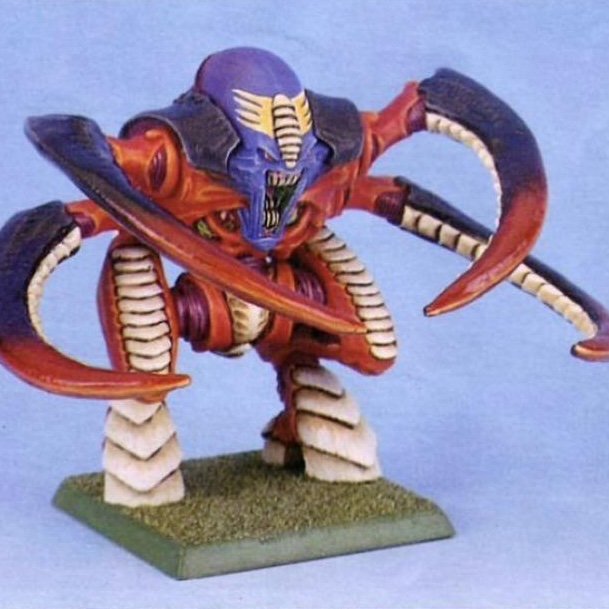
You can see some examples below of the classic Tyranid colour scheme from the 1990s. This is my main source of inspiration for the colours of Hive Fleet Cerberus.
When I list my painting recipes on this blog, I’m not only recording them for those of you who are interested in using them, but also as a reminder for myself. Below are the paint recipes for Hive Fleet Cerberus, and I’m sure I’ll be referring to this post frequently throughout the project. All paints listed are from the Citadel range and are applied over an undercoat of Citadel Wraithbone spray.
Red Flesh
Contrast Blood Angels Red
Wild Rider Red highlight
Troll Slayer orange dot highlight on sharp points
Bone Carapace
Contrast Skeleton Horde
Screaming Skull highlight
Skull White dot highlight on sharp points
Blue Bioweapons
Contrast Talassar Blue
Lothern Blue highlight
Blue Horror dot highlight on sharp points
Black Claws
Contrast Black Templar
Eshin Grey highlight
Dawnstone dot highlight on sharp points
Head Mottling
Naggaroth Night irregular dot
Genestealer Purple layer inside dot
Yellow Eyes
Averland Sunset base coat
Agrax Earthshade shade
Yriel Yellow layer
Abaddon Black pupils
Urban Ruins Base
Mechanicus Standard Grey base coat on rocks
Warplock Bronze base coat on metal debris
Contrast Skeleton Horde on skulls
Nuln Oil shade over rocks and metal
Dawnstone drybrush on rocks
Administratum Grey drybrush on rocks
White Scar drybrush on rocks
Retributor Armour highlight on metal debris
Screaming Skull highlight on skulls
Skull White dot highlight on skulls
Citadel Middenland Tufts (used sparingly)
Abaddon Black rim
When I’m painting a display miniature or a small model count army, then I prefer the traditional painting methods of base coat, shade, multiple highlights and glazes. But if I was to try and apply that to the Tyranids I don’t think my sanity would hold out (although that would be fitting)! So I’ve decided that Contrast paints and one or two highlights are the best compromise between speed and acceptable quality. You can see the first test Termagant above, and I’m pleased with the results.
LED Palette
Since my Crimson Fists project I tend to specify a limited LED colour palette for new armies. This is to ensure they don’t look like multi-coloured Christmas decorations when the force is fully assembled on the tabletop. Hive Fleet Cerberus will use the following limited LED colour palette:
Blue for bio plasma, psychic weapons and psychic abilities.
Yellow for bullet impacts and fire.
I expect to use less LEDs in this project than in my space marine armies. My first rule of LED miniature design philosophy is “follow the art”. What this means is that I won’t put effects like LED muzzle flares on bio weapons that launch their projectiles through muscle spasms rather than gunpowder, as that wouldn’t make sense. Pyrovores on the other hand…
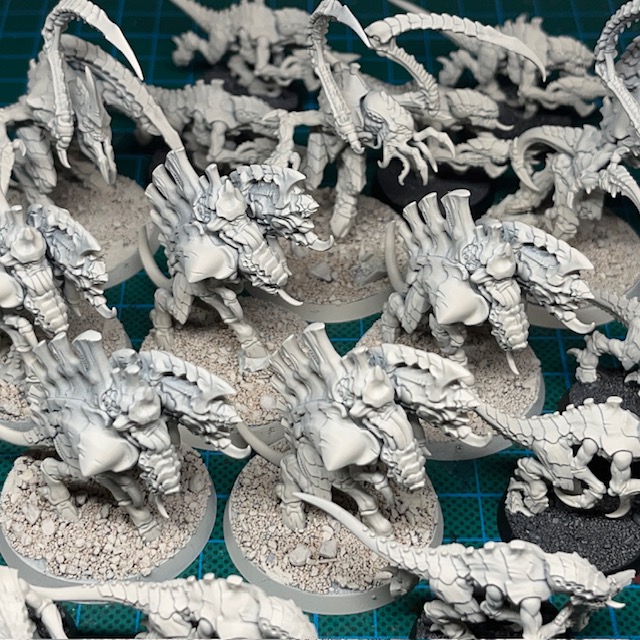
My painting desk is swarming with Tyranids!
Army List
Below is the initial 1000 point army list that I’m aiming for. I hope to have this done by the summer so I can start playing some small games with this force. This list uses the ‘Invasion Fleet’ detachment.
Hive Tyrant
Heavy venom cannon
Monstrous bonesword and lash whip
Warlord
Enchancement: Perfectly adapted
Termagants x 10
Termagants x 10
Termagants x 10
Barbgaunts x 5
Neurolictor
Screamer Killer
Tyranid Warriors x 3
Melee bio-weapons
Von Ryan’s Leapers x 3
Zoanthropes x 3
Once the initial 1000 points are finished, what will be next? Tyrant Guard and a Biovore will be high priority, as I think they are awesome models. I’ll probably also need more fire power in the form of either Hive Guard, Exocrine or a Tyrannofex. A second Screamer Killer would be great too, as would some Lictors! My army list choice is always based on what I think looks cool, not what makes any tactical sense. I just can’t bring myself to paint miniature I’m not enthused about.
Like all my armies, I’m sure Hive Fleet Cerberus will be a slow-burn project. The Crimson Fists took about three years to complete, and the Flesh Eaters are also coming into their third year. So don’t expect to see a new unit of Tyranids every week! Having said that, here’s a preview of a another Tyranid miniature that is currently on my workbench…
What Else This Year?
It won’t just be Tyranids all the way down in 2024, I’ll also be continuing to expand my Flesh Eaters, painting a small Age of Sigmar force, plus working on a couple of one-off display projects.
That’s all for today, I hope you’ve enjoyed this introduction to my Tyranid project. Thanks very much for reading, and please remember you can also find me sharing my work on Instagram, Threads, Twitter/X, Bluesky and Mastodon.
Today we’re looking at the first model that I’ve assembled and painted from the 10th Edition Warhammer 40,000 ‘Leviathan’ box – the Screamer Killer!
Hive Fleet Cerberus
My personal Tyranid swarm, Hive Fleet Cerberus, has been plaguing the galaxy for decades. In fact, they’re the only army I own that has – in some form or another – consistently seen the tabletop in every single edition of Warhammer 40,000. They took part in the global Ichar IV campaign back in the 1990s, so it has always been my ‘headcanon’ that Hive Fleet Cerberus was a splinter of Hive Fleet Kraken, skulking off to terrorise the Eastern Fringe in the aftermath of that epic conflict.
This army has soldiered on with some of the original Tyranid models for many years now (as shown below). These were among the first xenos models I ever purchased, and they will always hold a special place in my nostalgic gamer’s heart. For the last couple of new Warhammer 40,00 edition release boxes, I’ve sold the non-Marine models, but the arrival of Leviathan convinced me to not only keep them, but begin the long-overdue revamp of my Tyranid army. As the classic Screamer Killer was always one of my favourites, I decided this is where I should start the project.
Modelling
The most prominent feature of my Leviathan Screamer Killer is the LED bioplasma effect. This was achieved using the techniques described in my Simple LED Muzzle Flare tutorial, only with a blue 0805 chip LED instead of the yellow one listed in the tutorial. Additionally, the acrylic gel was given a blue glaze instead of the yellow.
These days I like to pick a limited colour palette of LEDs for army projects, just so the finished force does not look like a bunch of Christmas decorations with a huge mish-mash of different colours and lights. For Hive Fleet Cerberus I’ve settled on blue for energy weapons and psychic powers. I’m not sure what other colours I’ll use yet, but I’ll decide that as the need arises.
Painting
It’s often said that it’s best to start a new army paint scheme with the rank and file models, and not the leaders or large centrepieces, but as mentioned above I just couldn’t resist starting with the Screamer Killer. When it came to picking the colours for this revamp project I wanted to stick fairly close to the original scheme, so that meant red for flesh and bone for carapace. After some thought on what colour bioweapons should be, and considering both green and a beige ‘flesh’ colour, I eventually settled on blue. This forms a triadic colour harmony with the red and the yellowish tint of the bone. As an aside, I find this free Colour Wheel website a useful reference for choosing complementary colours schemes for painting projects.
You can see some examples below of classic Tyranids from Games Workshop publications painted in a red, yellow, and blue scheme. This colour combination definitely has a pedigree!
I decided to paint the Screamer Killer’s face blue for a number of reasons. Firstly, it was traditionally painted a different colour to the rest of the flesh and carapace on the classic model, so I felt that should be the case here as well. Secondly, as mentioned above, I’d settled on blue for bioweapons, and for this Tyranid, their face is the weapon! I added the purple mottling to the top of its head to provide some visual interest for what is otherwise a large, flat area.
I also made the sinews on the arms blue, as you may have noticed. This was because they felt distinct from the surrounding flesh, and in need of picking out in another colour. Again, as the claws are weapons, the blue seemed appropriate. Also, it adds some visual interest to what is otherwise a very large area of solid red when the model is viewed directly from the front.
When I list my painting recipes on this blog, I’m not only recording them for those of you who are interested in using them, but also as a reminder for myself! Below are the paint recipes for Hive Fleet Cerberus, and I’m sure I’ll be referring to this post frequently as the project progresses. All paints listed are from the Citadel range and are applied over an undercoat of Citadel Wraithbone spray.
Red Flesh
Contrast Blood Angels Red
Wild Rider Red highlight
Troll Slayer orange dot highlight on sharp points
Bone Armour
Contrast Skeleton Horde
Screaming Skull highlight
Skull White dot highlight on sharp points
Blue Bioweapons
Contrast Talassar Blue
Lothern Blue highlight
Blue Horror dot highlight on sharp points
Black Claws
Contrast Black Templar
Eshin Grey highlight
Dawnstone dot highlight on sharp points
Purple Mottling
Naggaroth Night irregular dot
Genestealer Purple layer inside dot
Yellow Eyes
Averland Sunset base coat
Agrax Earthshade shade
Yriel Yellow layer
Abaddon Black pupils
Urban Base
Mechanicus Standard Grey base coat on rocks
Warplock Bronze base coat on metal debris
Contrast Skeleton Horde on skulls
Nuln Oil shade all over
Dawnstone drybrush on rocks
Administratum Grey drybrush on rocks
White Scar drybrush on rocks
Retributor Armour highlight on metal debris
Screaming Skull highlight on skulls
Skull White dot highlight on skulls
Citadel Middenland Tufts
If you’re after tabletop ready models quickly, then I don’t think you can beat Contrast and one or two highlights as the best compromise between speed and acceptable quality. For projects with fewer models, like my Flesh Eaters space marines, then I do prefer traditional painting methods. But when you have to get a load of models done, especially highly textured models like Tyranids, then I just don’t have the hobby time these days to paint them in the traditional way.
That’s it for today, I hope you all found that interesting. Please check back soon for more miniatures from the Leviathan boxed set. As always, thanks very much for reading, and please don’t forget you can also follow my work on social media at Twitter, Mastodon and Instagram.
















 Chris Buxey Paints