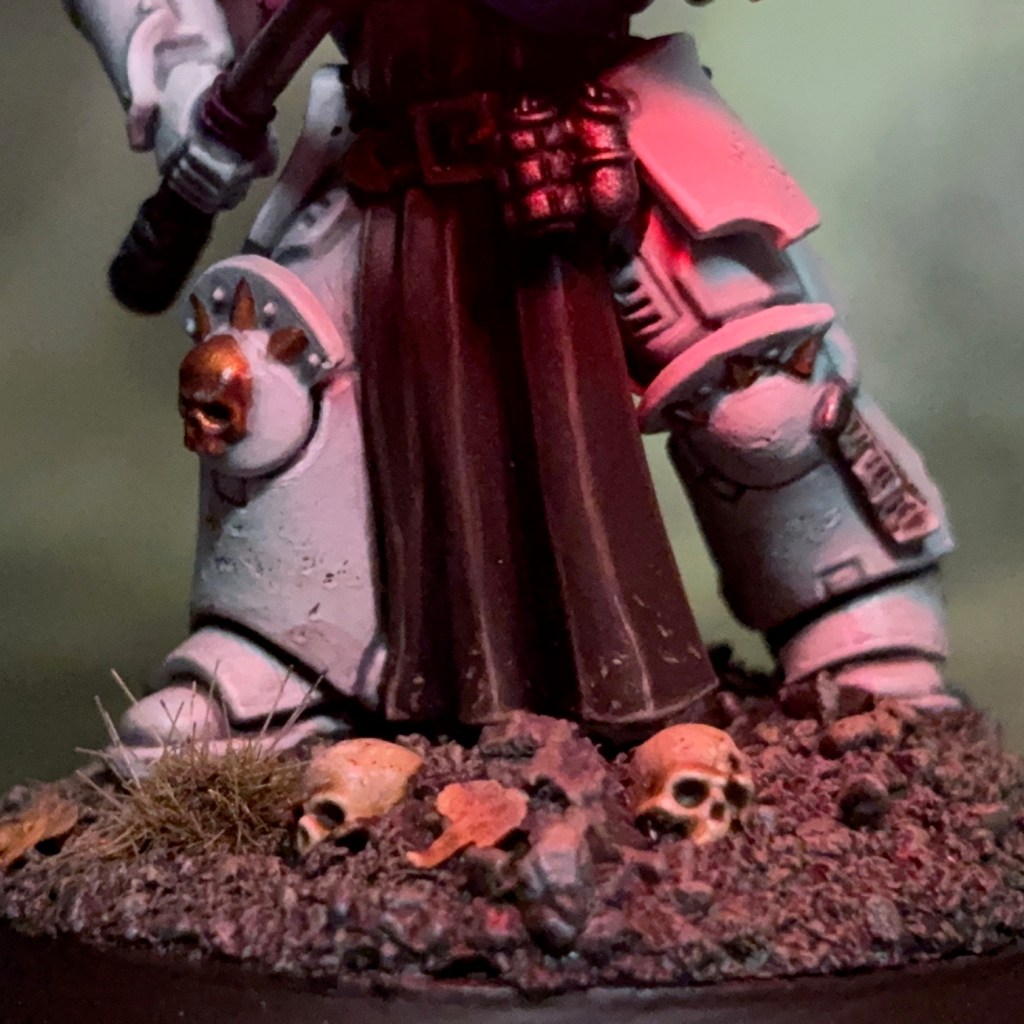
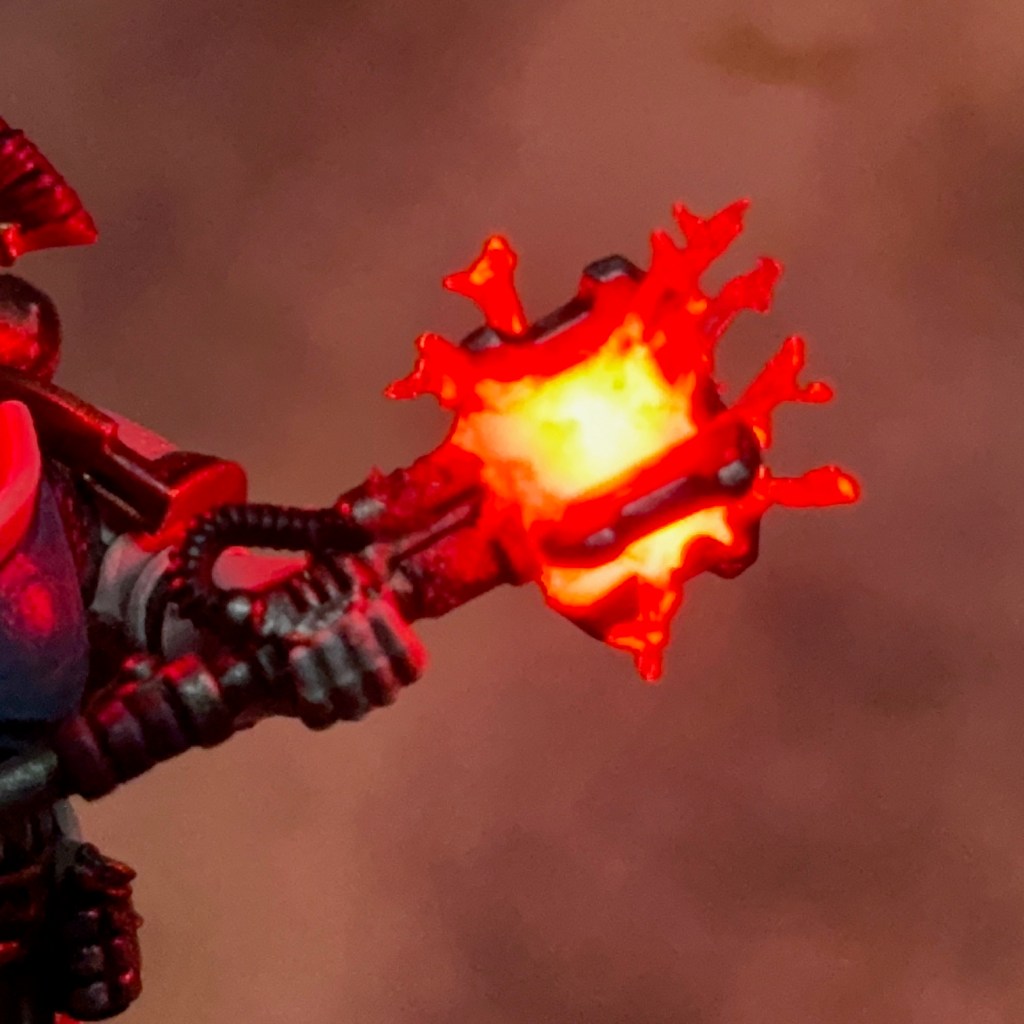
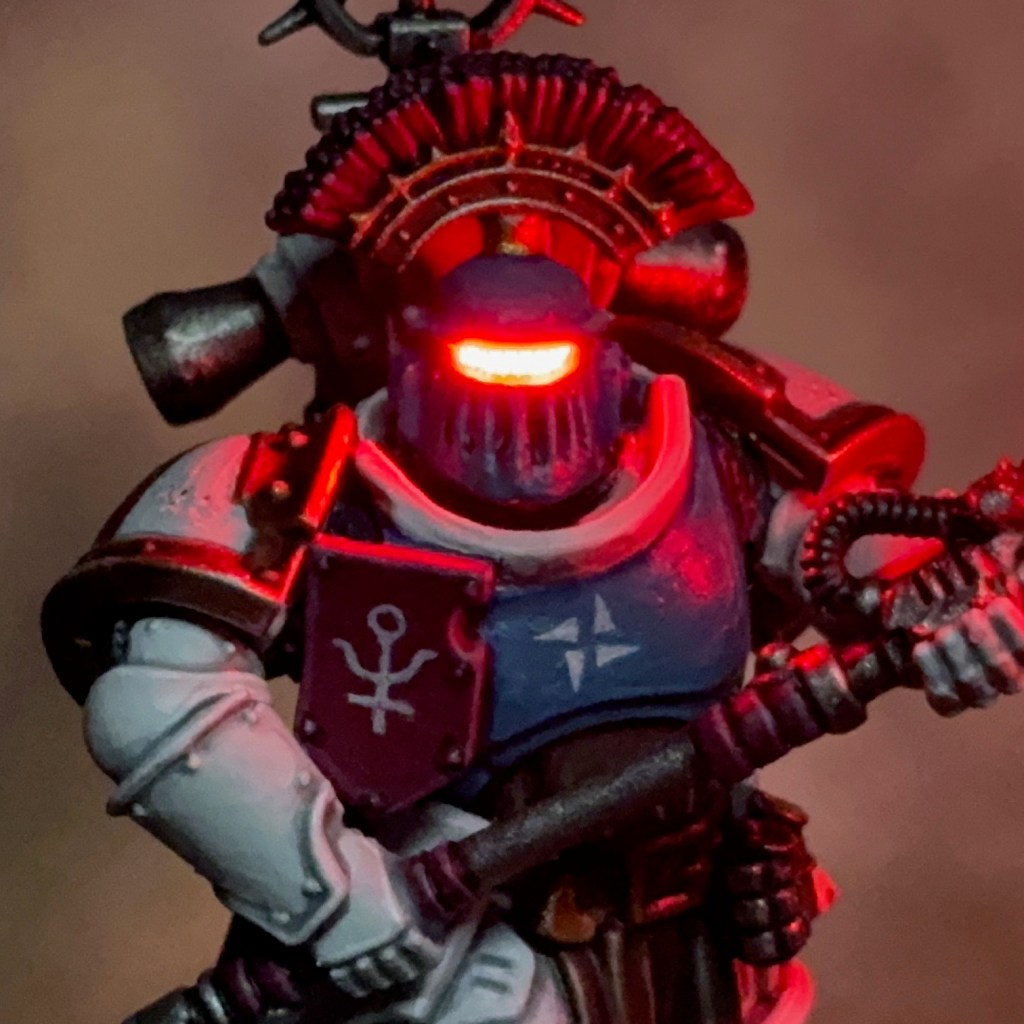
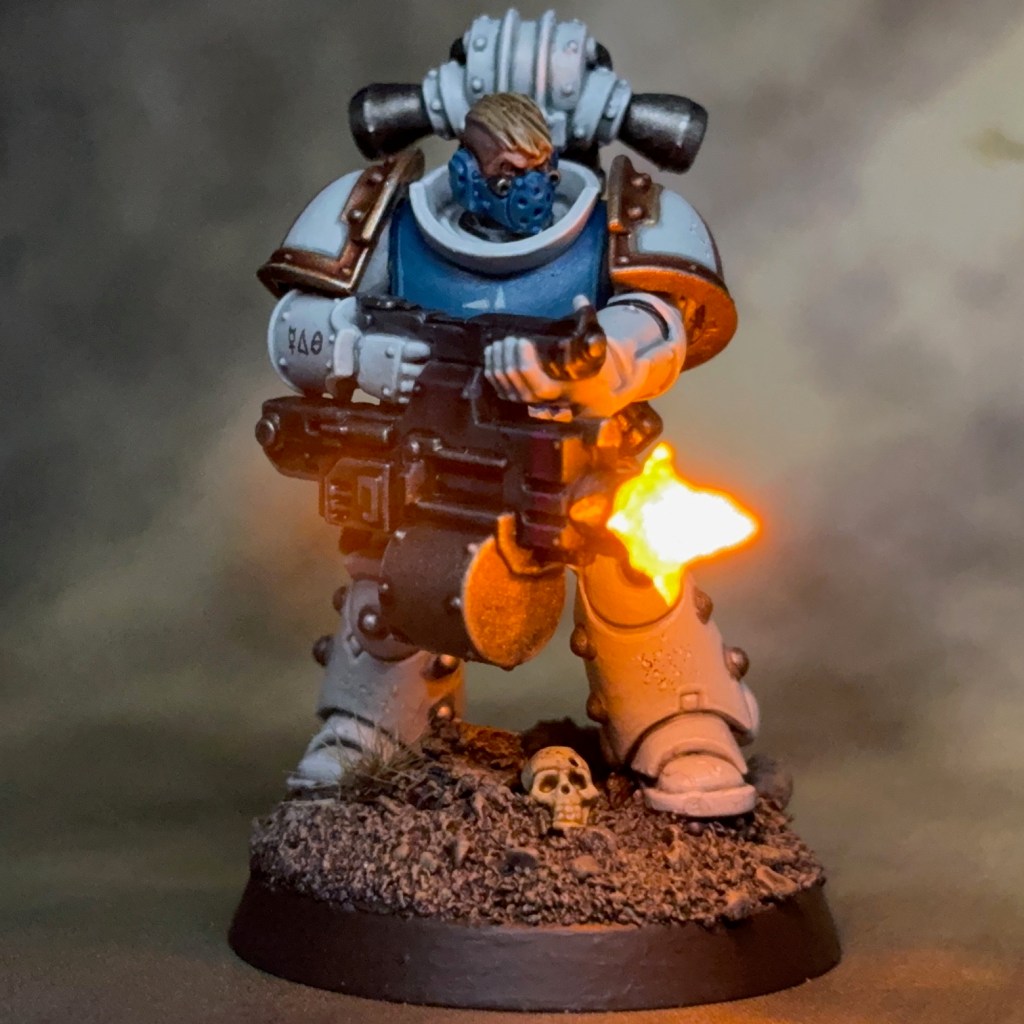
Lieutenant Titus on WarhammerTV

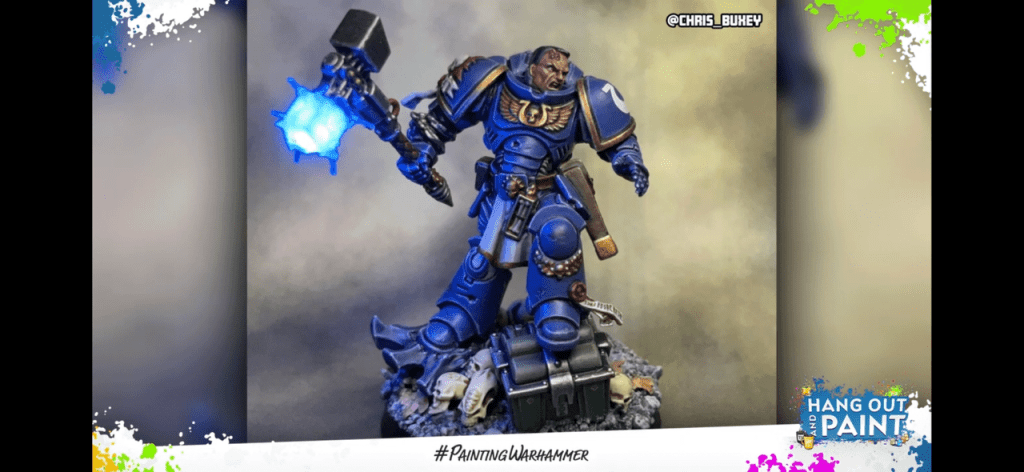
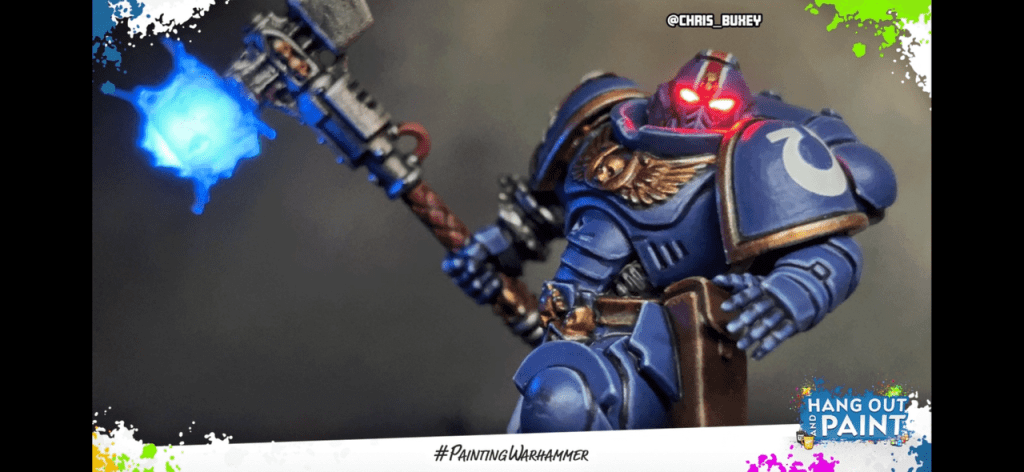
Yesterday evening I was lucky enough to have one of my models make it onto the Warhammer TV Twitch channel again!

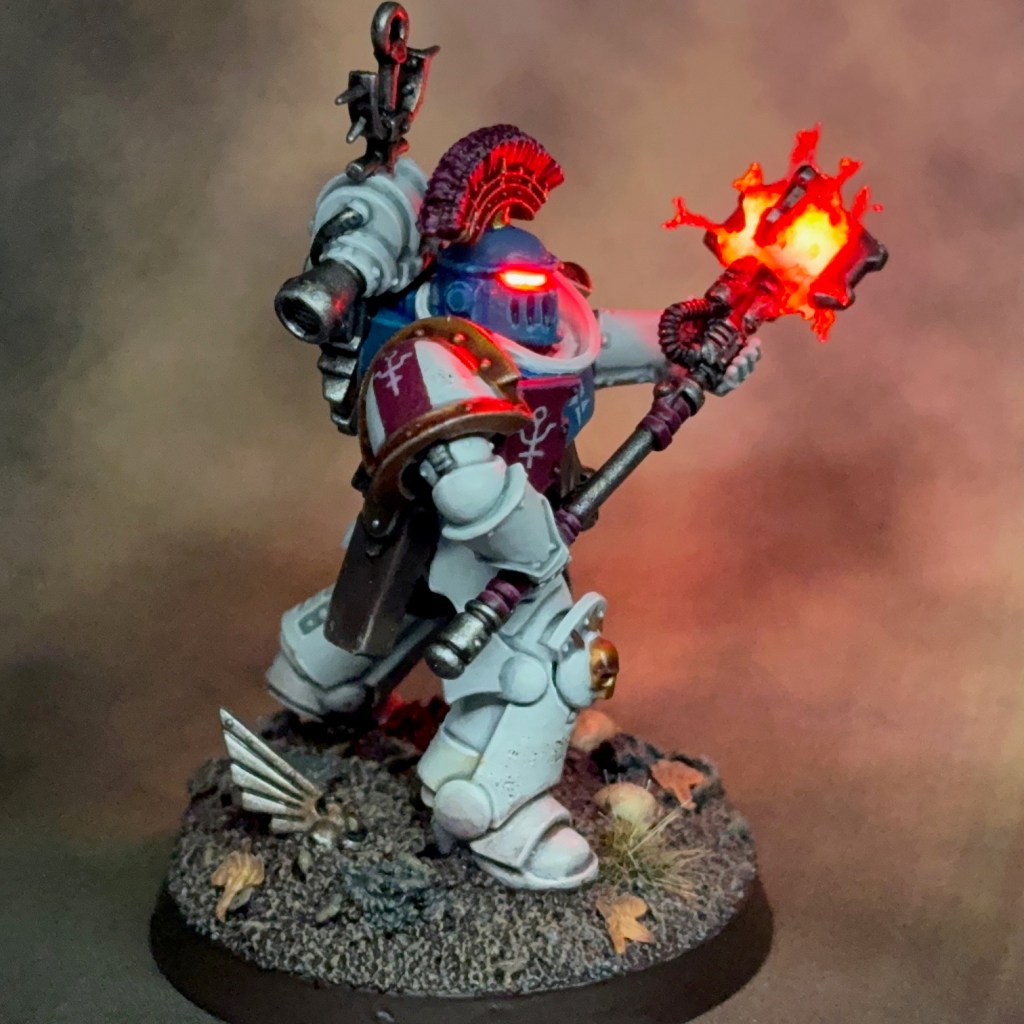
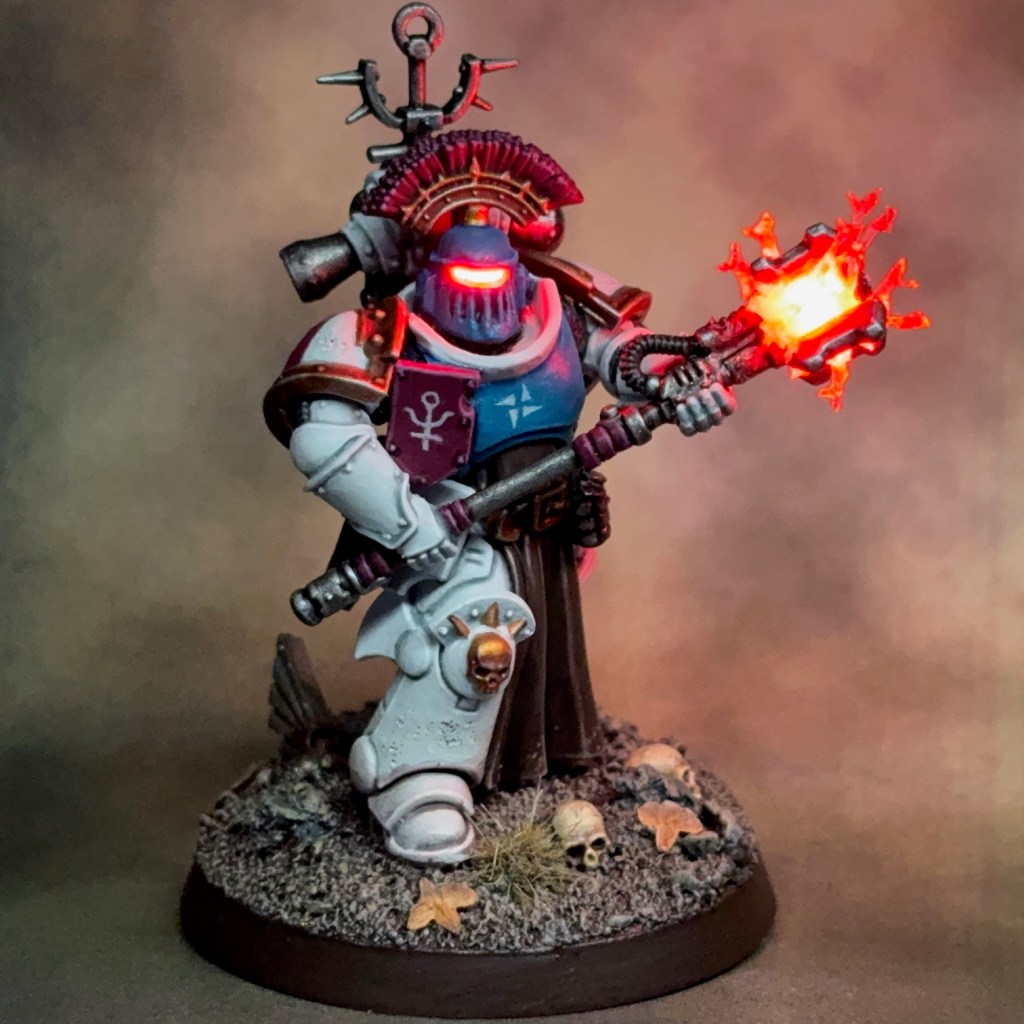
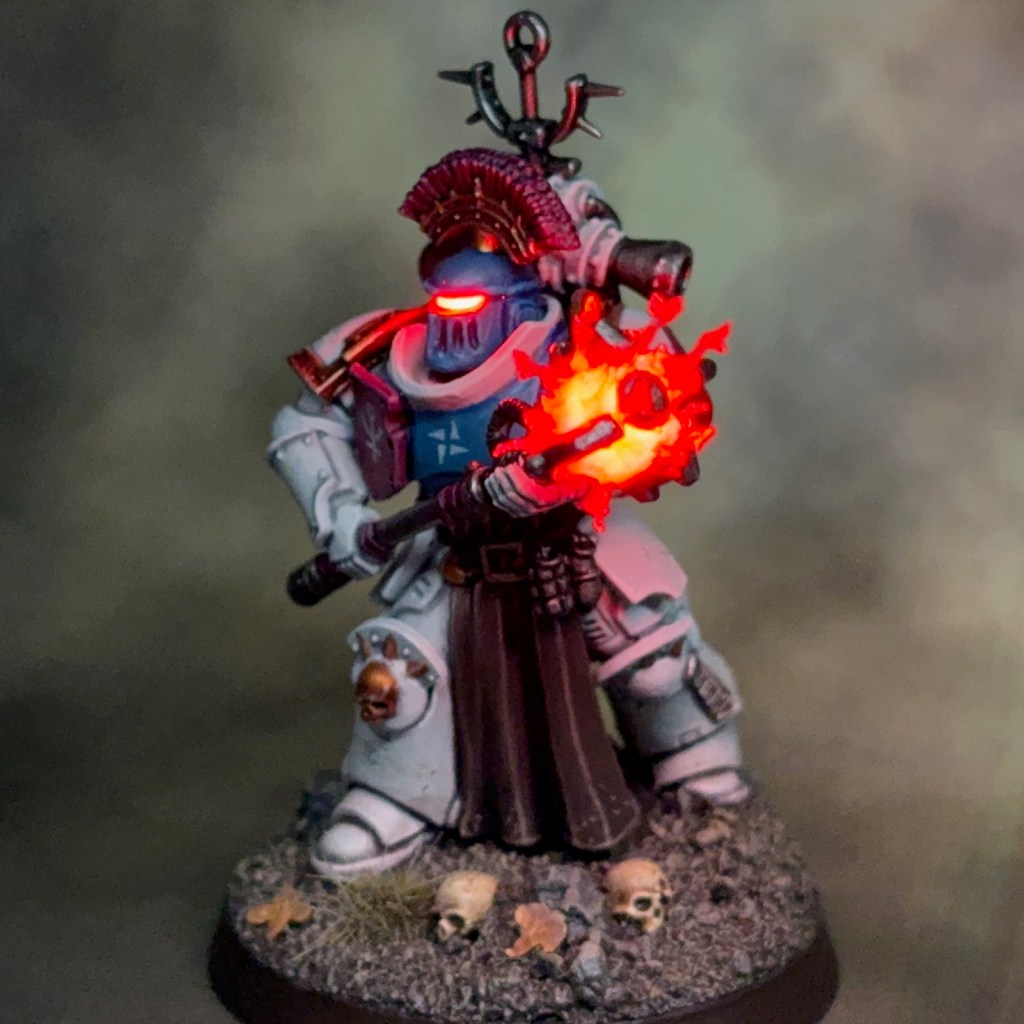
Lieutenant Titus featured alongside the work of other hobbyists on yesterday’s ‘Hang Out and Hobby – March for Macragge 2025’ episode on Warhammer TV (the Friday 4th April episode, at around the 1 hour 36 minute and 20 seconds mark, if anyone would like to see it).

It’s always an honour to have had my work exhibited in this way, and a big thank you to Simon, Nick, and the rest of the Warhammer Community Team for their kind words about this miniature! 

Imperial Fists Apothecary Biologis

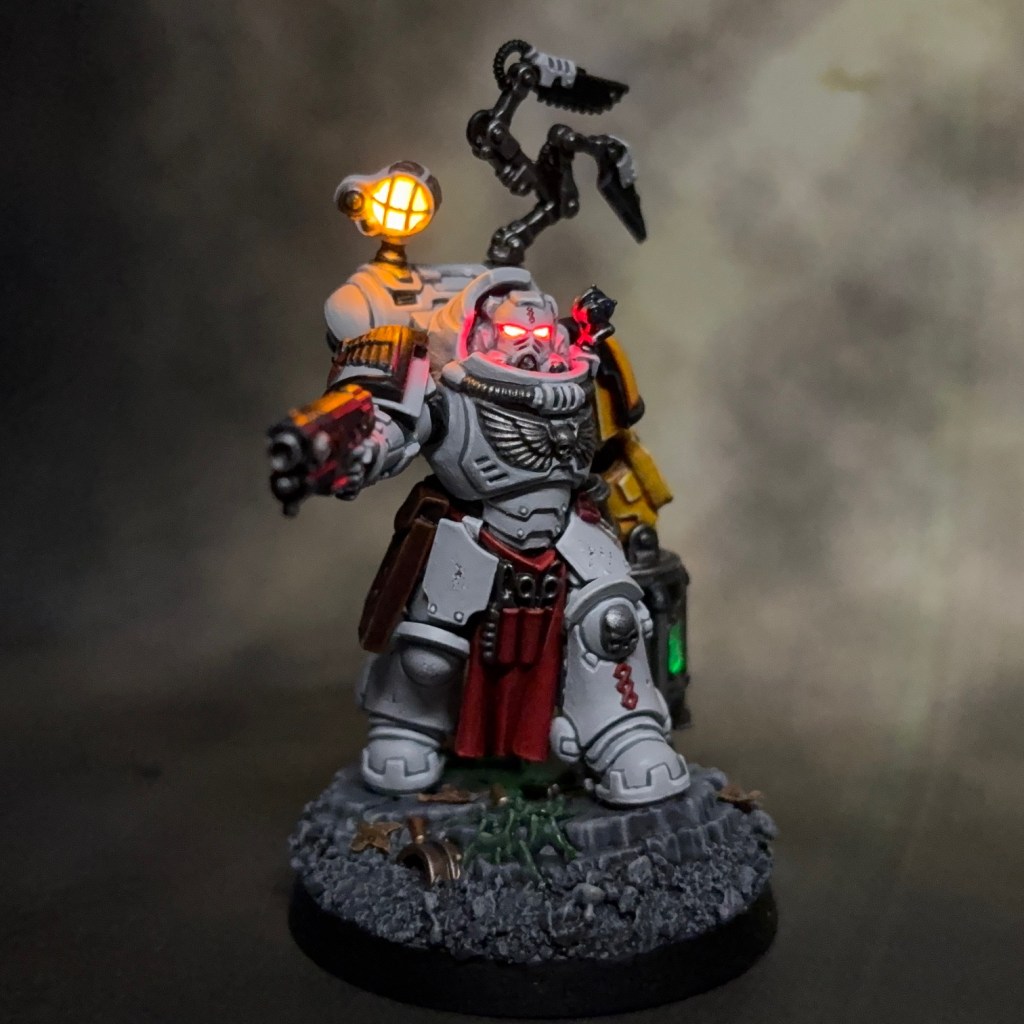
This week I’m showcasing a very special project – an Apothecary Biologis of the Imperial Fists. I am donating this miniature to The Apothecarion project, a fundraising effort for a charity that supports survivors of childhood cancer. Members of the online Warhammer community are donating Apothecary miniatures, and anyone can buy tickets to enter the raffle for a chance to win one of four ‘reliquary’ display cases full of donated miniatures. If you enter this raffle then this is your chance to not only own this miniature, but also raise money to a great cause!

Modelling

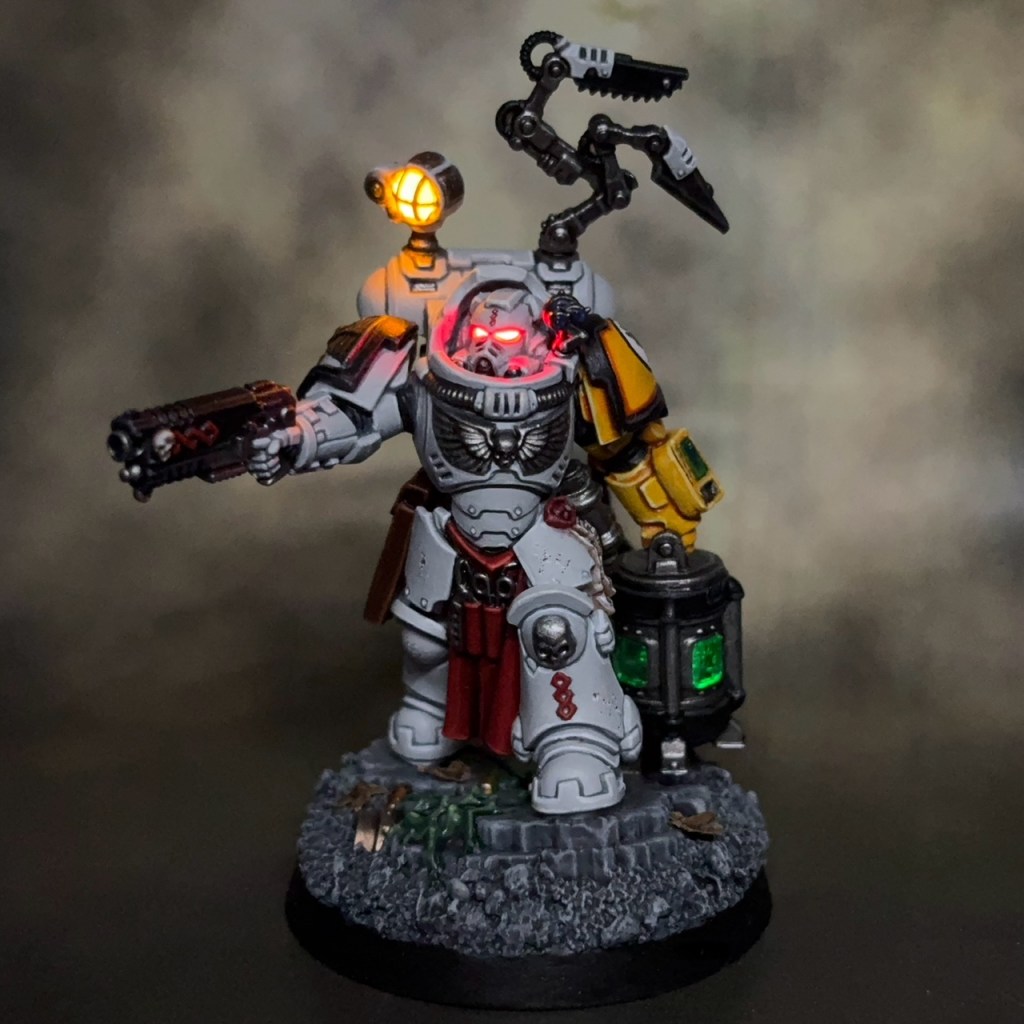
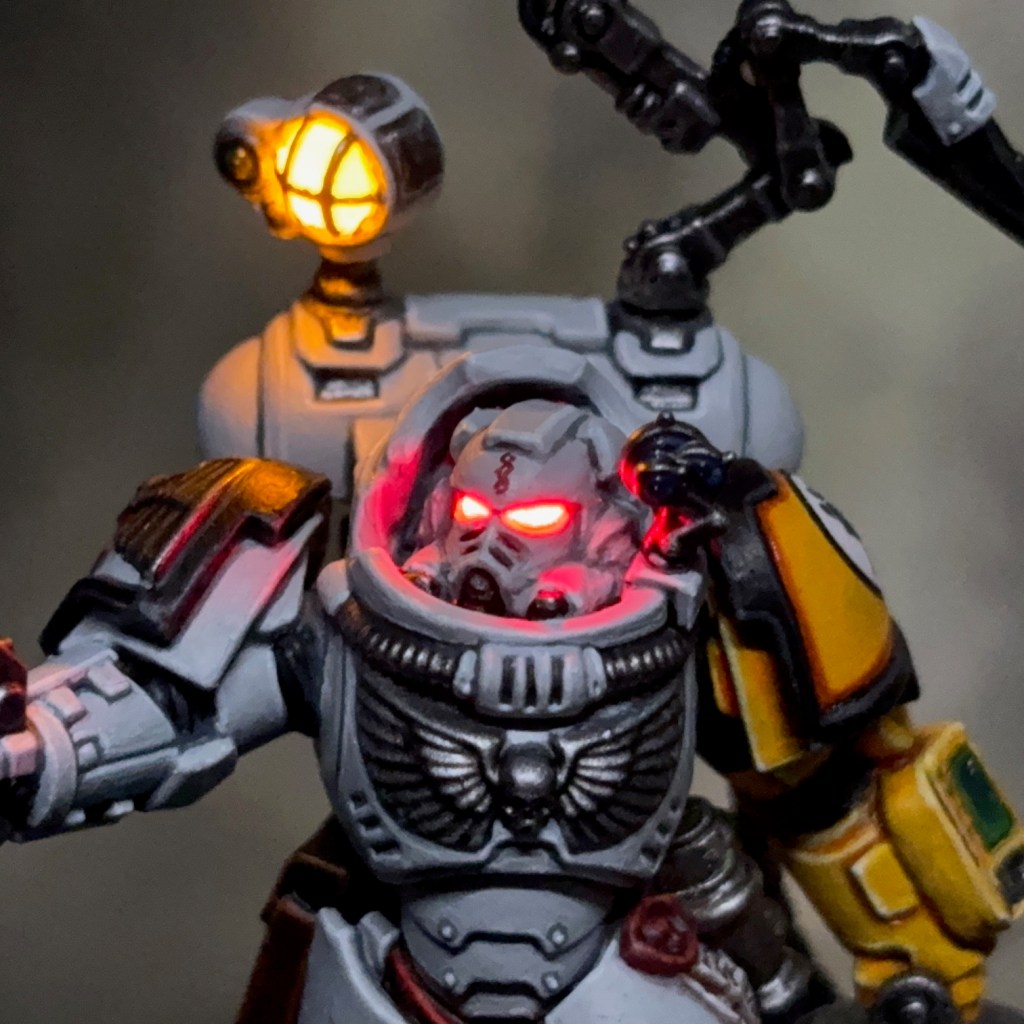
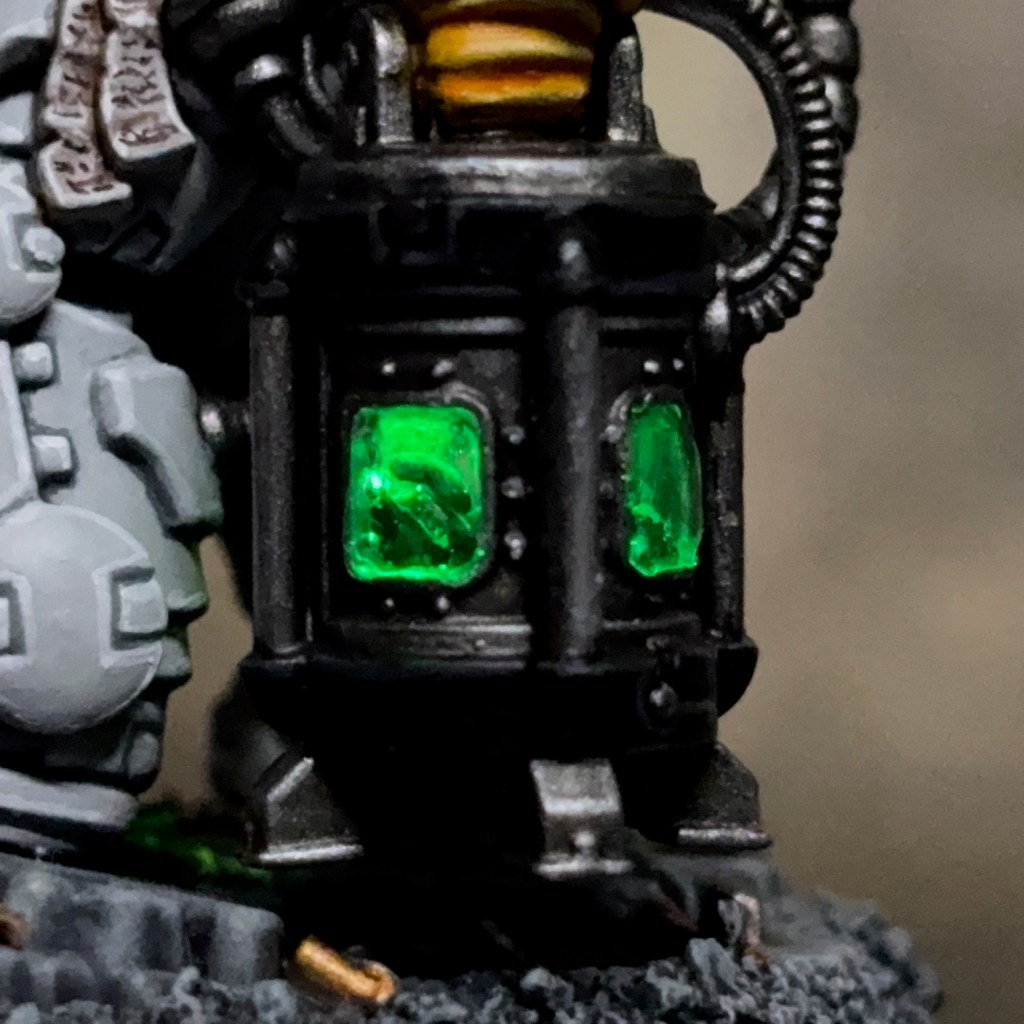
When I was asked to take part in this fundraising project and donate an Apothecary, my mind immediately went to the Leviathan Apothecary Biologis. Until recently I had no clear plans for this miniature as it didn’t really fit in with my Flesh Eaters. But with this community project to inspire me I suddenly knew exactly what I wanted to do with this kit. This Apothecary includes three LEDs to create its effects; one in the helmet, one in the task lamp, and one in the Vivispectrum sample chamber.

The glowing helmet eye lenses were created using the techniques detailed in my LED Eye Lens Tutorial, including the TruOpto 1.8mm Red LED.

The task lamp was created following the same principles as the helmet, in the sense that it’s a resin cast. The lamp uses a 3V yellow 0805 SMD chip LEDs connected to a 47 ohm resistor (also available pre-wired from Small Scale Lights) to provide the illumination.

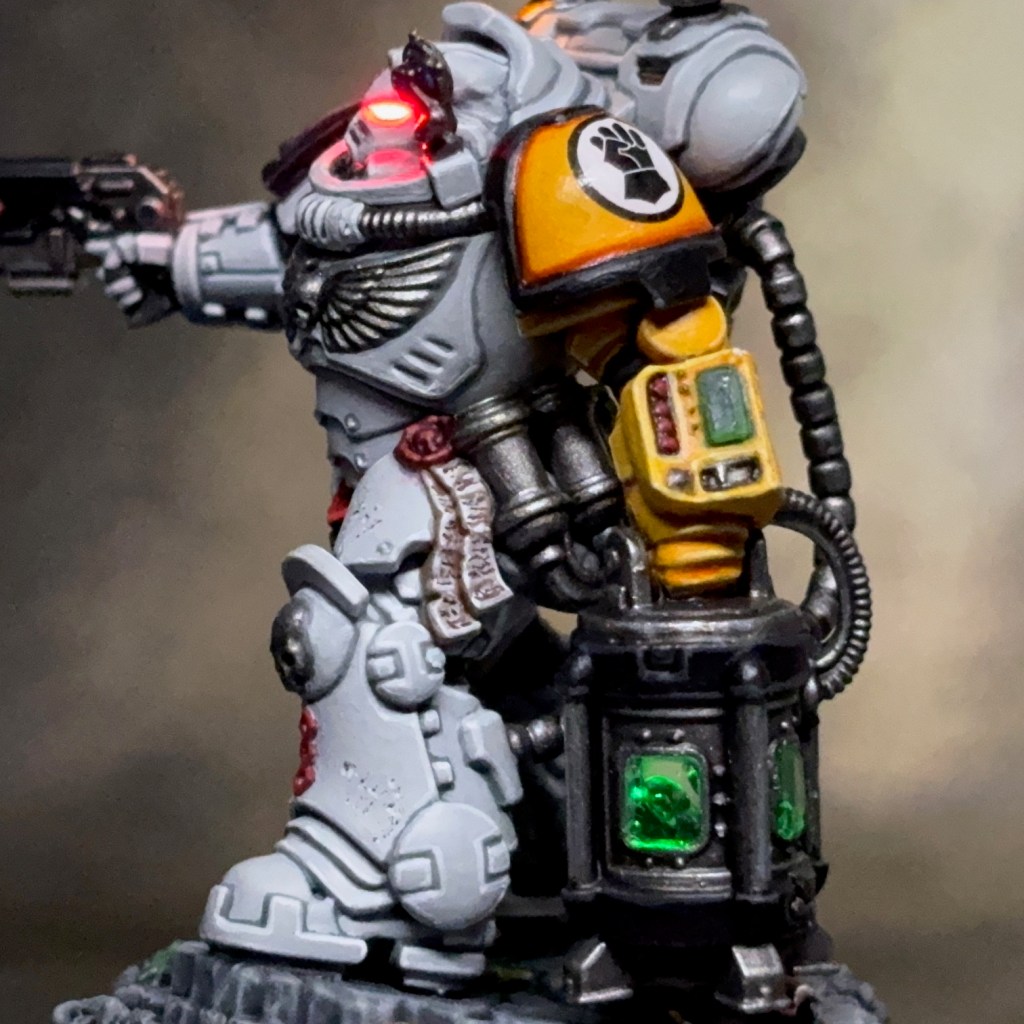
The Vivispectrum sample containment chamber was the most complex part of the conversion. Thankfully it is hollow, but I had to carefully cut out and file the chamber windows. The ‘xenos sample’ is made from the tentacled maw of a Ymgarl Genestealer. I painted the sample and the inside of the chamber before proceeding to the resin pour. Will the chamber with resin was intended to give the impression it was filled with liquid. I used PVA glue to temporarily fix a thin piece of plastic over each of the four windows, then poured UV Resin from Green Stuff World into each half of the chamber. I then cured the resin with a UV Torch.

The final touch on the Vivispectrum chamber was adding the 3V Flickering Green 0807 SMD chip LED to the inside of the top of the chamber, facing downwards. The connecting wire runs up through the arm and then down through the torso and legs. I chose a flickering LED to give a sense of motion to the sample, and hopefully the impression that whatever it is, it’s still alive!

Each of the three LEDs described above are connected in parallel to a single 3V CR2032 coin cell battery and miniature switch hidden under the base.

I did originally also plan to illuminate the wrist-mounted computer screen. The wrist unit is actually cast in resin in preparation for this. But I decided against it in the end as I was concerned it would draw the eye away from the much more interesting LED effect in the sample chamber.

Painting

When it came time to paint this miniature I went with Imperial Fists as they are of course one of my favourite chapters. This was quite a complex miniature to paint, both in the amount of detail and the range of colours used. There’s a little too much info about all the paints used to include in a single blog post, but I’ve listed my recipes for the off-white and yellow armour below. The whole miniature was undercoated with Chaos Black spray prior to painting.

  • Yellow Armour
  • Averland Sunset basecoat
  • Yriel Yellow layer (2-3 thin coats)
  • Casandora Yellow shade
  • Fuegan Orange shade in darker areas (slightly watered down)
  • Mournfang Brown shade in deepest recesses
  • Yriel Yellow edge highlight
  • Flash Gitz Yellow fine highlight
  • Dorn Yellow fine highlight on sharpest edges
  • White Scar dot highlight on sharpest edges
  • Off-White Armour
  • Administratum Grey basecoat (two thin coats)
  • Apothecary White Contrast shade
  • Corax White layer
  • Skull White highlight

So there we go, something slightly different this week. Don’t forget to follow The Apothecarion project for updates, and please buy tickets to enter the raffle for a chance to win this miniature! As always, thanks very much for reading, and please remember you can also find me sharing my work on InstagramThreadsBluesky and Mastodon.
Striking Scorpion

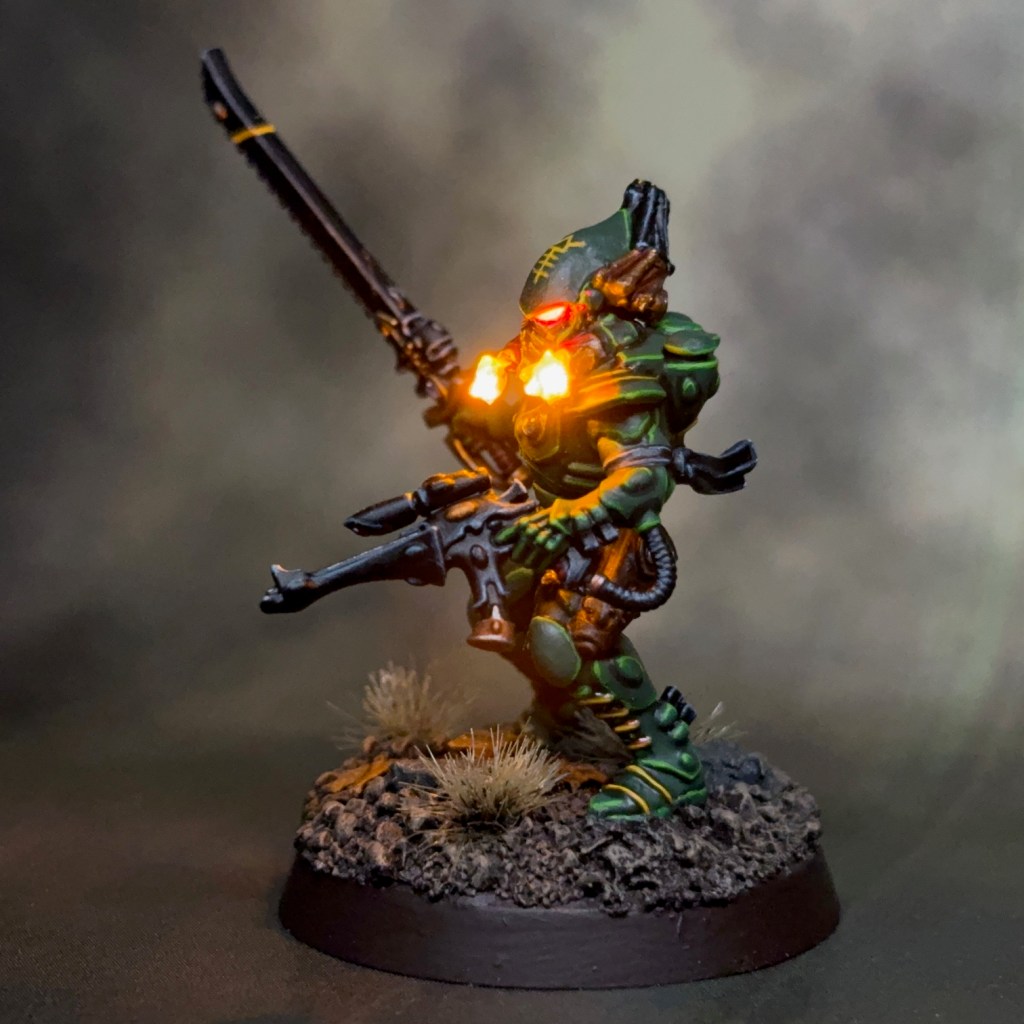
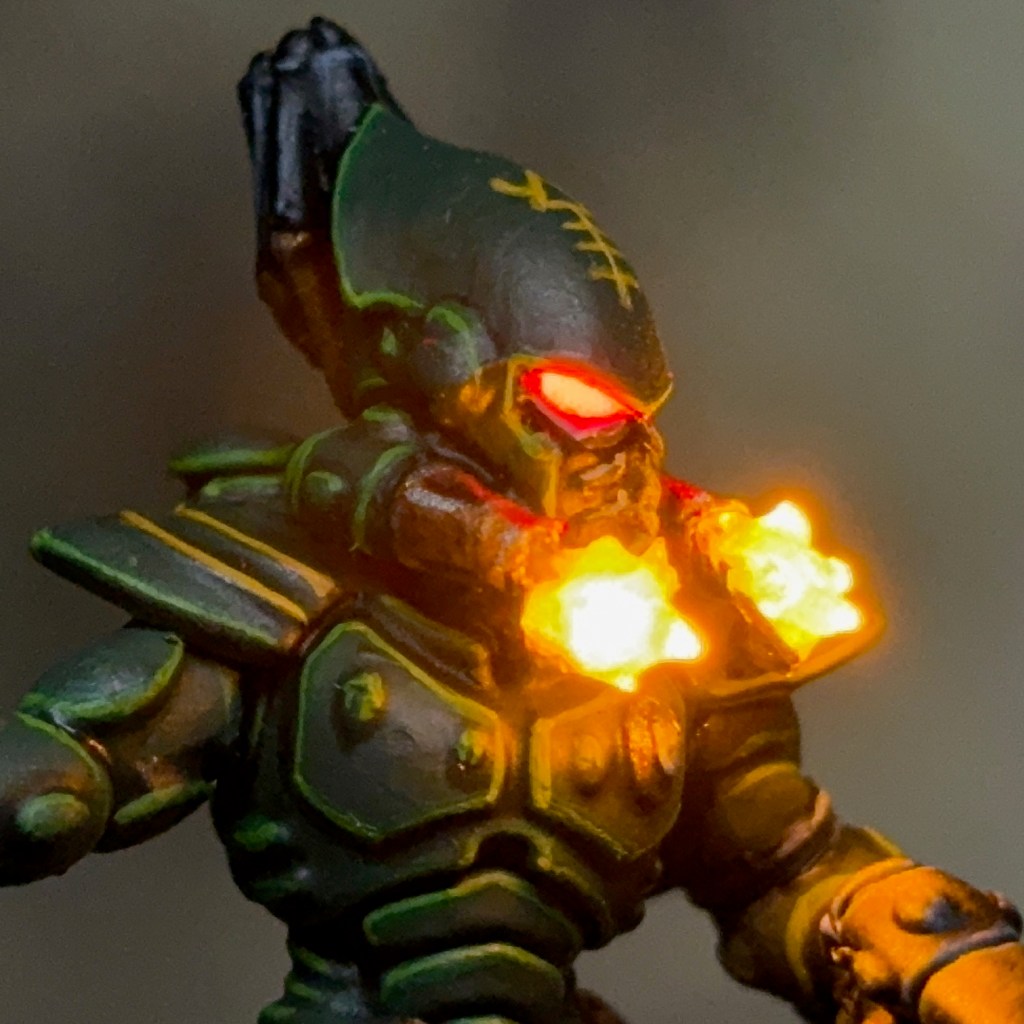
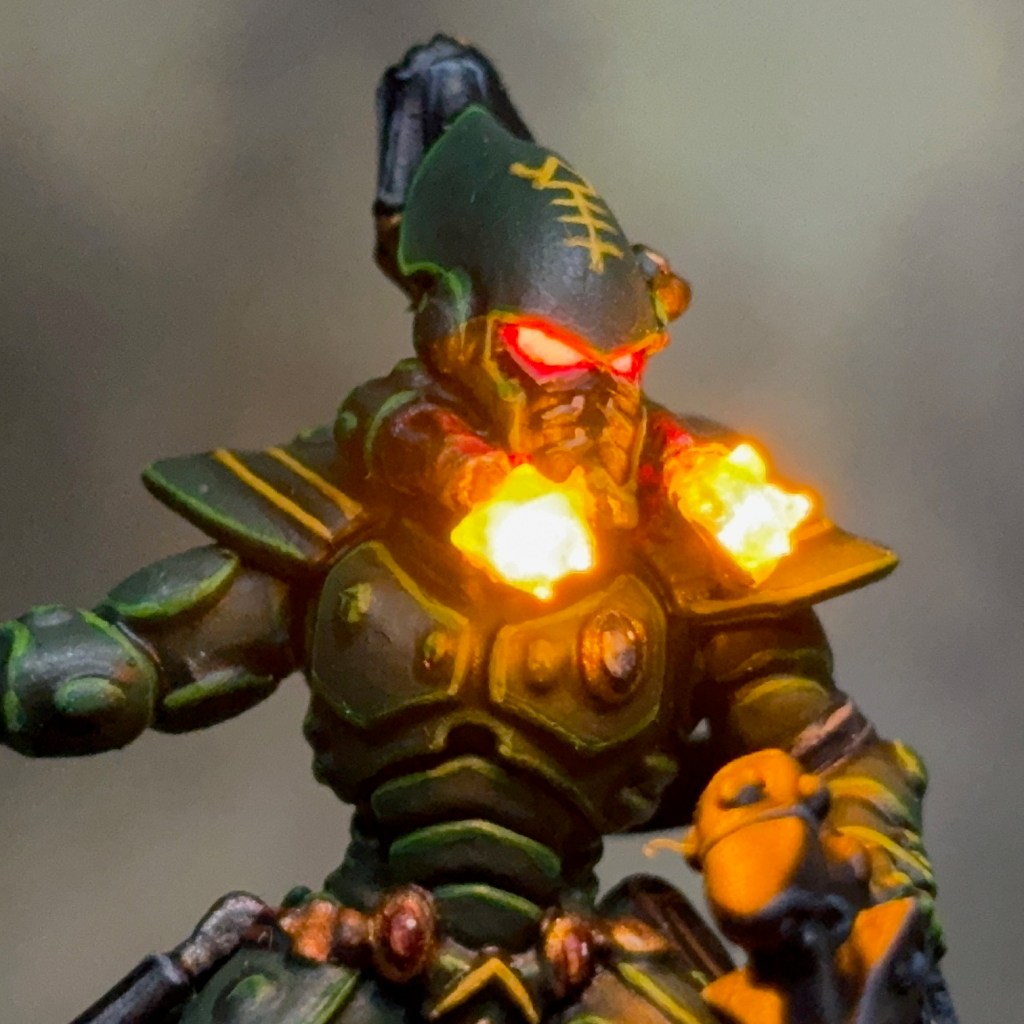
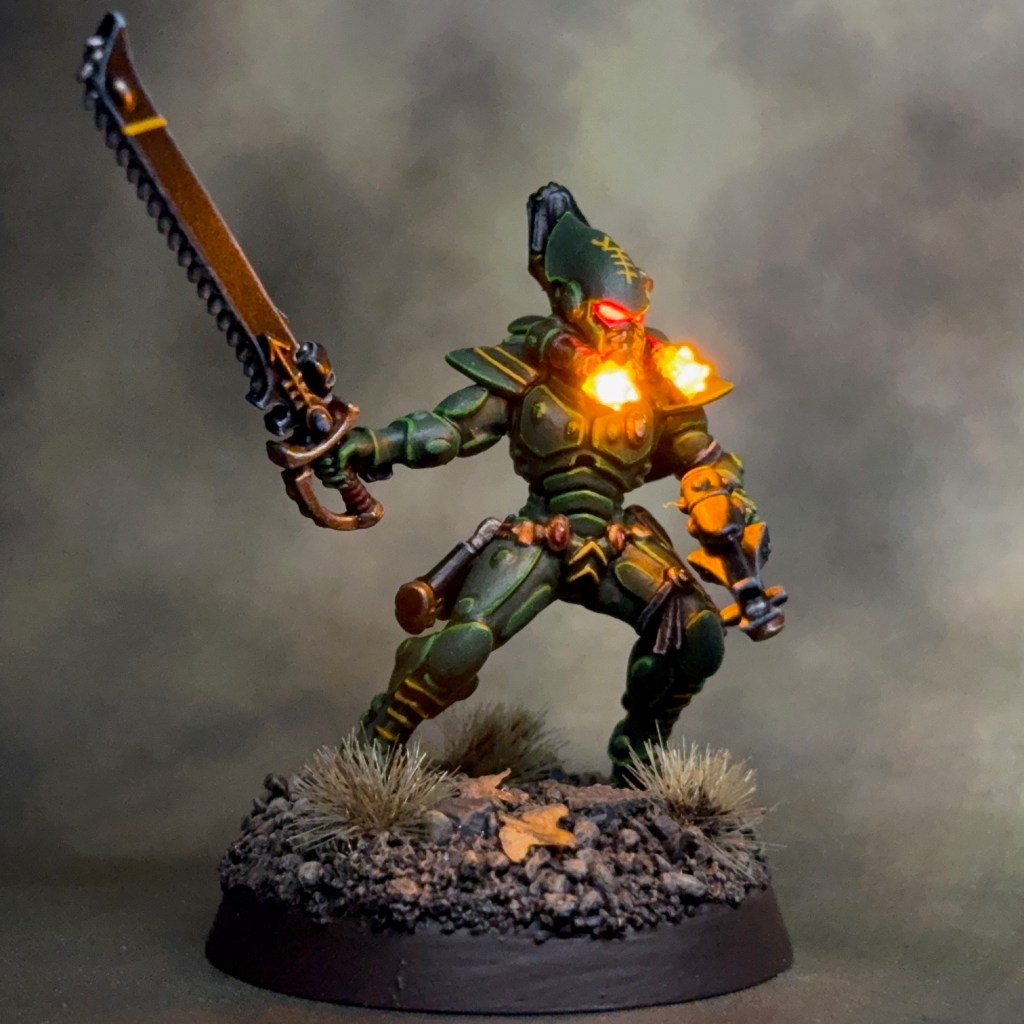
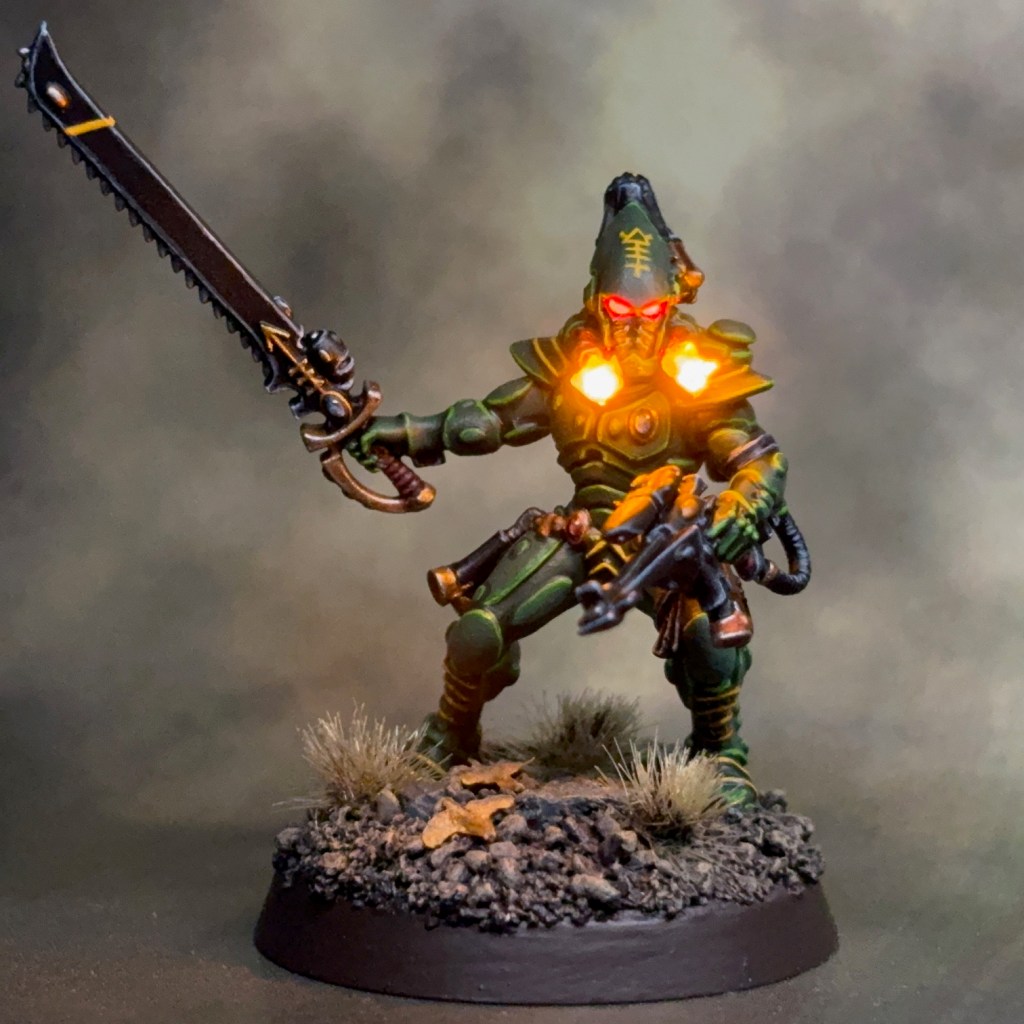
This week I’m dealing with the perfidious Aeldari and January’s ‘Mini of the Month’, a Striking Scorpion Aspect Warrior!

Modelling

Don’t roll your eye just yet, this isn’t another army project to distract me from my 2025 hobby goals. It’s simply a proof of concept to see how LED Aspect Warrior helmets look and find out if LED mandiblasters are feasible. Having said that, I don’t get much Game Workshop new release FOMO these days, but I must admit the Aeldari releases are making me sweat a little…

The LED helmet and eye lenses were made using the techniques described in my LED Eye Lens Tutorial. As you can see in the image below, only the upper portion of the helmet was cast in resin. The eyes used a single 3V red 0805 SMD chip LED and a 47 ohm resistor (also available pre-wired from Small Scale Lights). This is smaller than the 1.8mm LED that I normally use for Space Marine eye lenses, since there’s not as much room in Aeldari helmets.

The mandiblaster muzzle flares were created using the techniques described in my Simple LED Muzzle Flare Tutorial. There are two separate 3V yellow 0805 SMD chip LEDs each connected to a 47 ohm resistor (again also available pre-wired from Small Scale Lights). The muzzle flares were sculpted from Water Splash Effect Gel, available from Green Stuff World.

All three LED circuits were connected in parallel with each other to a single 3V CR2032 coin cell and switch in the base.

Painting

While I’m mostly happy with the paint job as a whole, I think I would try a different green next time. I checked Striking Scorpions on the Citadel Colour app, and it informed me that the receipe used Waaagh! Flesh as a base, with highlights of Warpstone Glow and Moot Green. It wasn’t until I was fully committed that I realised this probably wasn’t correct and the “official” scheme was a lot brighter.

I try to stick close to the official scheme and stock poses for LED ‘proof of concepts’ such as this one. It’s about not changing too many variables at once. I may possibly come back and make a Blades of Khaine Kill Team at some point. If I do, I’ll probably be a little more adventurous with the paint palette, perhaps bringing in some blacks and yellows.

So now the Striking Scorpion is done and dusted and I’ve satisfied myself that LED mandiblaster are possible, does that mean I’ll be getting back to my planned 2025 projects?

*Checks workbench*

Erm, no…

Please come back again soon to find out what my next tangent will be! As ever, thanks very much for reading, and please remember you can also find me sharing my work on InstagramThreadsBluesky and Mastodon.

Lieutenant Titus

Courage and honour! I’m kicking off 2025 with Demetrian Titus, Lieutenant of the Ultramarines 2nd Company and protagonist of the ‘Space Marine 2’ video game. While I don’t collect Ultramarines, I do have a soft spot for the chapter and have spent a lot of time playing Space Marine 2 recently. So when Titus was released as an individual miniature in Warhammer stores in December, I snapped him up immediately!

Modelling

If you’re familiar with this miniature, then you’ll notice that my version is significantly different from the base model. I wanted to swap the chainsword for a thunder hammer, which was my favourite melee weapon in the single player campaign. I didn’t want to do a straight swap with the chainsword as having Titus posed waving the thunder hammer above his head one-handed didn’t feel like it had the necessary gravitas, so I decided to mix things up and repose the miniature. The new pose is influenced by both the Weta Workshop statue and the life-size Titus statue in the Warhammer World entrance hall.

Forging the LED Thunder Hammer

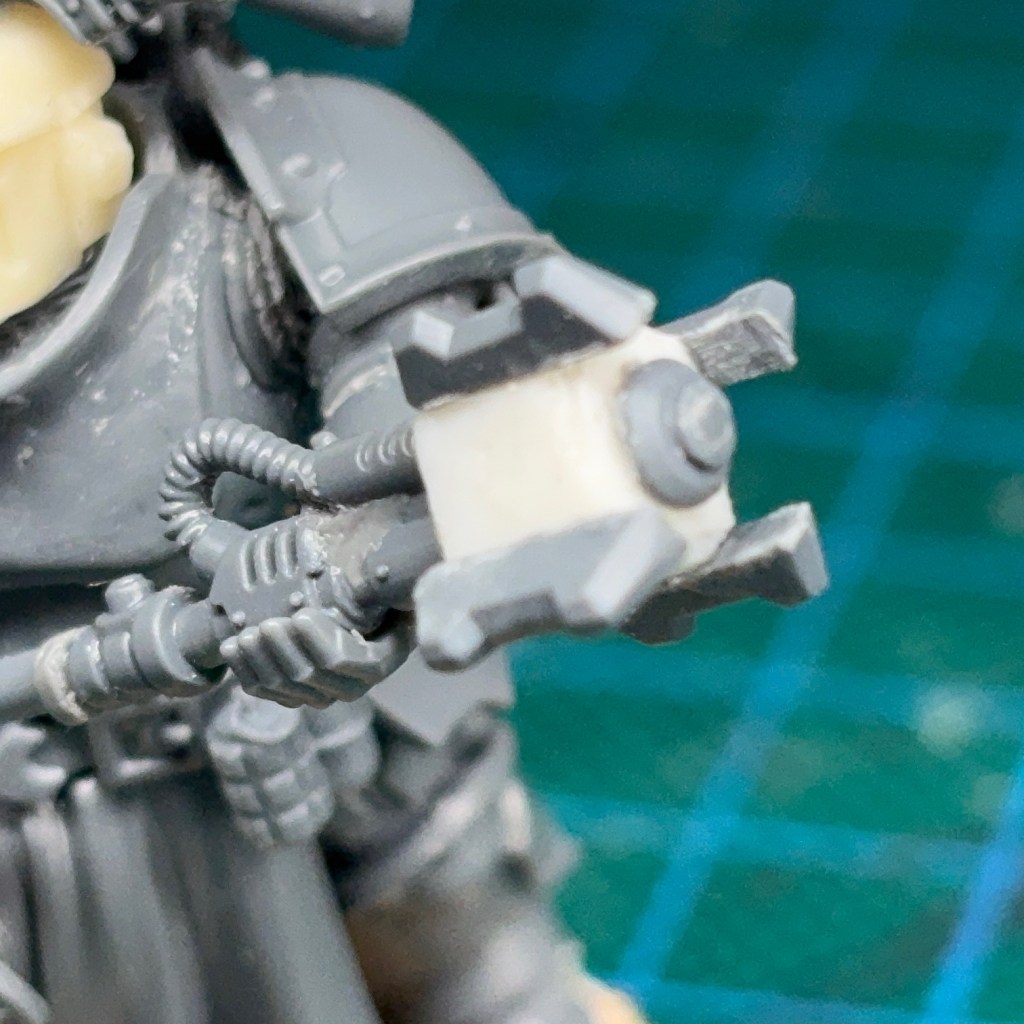
1. This miniature uses a single-handed thunder hammer. This particular one is from the discontinued Dark Angels Terminator set as I happened to have in my bits box, but any single-handed thunder hammer will do. The first step was to prepare the hammer by drilling holes for the wires. I made cuts at joints between different textures (e.g. the top of the grip and the shaft) as these are easier to hide when reassembling. Cutting the hammer into smaller sections makes drilling holes for the wires easier.

The head of the hammer was cast in polyurethane resin, using the techniques in my Resin Casting Tutorial. This is to allow diffusion and transmission of the LED light.

2. I used a 1.8mm Tru Opto Blue LED to create the blue glow in the thunder hammer. The LED is connected by thin wires that run down through the thunder hammer (as seen below), Titus’ right arm, torso and leg to a 10 ohm resistor and 3V coin cell battery in the base (see my LED Eye Lens Tutorial for more details on how to do this).

To insert the LED into the resin hammer head you will need to drill a hole in the resin. It’s worth noting that the “1.8mm” in the LED’s name refers to its standard directivity, i.e. the radius over which the light is emitted, rather than it’s physical size. I recommend a 3.5mm drill bit for drilling a suitably sized hole in the resin. Once the LED is fully inserted, you can reassemble all parts of the hammer. Any gaps can be filled with modelling putty.

3. I added Water Splash Effect Gel, available from Green Stuff World, in narrow lines over the resin to create the crackling energy effect. This gel is best applied in thin layers, allowing each layer to dry before applying the next.

Once all the gel is completely dry, the final step is to apply a single thin glaze of blue paint over all the resin and gel. As long as this is suitably thin it will enhance the look of the miniature while the LED is off without inhibiting the light of the LED.

Getting A-head on Helmets

The miniature is supplied with a choice of bare head and helmet. Titus’ stoic visage and the glowering MkX helmet are both iconic looks, but thankfully I didn’t have to choose. I made the bare head and LED helmet interchangeable by using an IC socket and the techniques detailed in my LED Swapable Helmet Tutorial. When not in use, the helmet fits into a socket on Titus’ belt, as shown below.

The helmet contains a single 1.8mm Tru Opto Red LED and was created by following the steps in my LED Eye Lens Tutorial. As mentioned above, the LEDs in the helmet and thunder hammer are connected in parallel to a single 3V coin cell battery and switch in the base that are both accessible from underneath.

Painting

I followed the “official” scheme when choosing colours for this miniature, which seemed important as I was recreating a specific character. I did wonder about painting the Neuroloid in my Hive Fleet Cerberus scheme, but decided that was too much of a deviation from the Tyranids encountered in the game, so used the standard Hive Fleet Leviathan colours. The green box on the base is painted in the style of the crates that conceal ammo and supplies in the game.

This miniature used a lot of different paints, but I have included my recipes for a few key colours, just in case anyone is interested. All paints are Citadel unless stated otherwise. The miniature was spray undercoated Chaos Black.

  • Ultramarine Armour
  • Macragge Blue basecoat (two thin coats)
  • 50:50 Kantor Blue:Abaddon Black shade
  • Altdorf Blue highlight
  • Calgar Blue fine highlight
  • Fenrisian Grey fine highlight on top edges and corners
  • Blue Horror dot highlight
  • White Cloth
  • Administratum Grey basecoat
  • Apothecary White shade
  • Corax White layer
  • Skull White highlight
  • Administratum Grey thin glaze
  • Gold Details
  • Retributor Armour base coat
  • Reikland Fleshshade in recesses
  • Aggaros Dunes thinned glaze on lower portions of gold areas
  • Runefang Steel highlight
  • Urban Ruins
  • Mechanicus Standard Grey basecoat
  • Nuln Oil shade
  • Dawnstone drybrush
  • Administratum Grey drybrush
  • Skull White light drybrush

So there we are, my first completed miniature of 2025! Hopefully the corpse on the base allows it to also count as progress on my Tyranid project, haha! I’ll be back on the Ultramarines again in March for #MarchForMacragge, but before then I’ll be trying to progress my regular projects. Finally, if you haven’t played Space Marine 2, go and get it because it’s excellent! As ever, thanks very much for reading, and please remember you can also find me sharing my work on InstagramThreadsBluesky and Mastodon.

New Year, New(ish) Armies 2025

It’s that time of year when hobby plans are drawn up for the months ahead, so I thought it would be a good idea to share my plans for 2025. This is not only for my benefit, but also so we can all have a chuckle when I fail to meet the ambitious targets by the end of the year!

Tyranids

In January 2024 I introduced Hive Fleet Cerberus as my next big project. That plan didn’t quite survive contact with the enemy (the enemy in this case being hobby time management), but I’m keen to press on with the Tyranids as a high priority this year. The new Warrior Bioform Onslaught detachment has particularly inspired me!

Kruleboyz

The Kruleboyz have been a back burner project for almost as long as the Tyranids, but I’d like to give them more focus and try and get a painted and playable Kruleboyz Spearhead on the table and some Age of Sigmar games under my belt. The new Orruk Battletome is also imminent at time of writing, which seems like a good time to jump in.

Kill Team

I need to get up-to-speed with the new edition of Kill Team, which includes buying the new rules and finishing my Silver Stars Astartes Kill Team.

Flesh Eaters

I plan to “finish” the Flesh Eaters this year – although can you ever really finish an army? – with a few more units, vehicles and characters. I also hope to finish the year with one final Armies on Parade entry for this army.

New Year, New Challenge

The Warhammer Community team have thrown down the gauntlet with the New Year, New Challenge bingo card. Taking part and posting your progress online gets you entered into a voucher prize draw, and completing a row can earn you a pin badge in Warhammer stores. I’ll be giving this a go!

So those are my hobby plans for the year! I also have a few other minor projects and one-off miniatures on the workbench which I’ll be posting soon. I hope you all have plenty of plans in mind for fun hobby too. As ever, thanks very much for reading, and please remember you can also find me sharing my work on InstagramThreadsBluesky and Mastodon.