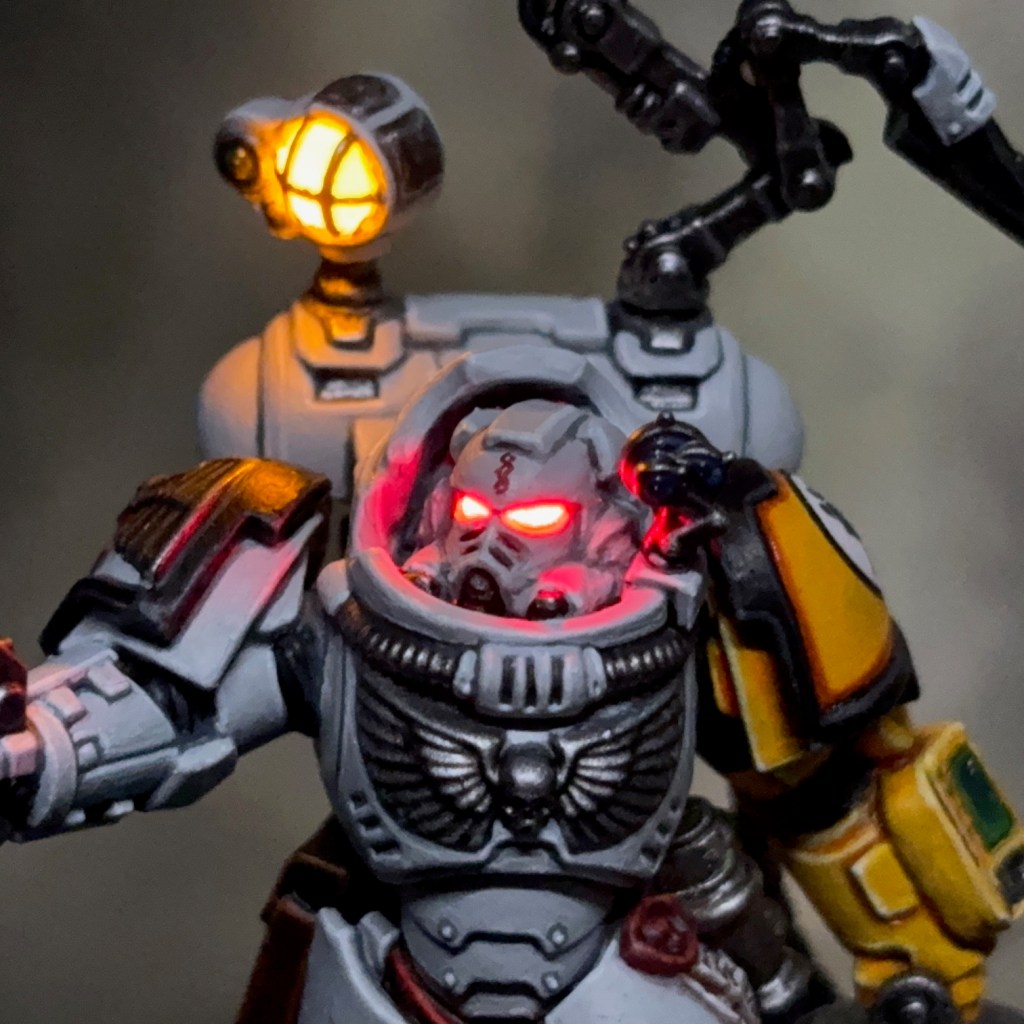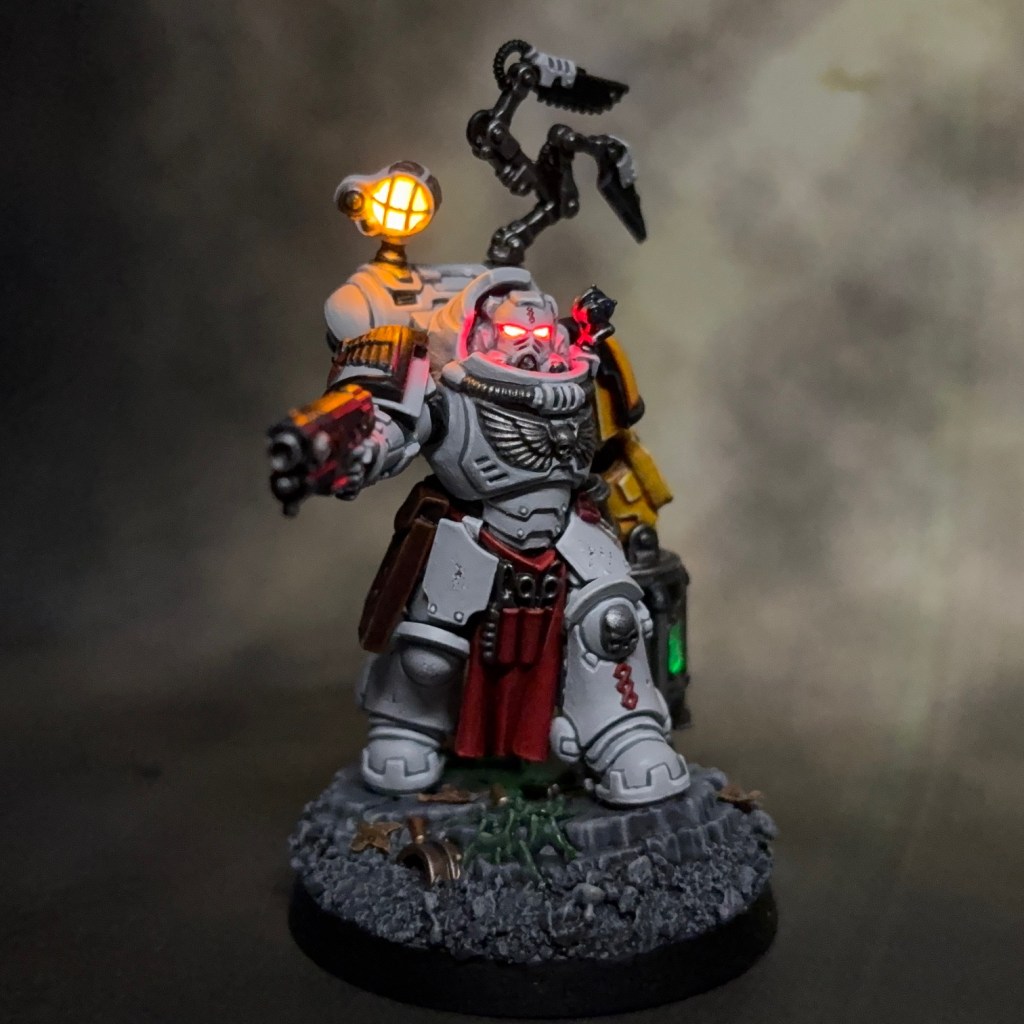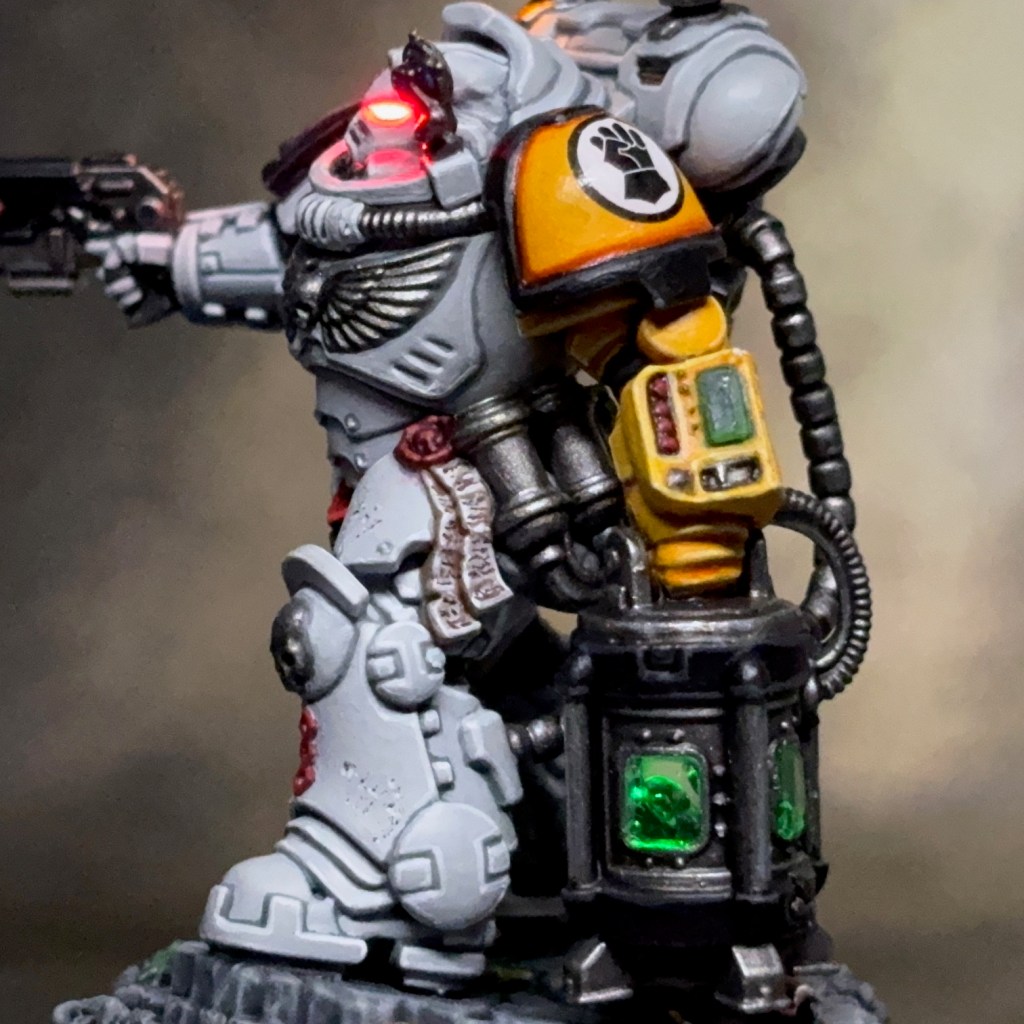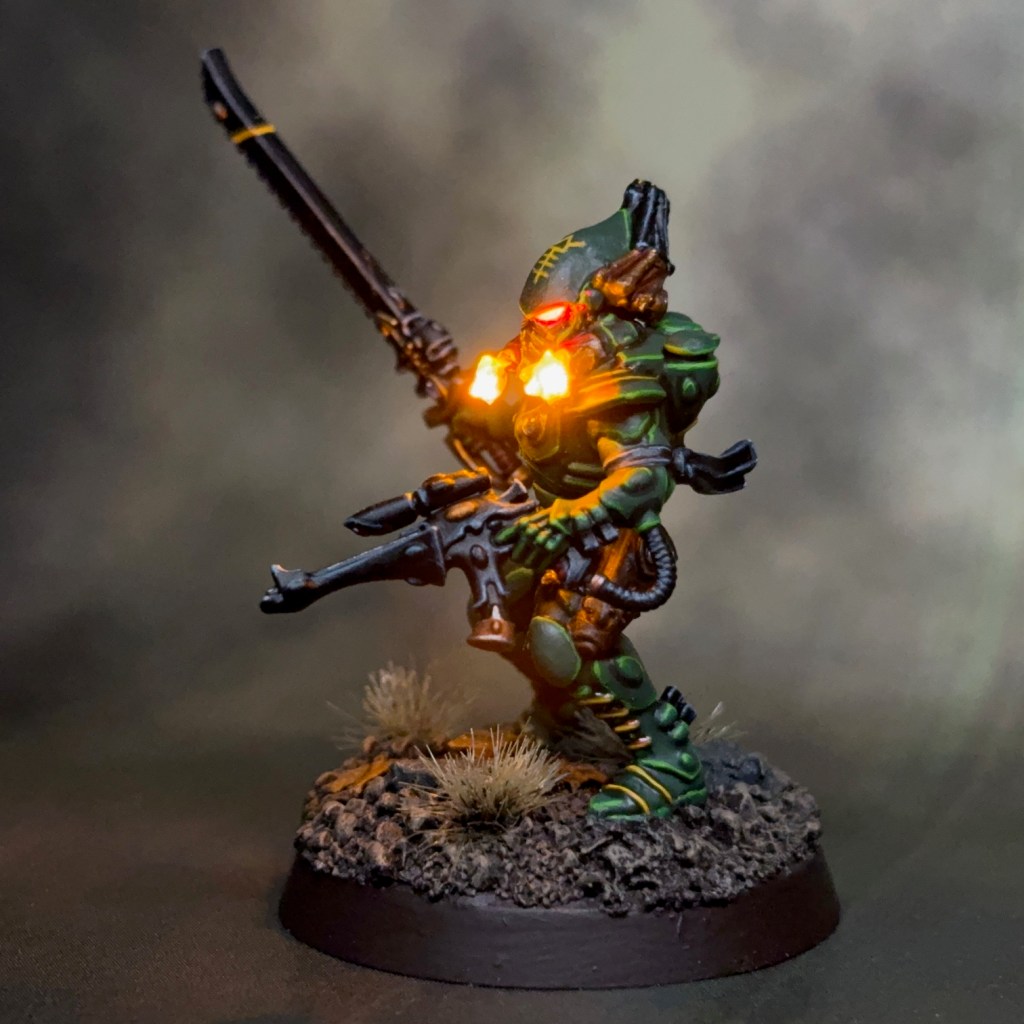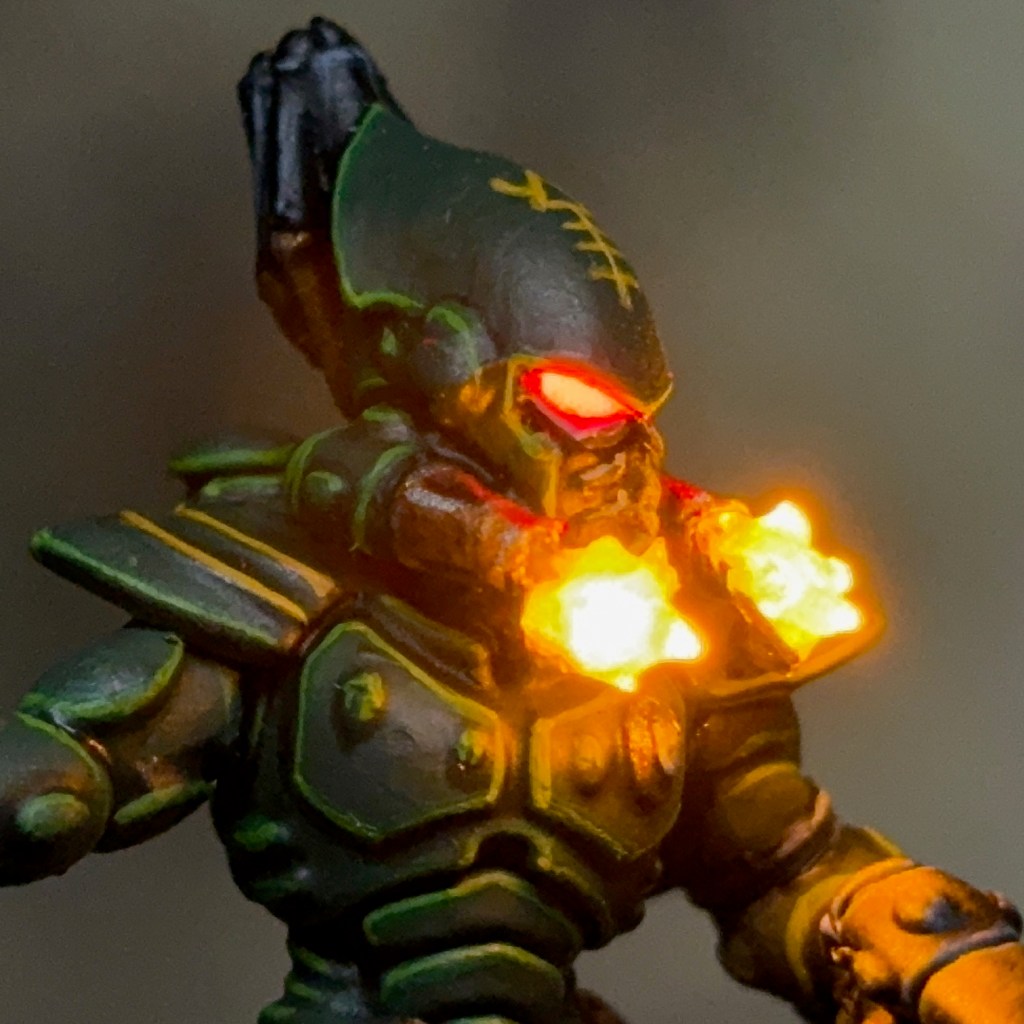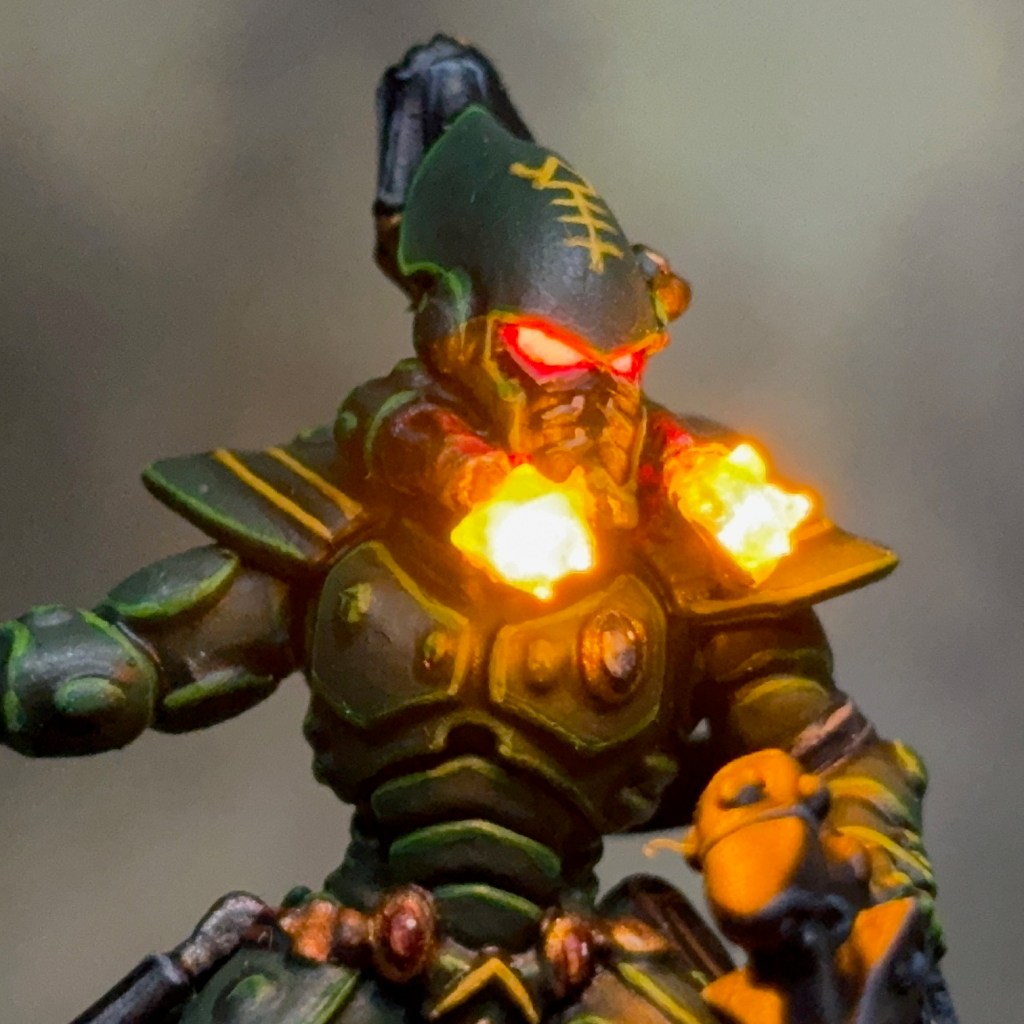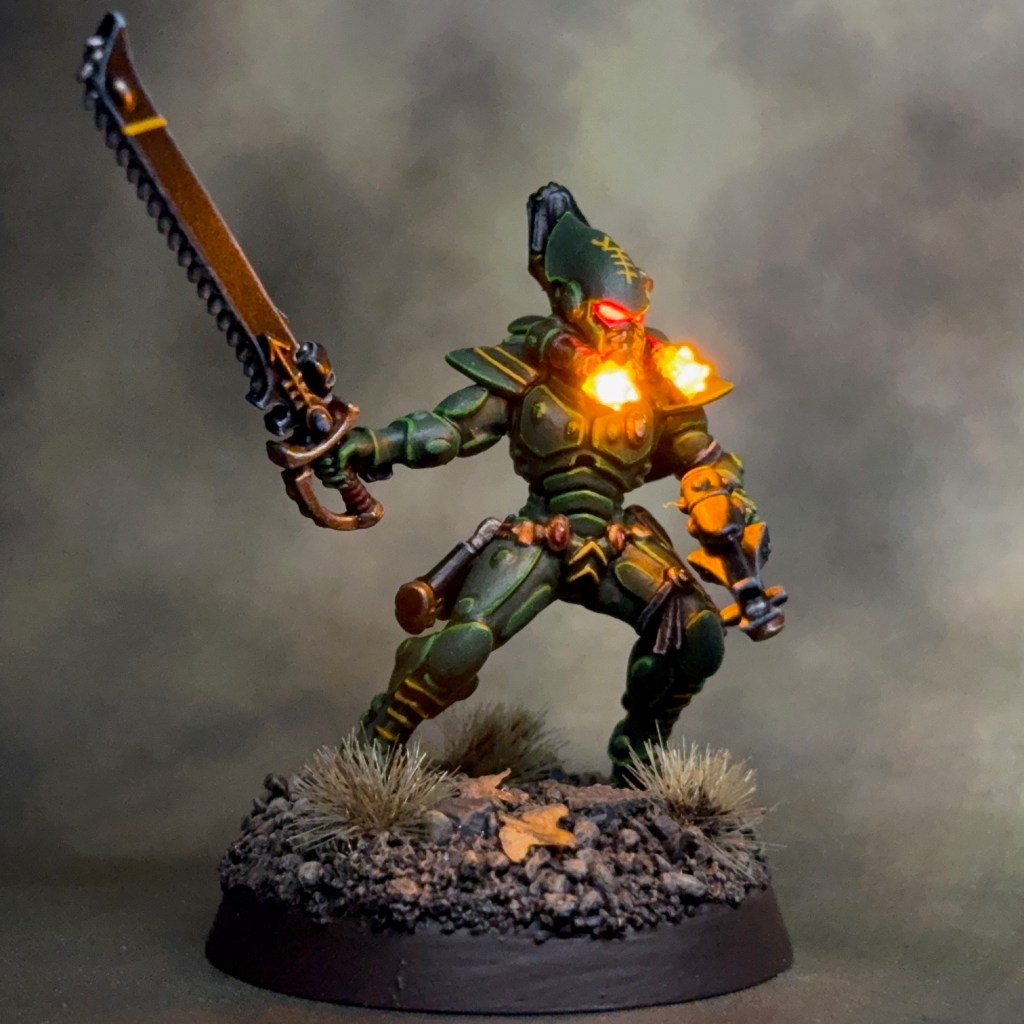
Lieutenant Titus

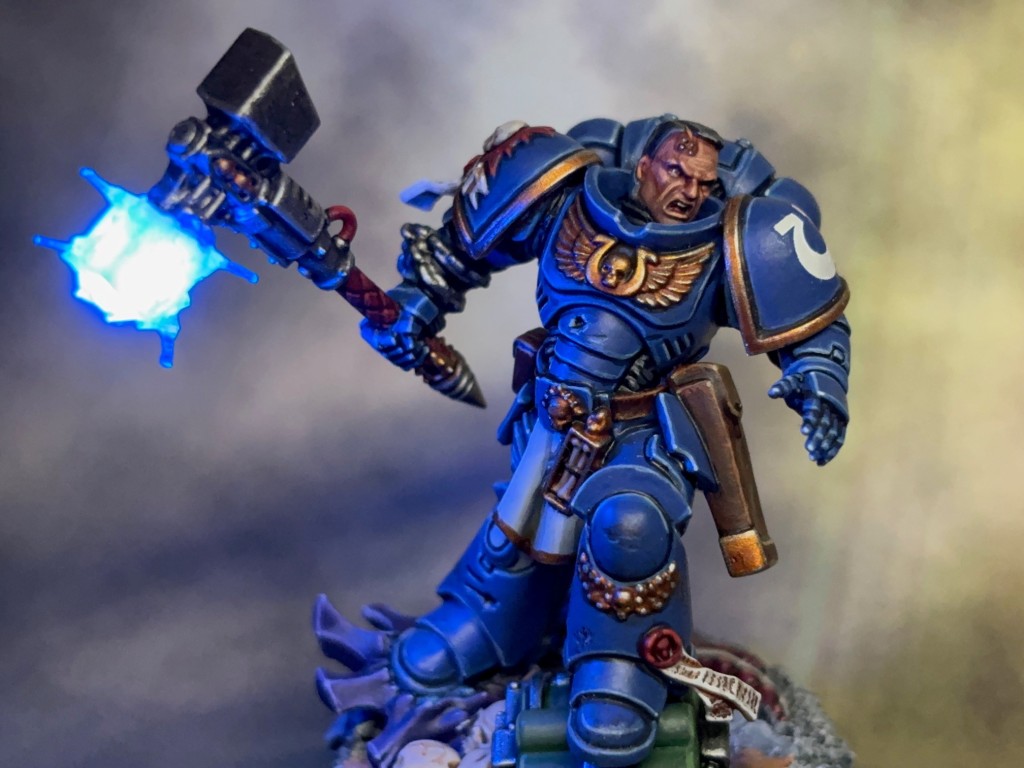
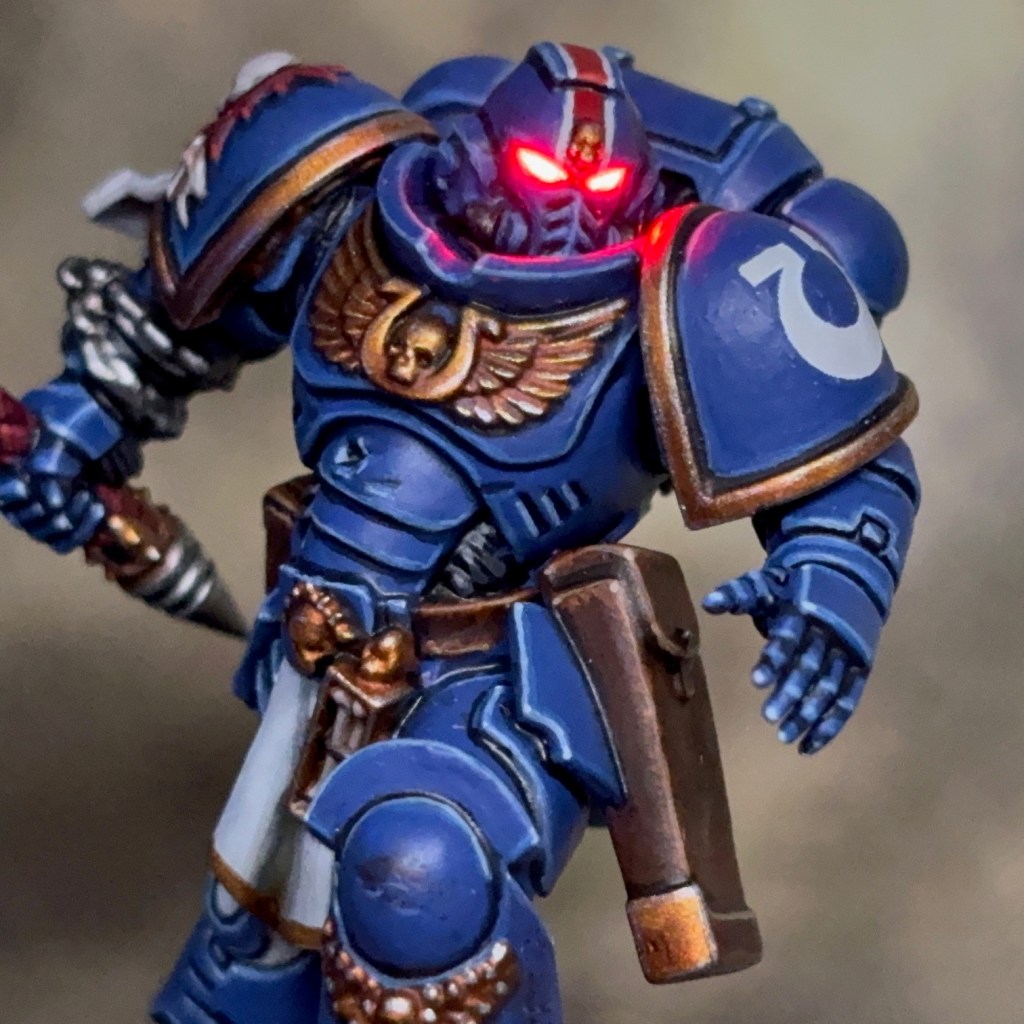
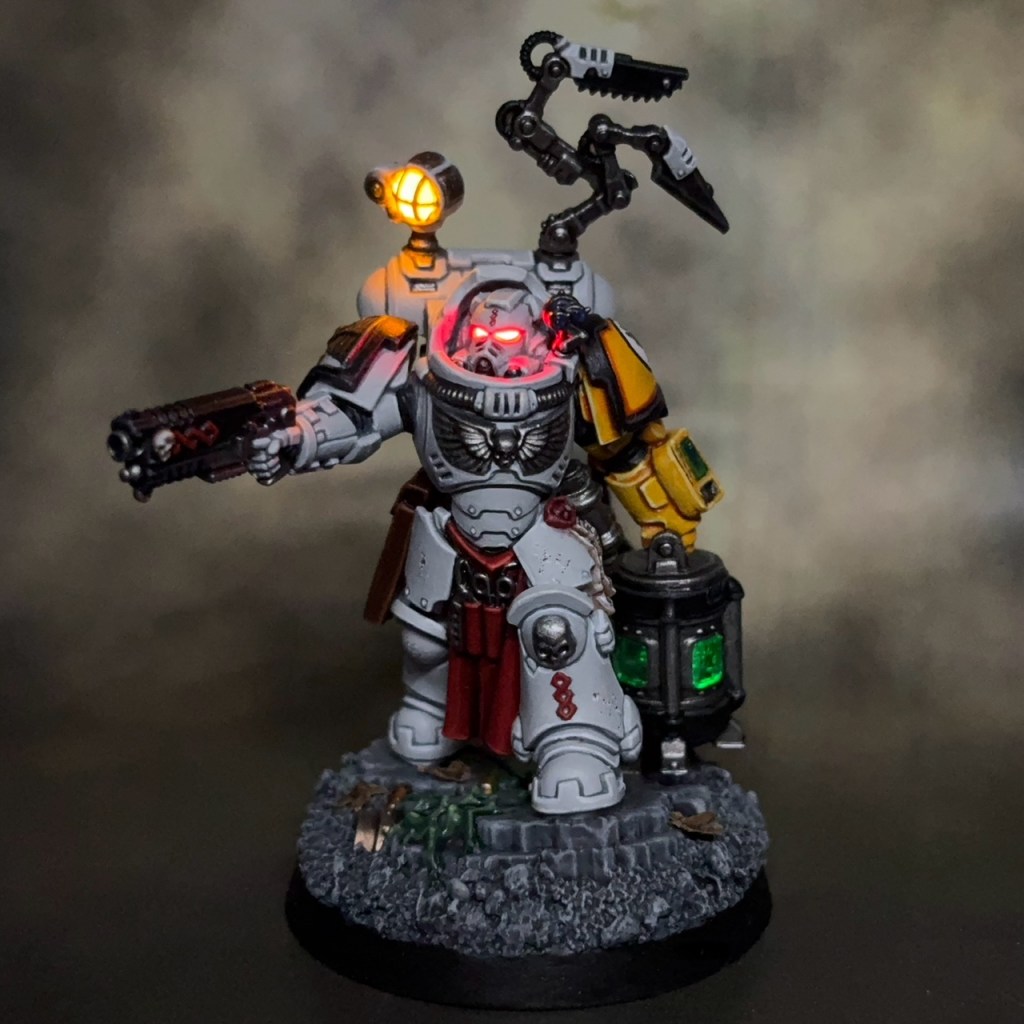
Courage and honour! I’m kicking off 2025 with Demetrian Titus, Lieutenant of the Ultramarines 2nd Company and protagonist of the ‘Space Marine 2’ video game. While I don’t collect Ultramarines, I do have a soft spot for the chapter and have spent a lot of time playing Space Marine 2 recently. So when Titus was released as an individual miniature in Warhammer stores in December, I snapped him up immediately!

Modelling

If you’re familiar with this miniature, then you’ll notice that my version is significantly different from the base model. I wanted to swap the chainsword for a thunder hammer, which was my favourite melee weapon in the single player campaign. I didn’t want to do a straight swap with the chainsword as having Titus posed waving the thunder hammer above his head one-handed didn’t feel like it had the necessary gravitas, so I decided to mix things up and repose the miniature. The new pose is influenced by both the Weta Workshop statue and the life-size Titus statue in the Warhammer World entrance hall.

Forging the LED Thunder Hammer

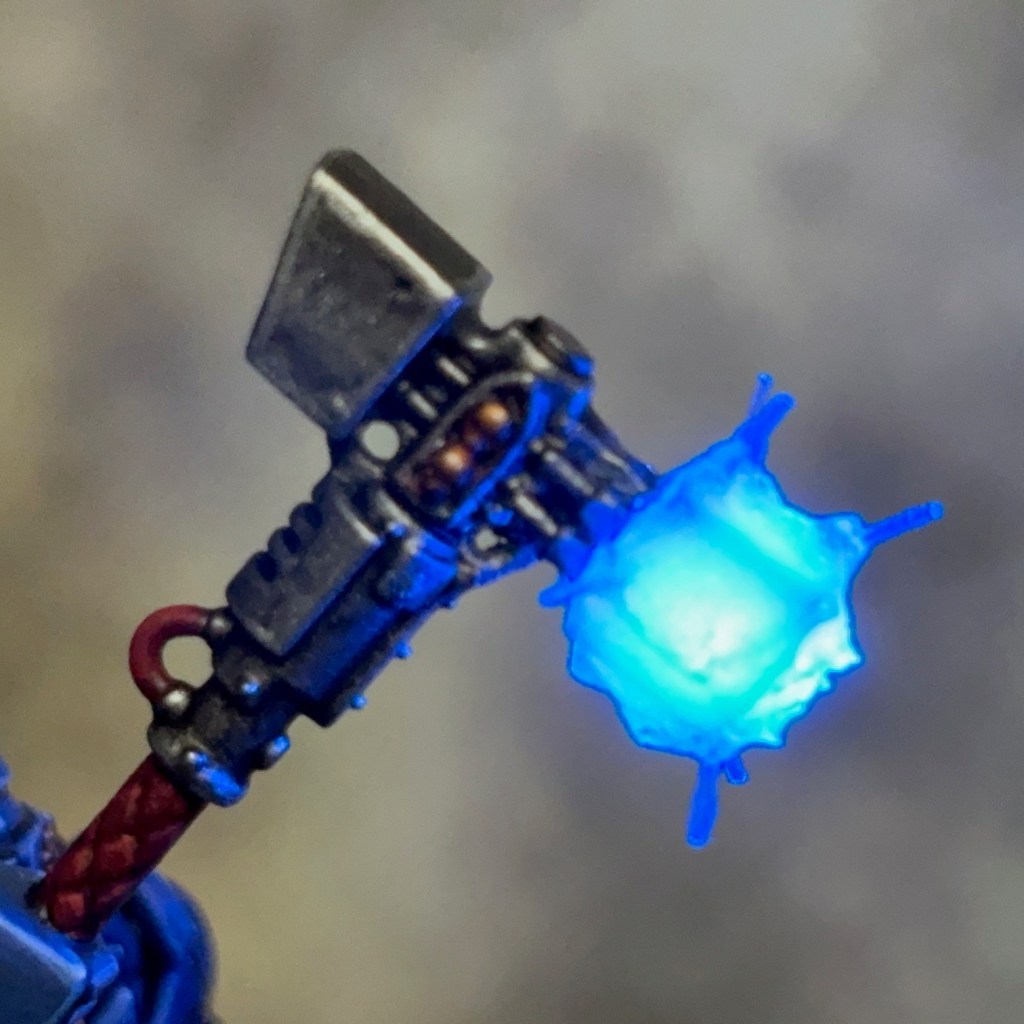
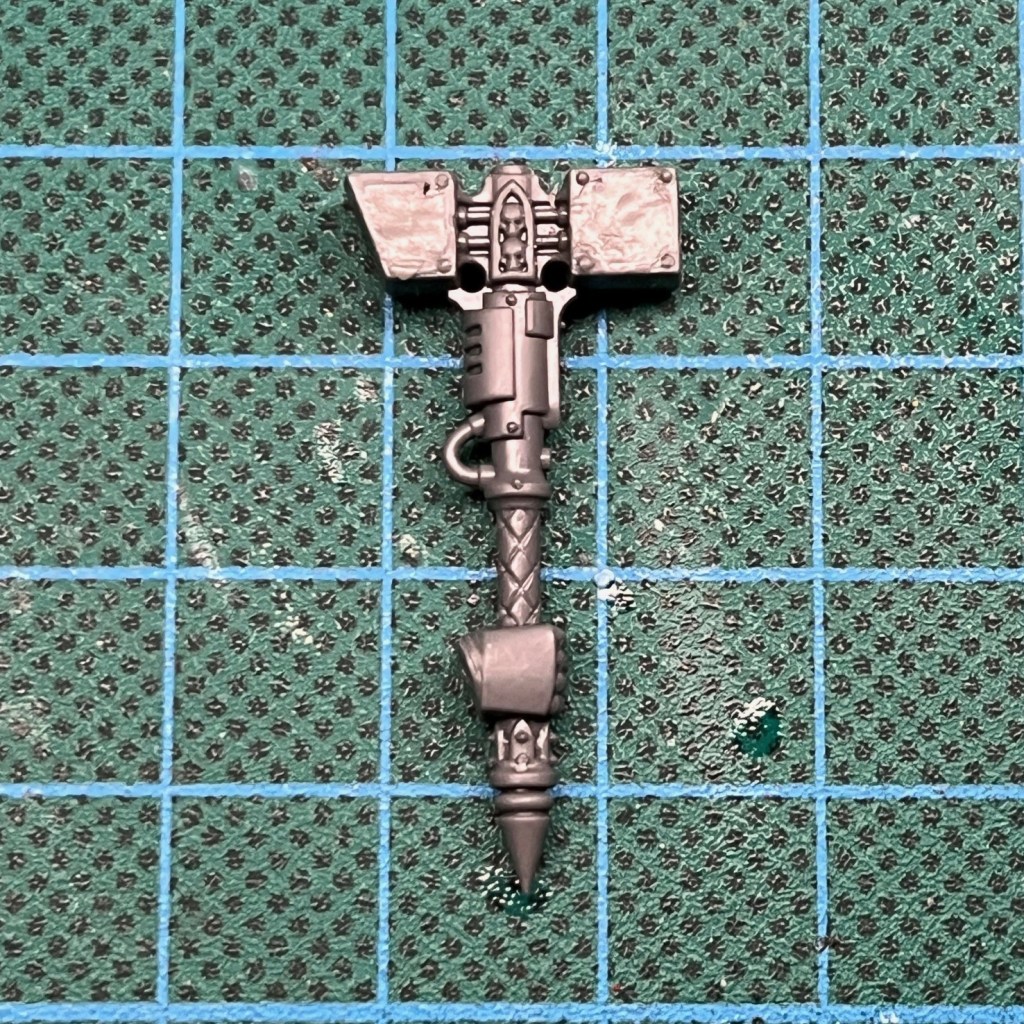
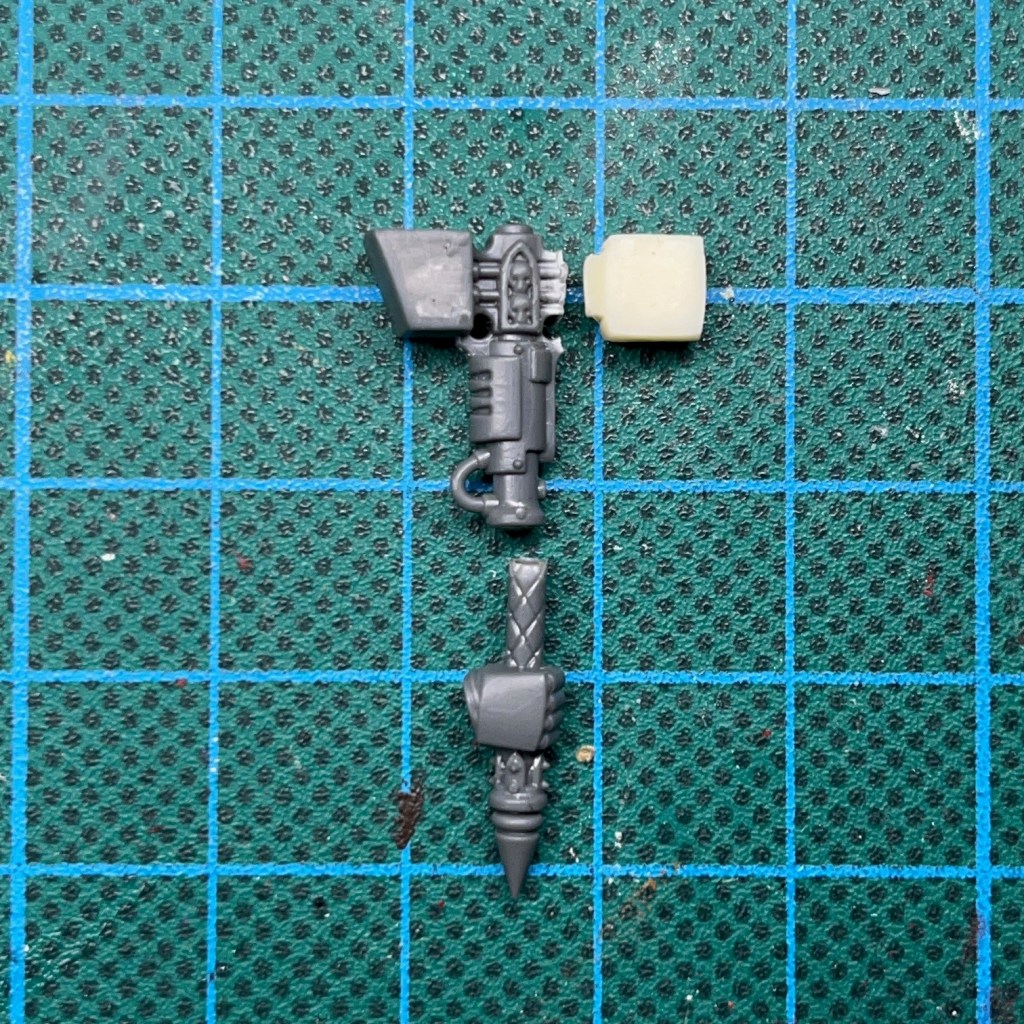
1. This miniature uses a single-handed thunder hammer. This particular one is from the discontinued Dark Angels Terminator set as I happened to have in my bits box, but any single-handed thunder hammer will do. The first step was to prepare the hammer by drilling holes for the wires. I made cuts at joints between different textures (e.g. the top of the grip and the shaft) as these are easier to hide when reassembling. Cutting the hammer into smaller sections makes drilling holes for the wires easier.

The head of the hammer was cast in polyurethane resin, using the techniques in my Resin Casting Tutorial. This is to allow diffusion and transmission of the LED light.

2. I used a 1.8mm Tru Opto Blue LED to create the blue glow in the thunder hammer. The LED is connected by thin wires that run down through the thunder hammer (as seen below), Titus’ right arm, torso and leg to a 10 ohm resistor and 3V coin cell battery in the base (see my LED Eye Lens Tutorial for more details on how to do this).

To insert the LED into the resin hammer head you will need to drill a hole in the resin. It’s worth noting that the “1.8mm” in the LED’s name refers to its standard directivity, i.e. the radius over which the light is emitted, rather than it’s physical size. I recommend a 3.5mm drill bit for drilling a suitably sized hole in the resin. Once the LED is fully inserted, you can reassemble all parts of the hammer. Any gaps can be filled with modelling putty.

3. I added Water Splash Effect Gel, available from Green Stuff World, in narrow lines over the resin to create the crackling energy effect. This gel is best applied in thin layers, allowing each layer to dry before applying the next.

Once all the gel is completely dry, the final step is to apply a single thin glaze of blue paint over all the resin and gel. As long as this is suitably thin it will enhance the look of the miniature while the LED is off without inhibiting the light of the LED.

Getting A-head on Helmets

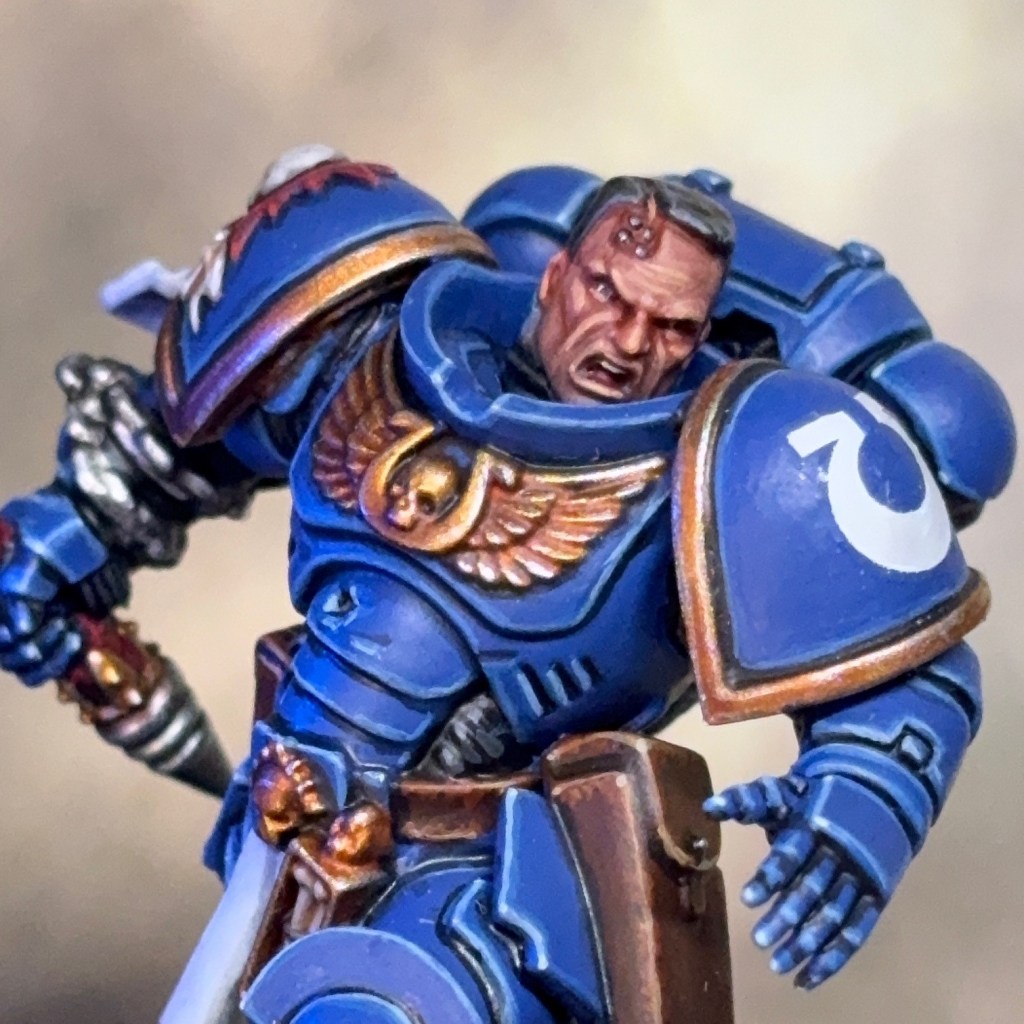
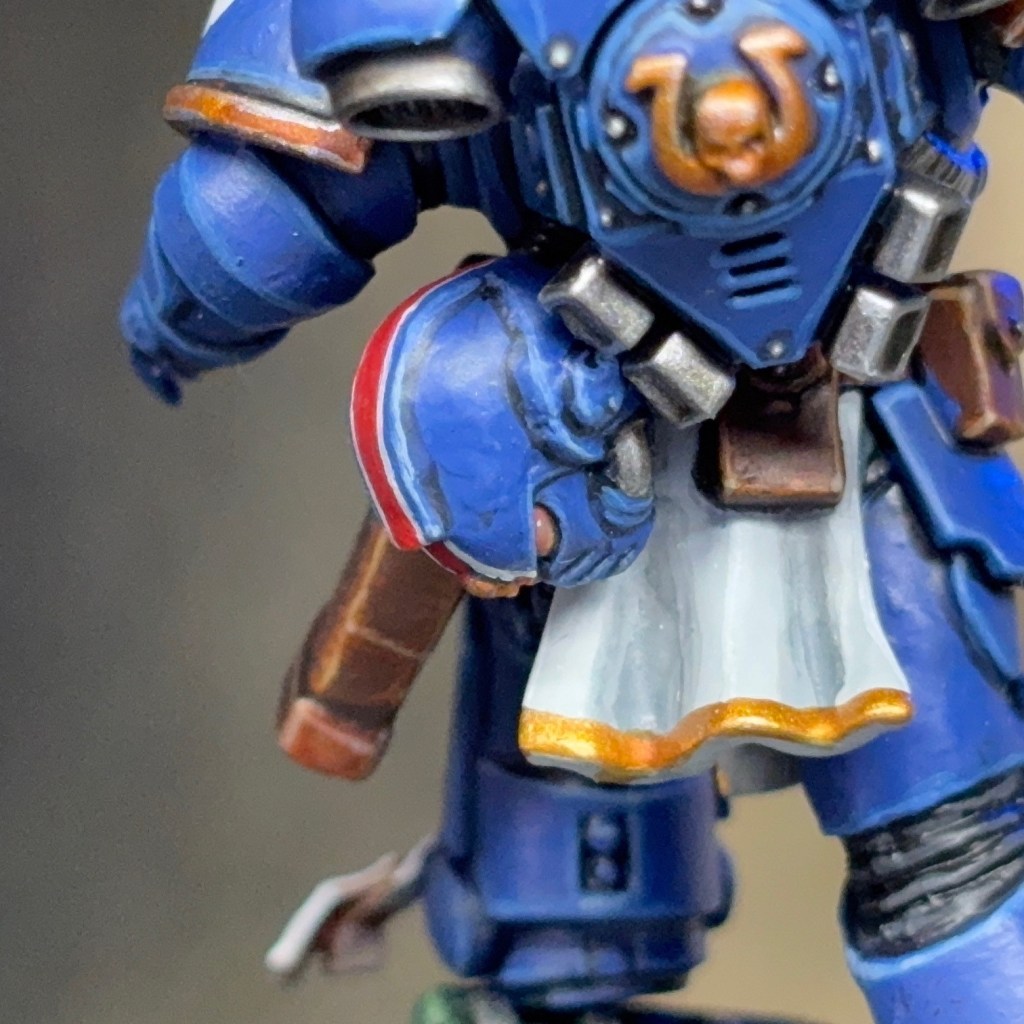
The miniature is supplied with a choice of bare head and helmet. Titus’ stoic visage and the glowering MkX helmet are both iconic looks, but thankfully I didn’t have to choose. I made the bare head and LED helmet interchangeable by using an IC socket and the techniques detailed in my LED Swapable Helmet Tutorial. When not in use, the helmet fits into a socket on Titus’ belt, as shown below.

The helmet contains a single 1.8mm Tru Opto Red LED and was created by following the steps in my LED Eye Lens Tutorial. As mentioned above, the LEDs in the helmet and thunder hammer are connected in parallel to a single 3V coin cell battery and switch in the base that are both accessible from underneath.

Painting

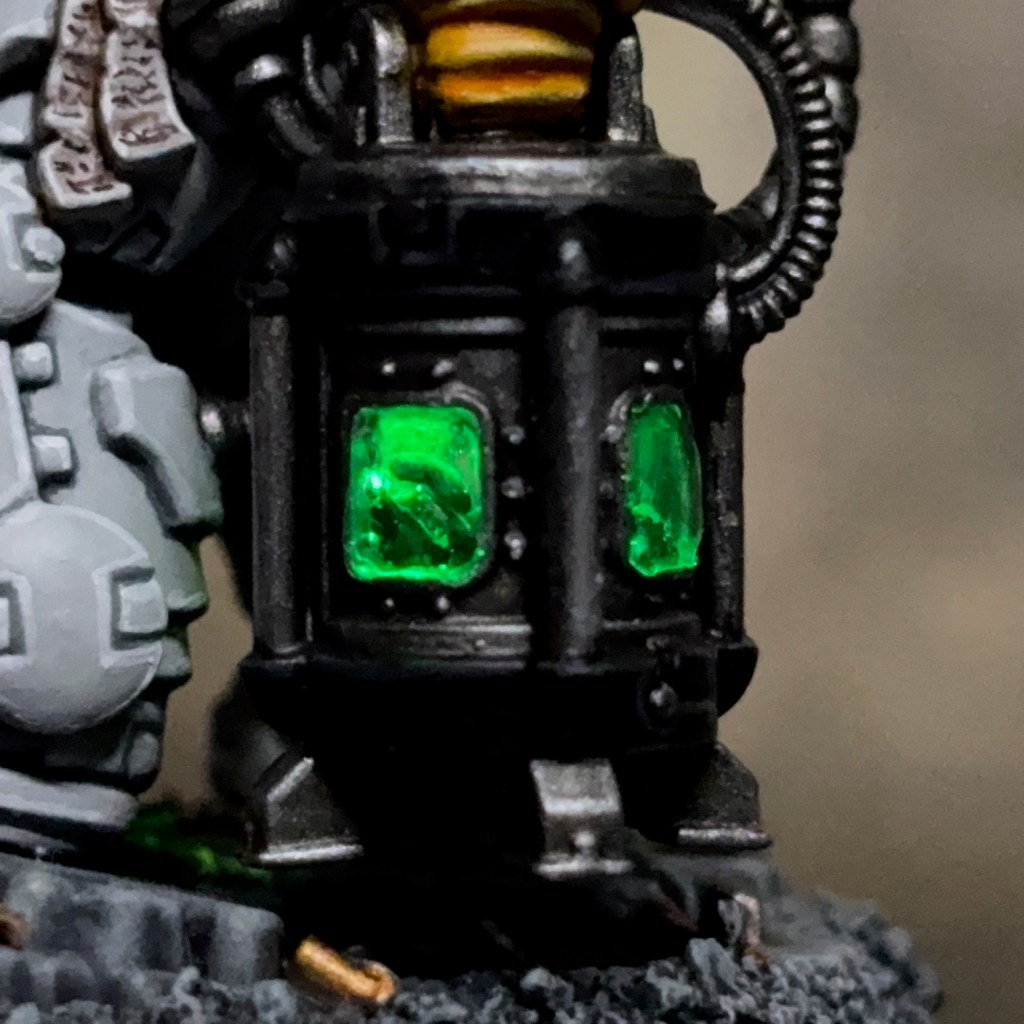
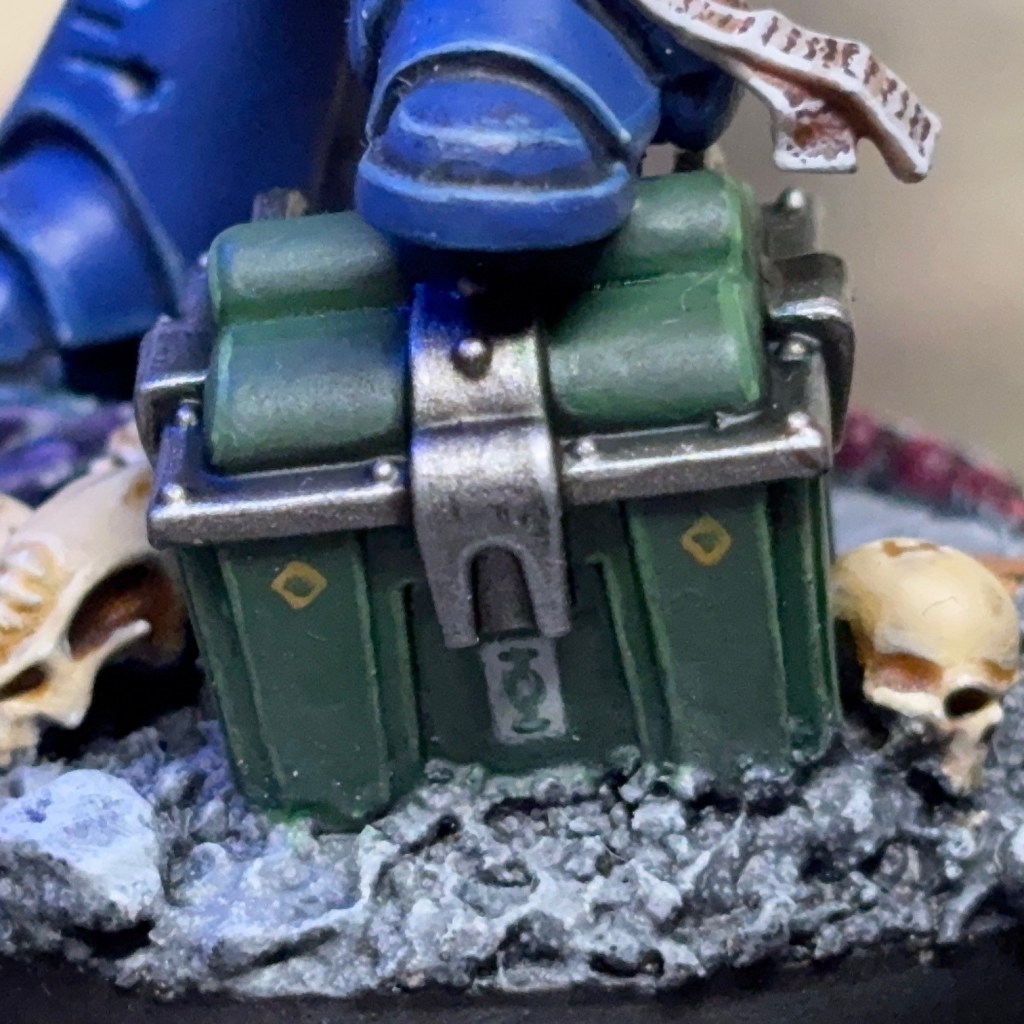
I followed the “official” scheme when choosing colours for this miniature, which seemed important as I was recreating a specific character. I did wonder about painting the Neuroloid in my Hive Fleet Cerberus scheme, but decided that was too much of a deviation from the Tyranids encountered in the game, so used the standard Hive Fleet Leviathan colours. The green box on the base is painted in the style of the crates that conceal ammo and supplies in the game.

This miniature used a lot of different paints, but I have included my recipes for a few key colours, just in case anyone is interested. All paints are Citadel unless stated otherwise. The miniature was spray undercoated Chaos Black.

  • Ultramarine Armour
  • Macragge Blue basecoat (two thin coats)
  • 50:50 Kantor Blue:Abaddon Black shade
  • Altdorf Blue highlight
  • Calgar Blue fine highlight
  • Fenrisian Grey fine highlight on top edges and corners
  • Blue Horror dot highlight
  • White Cloth
  • Administratum Grey basecoat
  • Apothecary White shade
  • Corax White layer
  • Skull White highlight
  • Administratum Grey thin glaze
  • Gold Details
  • Retributor Armour base coat
  • Reikland Fleshshade in recesses
  • Aggaros Dunes thinned glaze on lower portions of gold areas
  • Runefang Steel highlight
  • Urban Ruins
  • Mechanicus Standard Grey basecoat
  • Nuln Oil shade
  • Dawnstone drybrush
  • Administratum Grey drybrush
  • Skull White light drybrush

So there we are, my first completed miniature of 2025! Hopefully the corpse on the base allows it to also count as progress on my Tyranid project, haha! I’ll be back on the Ultramarines again in March for #MarchForMacragge, but before then I’ll be trying to progress my regular projects. Finally, if you haven’t played Space Marine 2, go and get it because it’s excellent! As ever, thanks very much for reading, and please remember you can also find me sharing my work on InstagramThreadsBluesky and Mastodon.
New Year, New(ish) Armies 2025

It’s that time of year when hobby plans are drawn up for the months ahead, so I thought it would be a good idea to share my plans for 2025. This is not only for my benefit, but also so we can all have a chuckle when I fail to meet the ambitious targets by the end of the year!

Tyranids

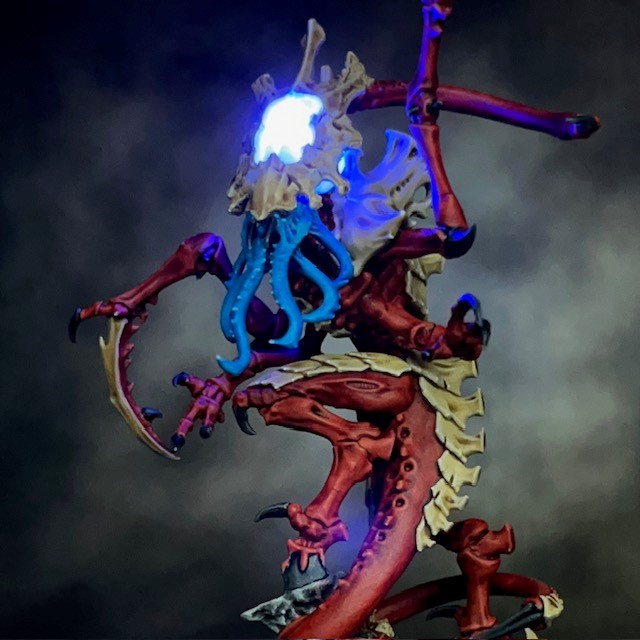
In January 2024 I introduced Hive Fleet Cerberus as my next big project. That plan didn’t quite survive contact with the enemy (the enemy in this case being hobby time management), but I’m keen to press on with the Tyranids as a high priority this year. The new Warrior Bioform Onslaught detachment has particularly inspired me!

Kruleboyz

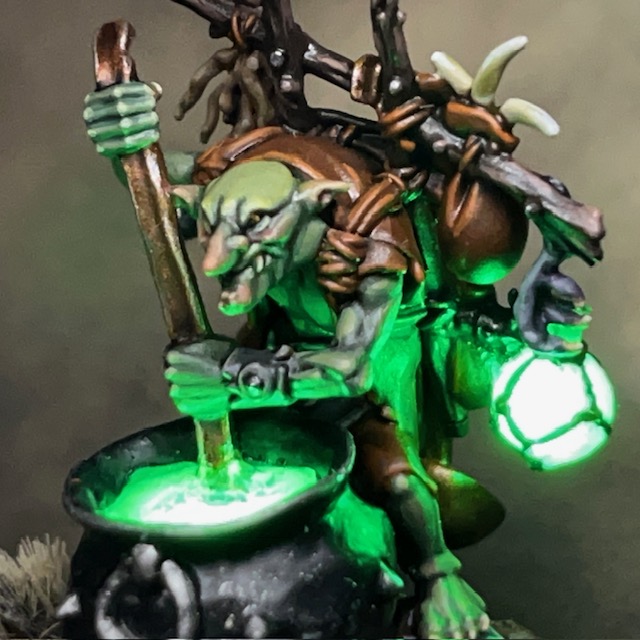
The Kruleboyz have been a back burner project for almost as long as the Tyranids, but I’d like to give them more focus and try and get a painted and playable Kruleboyz Spearhead on the table and some Age of Sigmar games under my belt. The new Orruk Battletome is also imminent at time of writing, which seems like a good time to jump in.

Kill Team

I need to get up-to-speed with the new edition of Kill Team, which includes buying the new rules and finishing my Silver Stars Astartes Kill Team.

Flesh Eaters

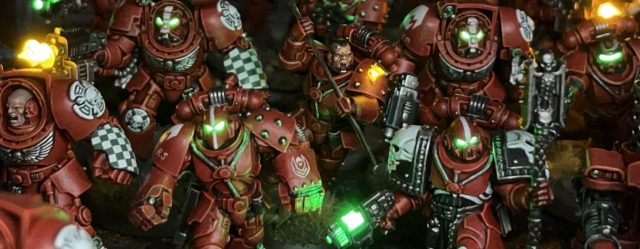
I plan to “finish” the Flesh Eaters this year – although can you ever really finish an army? – with a few more units, vehicles and characters. I also hope to finish the year with one final Armies on Parade entry for this army.

New Year, New Challenge

The Warhammer Community team have thrown down the gauntlet with the New Year, New Challenge bingo card. Taking part and posting your progress online gets you entered into a voucher prize draw, and completing a row can earn you a pin badge in Warhammer stores. I’ll be giving this a go!

So those are my hobby plans for the year! I also have a few other minor projects and one-off miniatures on the workbench which I’ll be posting soon. I hope you all have plenty of plans in mind for fun hobby too. As ever, thanks very much for reading, and please remember you can also find me sharing my work on InstagramThreadsBluesky and Mastodon.

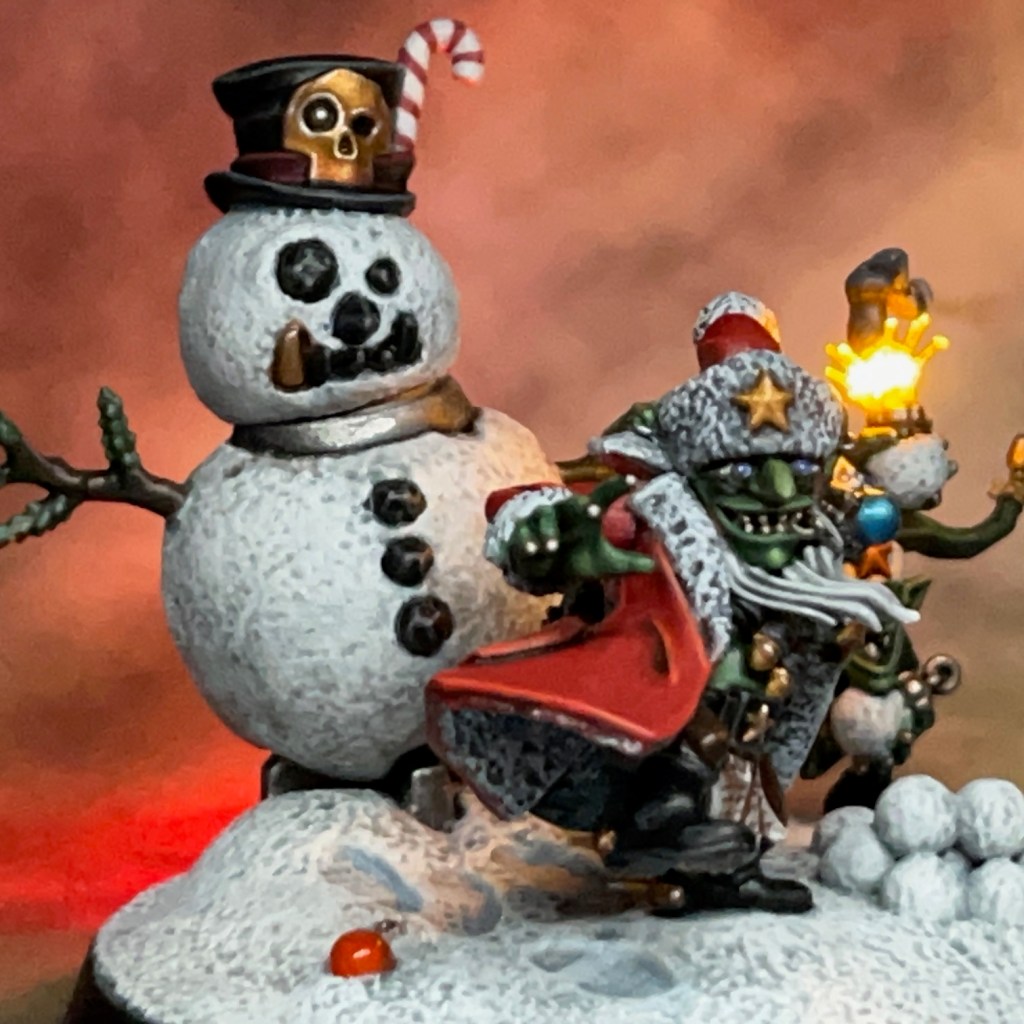
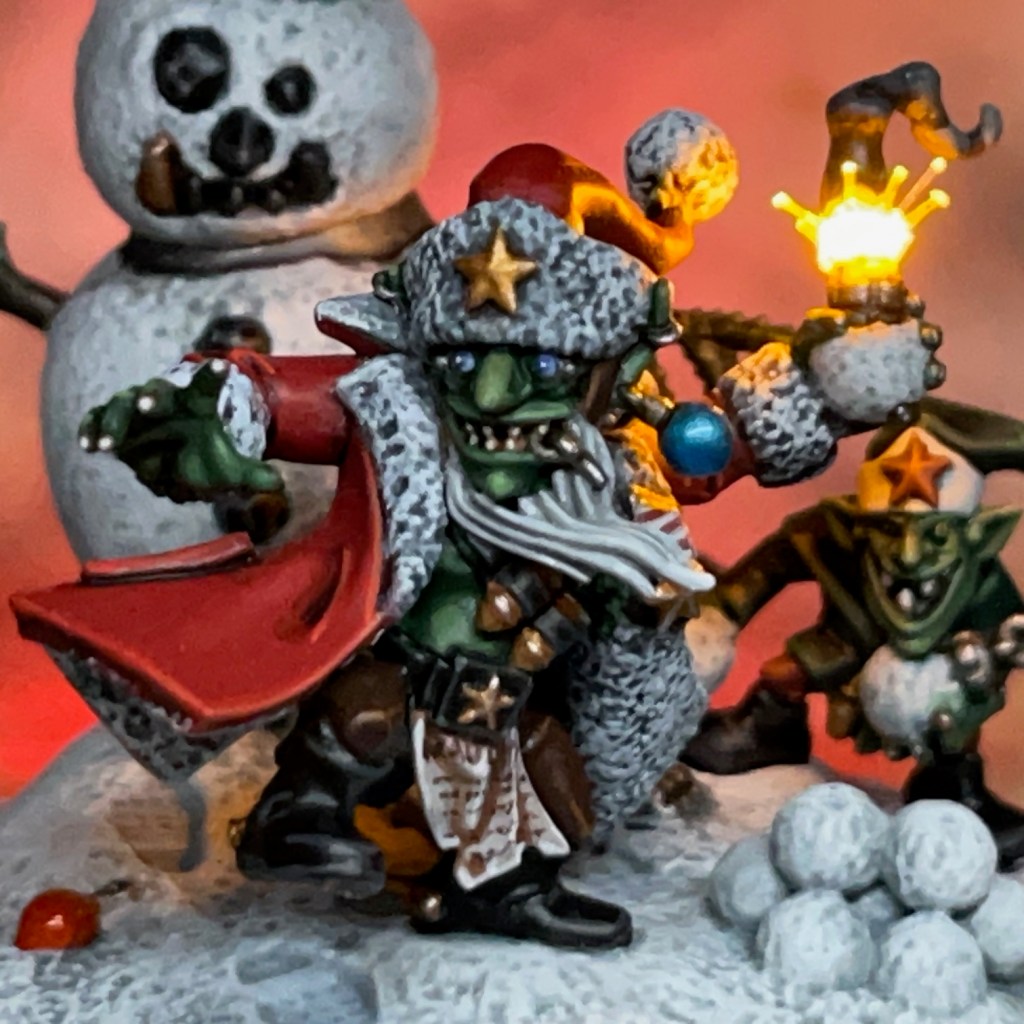
Da Red Gobbo’s A-Bomb-Inable Snowman

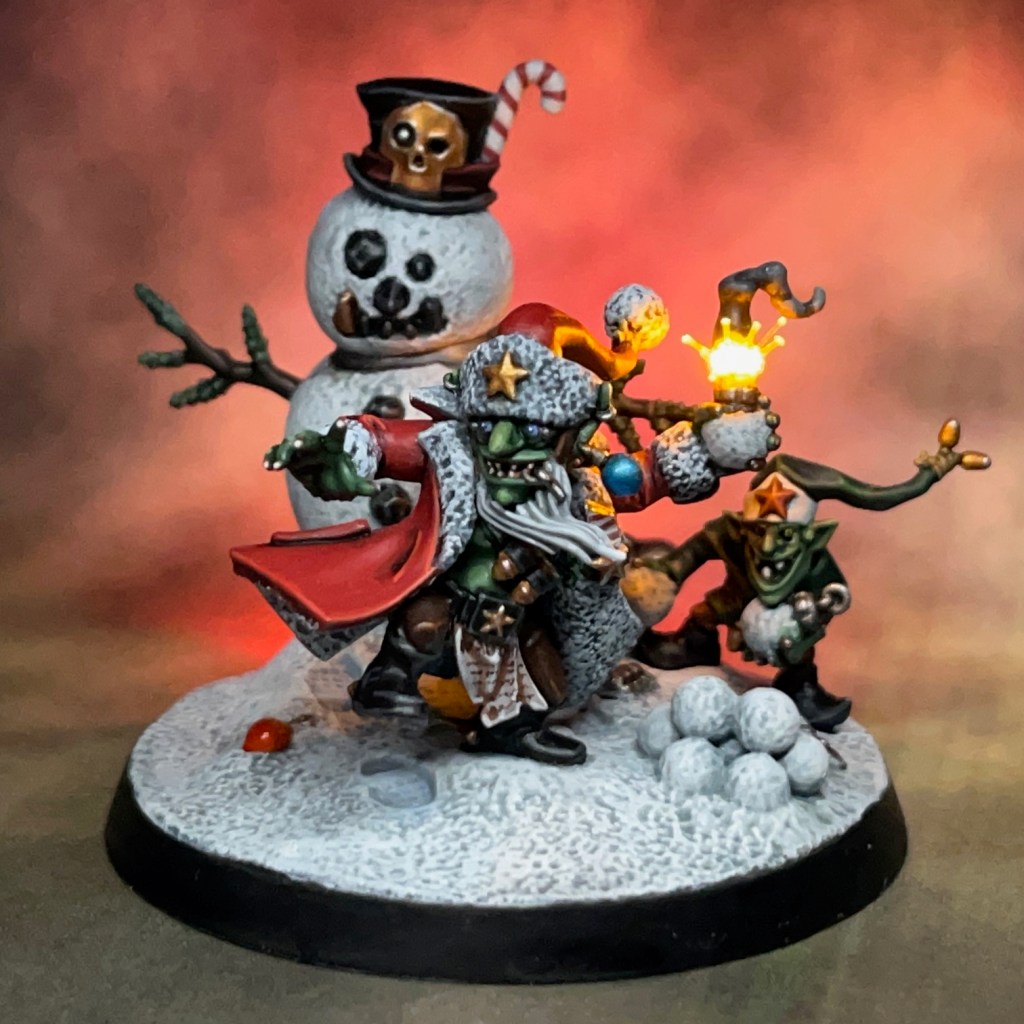
It just wouldn’t be Christmas without the Red Gobbo, so here’s my take on Games Workshop’s 2024 Christmas miniature, ‘Da Red Gobbo’s A-Bomb-Inamble Snowman’! Most of my LED miniature projects are meant for gaming so it’s always a nice change to paint a display model at this time of year. You may remember my take on Da Red Gobbo’s Surprise and Da Red Gobb & Bounca from previous years.

Modelling

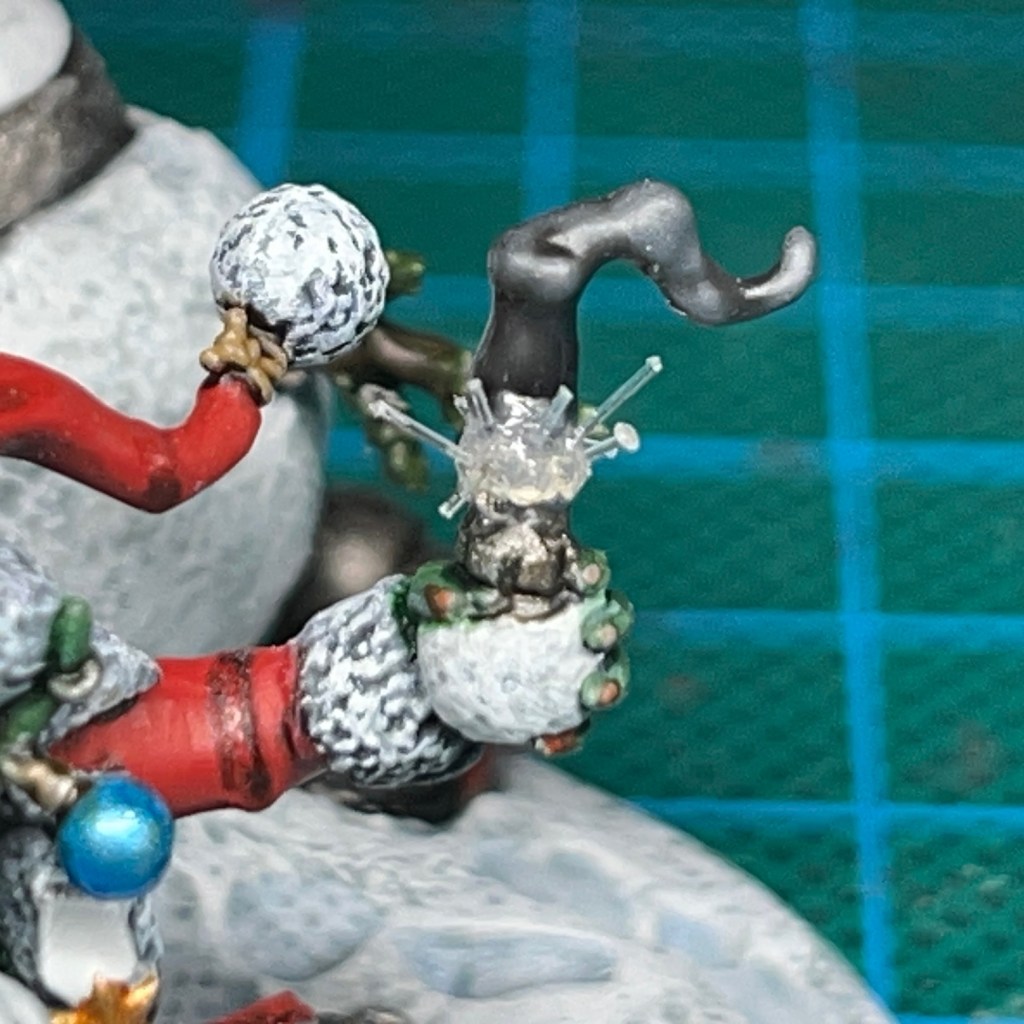
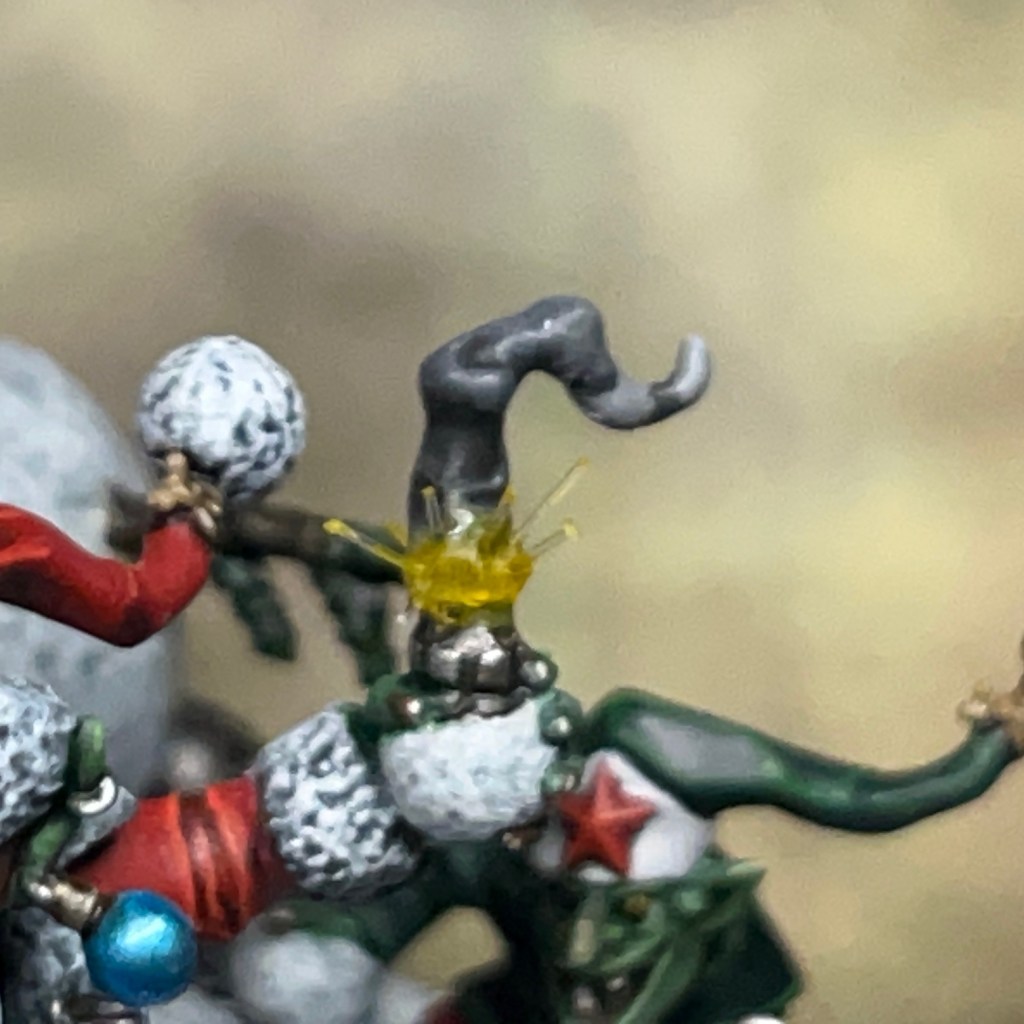
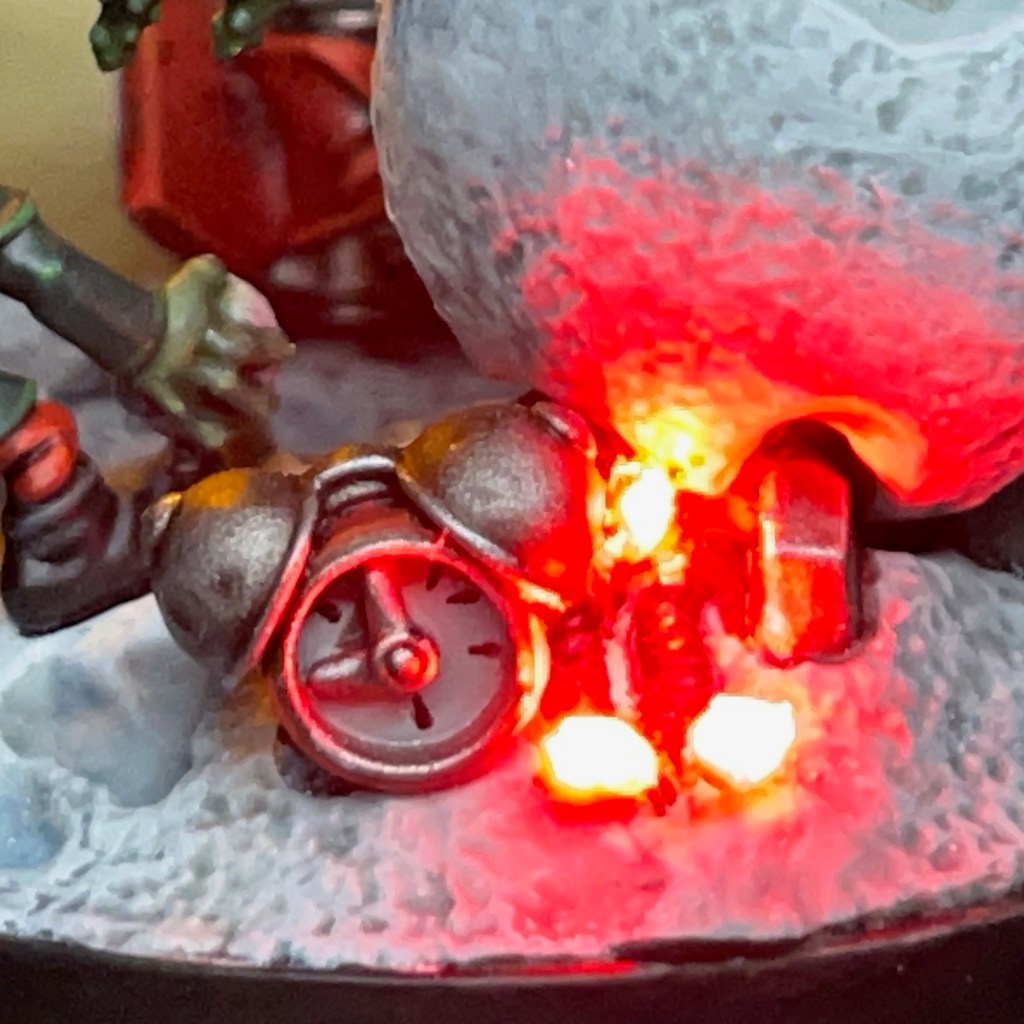
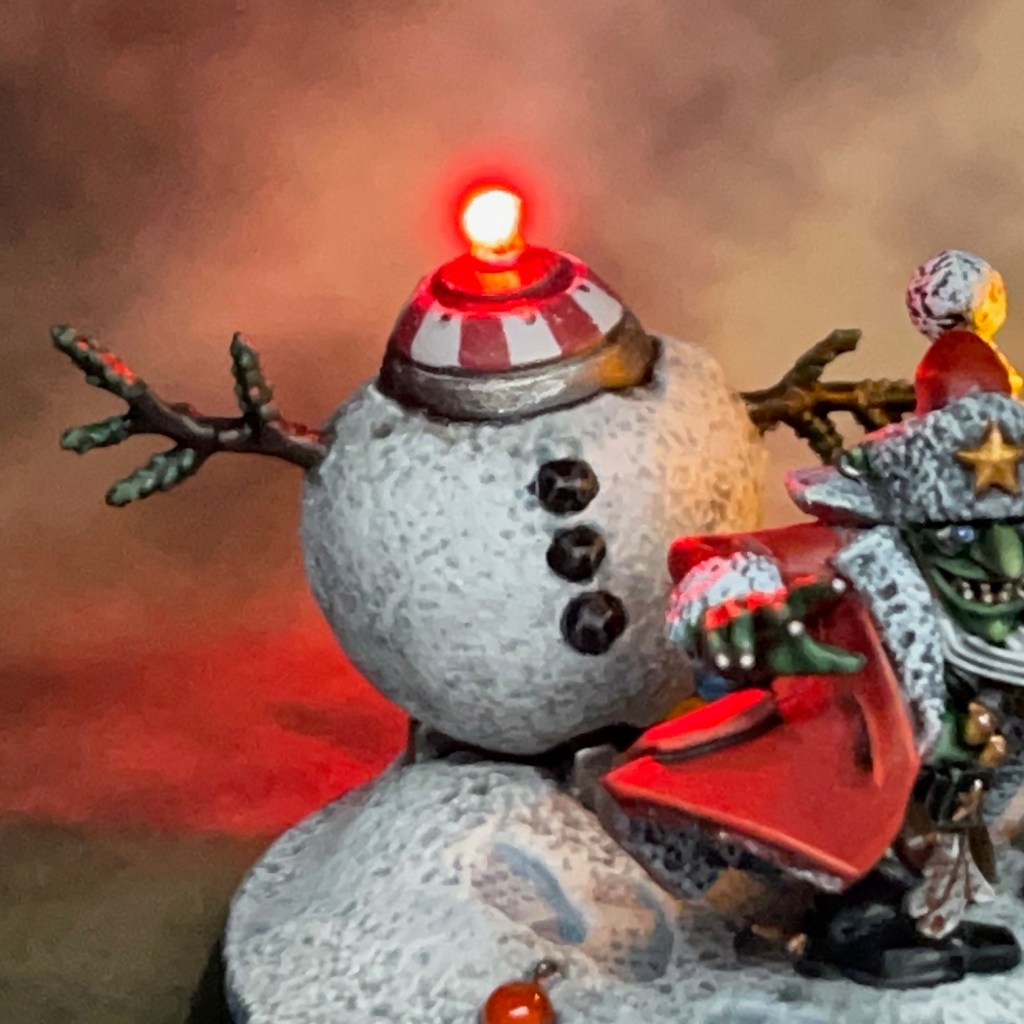
Each year when the new Red Gobbo is announced I’ve check the preview images for signs of sculpted Christmas lights and other light sources to work out how many LEDs I’m going to need to order. This year had fewer than normal. The grenade fuse was an obvious one, but there were also lights on the wire connecting the bomb timer to the snowman. As these are partially hidden, I thought it might be fun to compliment them with an additional light on top of the bomb.

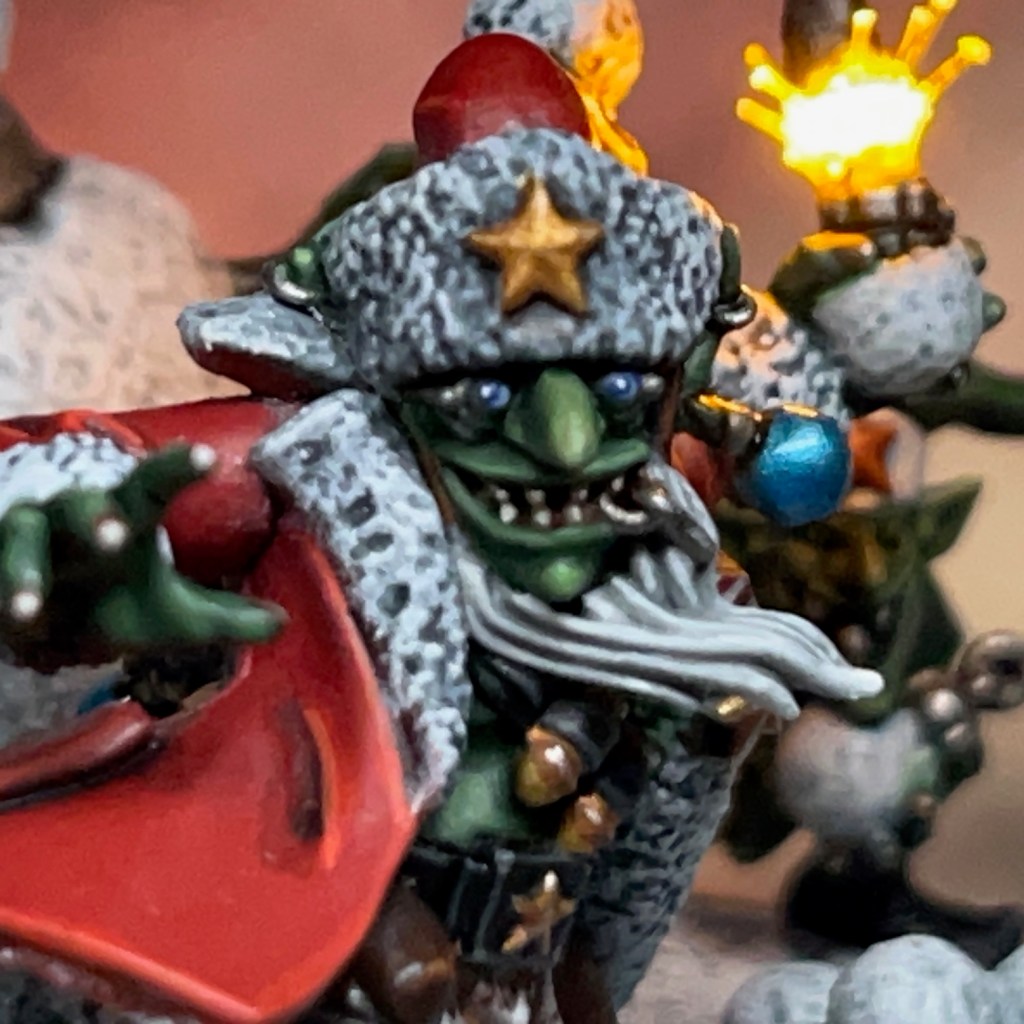
The object on the end of the grot assistant’s hat are open to interpretation. They could be lights, but I decided that making them lights would draw focus away from the Red Gobbo himself, so I painted them as sleigh bells instead!

The grenade fuse effect has been created from a Yellow/Amber 0805 Chip LED (3V) coated in acrylic gel, as per my Simple Muzzle Flare tutorial. To give the impression of sparks flying out of the fuse, I also added some very small lengths of fibre optic cable to the gel before it hardened. If you don’t want to purchase a full reel of fibre optic cable for this, you can simply cut small sections from a child’s toy using a sharp hobby knife.

I thought it might be fun if the LEDs connected to the bomb wiring were flashing, to help sell the idea it was counting down to detonation. The LEDs used were Red 0805 Flashing Chip LEDs (3V), flashing at approximately 1.5Hz. Each LED has its own inbuilt timer, and interestingly you can see minor variations in the manufacturing process mean that the frequency of each LED is very slightly different, so they slowly move out of sync. This was unintentional, but I don’t mind as I think it adds to the countdown effect – it reminds me of the lights on the Predator’s wrist-mounted self destruct mechanism!
Painting

Painting this miniature took longer than I expected. It felt like a relatively small miniature, but there were a lot of different colours used and areas of high detail. I mostly followed my own Ork-related paint recipes found in this article and the suggestions for previous Red Gobbos in the Citadel Colour App. I did consider using snow flock or texture again, as I had previously with Red Gobbo & Bounca, but I decided against it as I didn’t want to risk obscuring the details on the base.

I repainted the snow on this miniature because I wasn’t happy with my first attempt, and to be honest I’m not sure I’m 100% happy with the final version. But ‘perfect’ is the enemy of ‘done’, as they say! The snow recipe I settled on is shown below. All paints are Citadel Colour unless specified otherwise.

  • White Snow
  • Corax White base coat
  • Apothecary White shade
  • Skull White heavy drybrush
  • Fenrisian Grey thin glaze in areas of compacted snow (e.g. footprints)

I shared this tip for painting miniature Christmas baubles with last year’s Red Gobbo, but I’d like to share it again. base coat the bauble in a light silver like Runefang Steel, and then apply two coats of either Spiritstone RedSoulstone Blue or Waystone Green. This gives a lovely glossy, metallic festive finish!

That’s all for today, I hope you’ve enjoyed my latest take on the Red Gobbo. I wasn’t the only one to make an LED Red Gobbo this year – check out these other versions from warhamster_king_of_leds and therealmcrafter.

I still have a few more miniatures that I want to get finished before the end of the year, so please stay tuned over the Christmas holidays. As ever, thanks very much for reading, and please remember you can also find me sharing my work on InstagramThreadsBlueskyMastodon, and Twitter/X.

Silver Stars Marksman

I’m still tidying up after Armies on Parade this week. Last week I was rebasing Brother Garrett, and this week I’m doing the same for the Silver Stars Marksman. This sniper was last seen taking aim at the Flesh Eaters on my 2024 Armies on Parade, but now he has been given a proper base to join my growing Silver Stars Angels of Death Kill Team. He will take the role of ‘Intercessor Warrior with Stalker Bolt rifle’. This miniature will also be my entry into Apologist’s #HiddenArmies challenge.

Modelling

As with all my previous Silver Stars, this marine is built using a Primaris marine body and legs. The arms, pauldrons, backpack and bolter are from the previous version of the plastic Legion MkIII Tactical Squad set. To give the legs a more “antiquated” look, I added Mixed Micro Glass Balls from Green Stuff World as armour studs on the legs. To get the sniper pose, the legs required significant cutting an repositioning. You can see a work in progress image below, before I filled in the gaps with modelling putty.

The head is from the Legion MkVI Tactical Squad sprue. All of my Silver Stars are either wearing helmets or masks that cover their face. They are also all unnamed, unlike my Flesh Eaters. This is to help add to their sense of mystery.

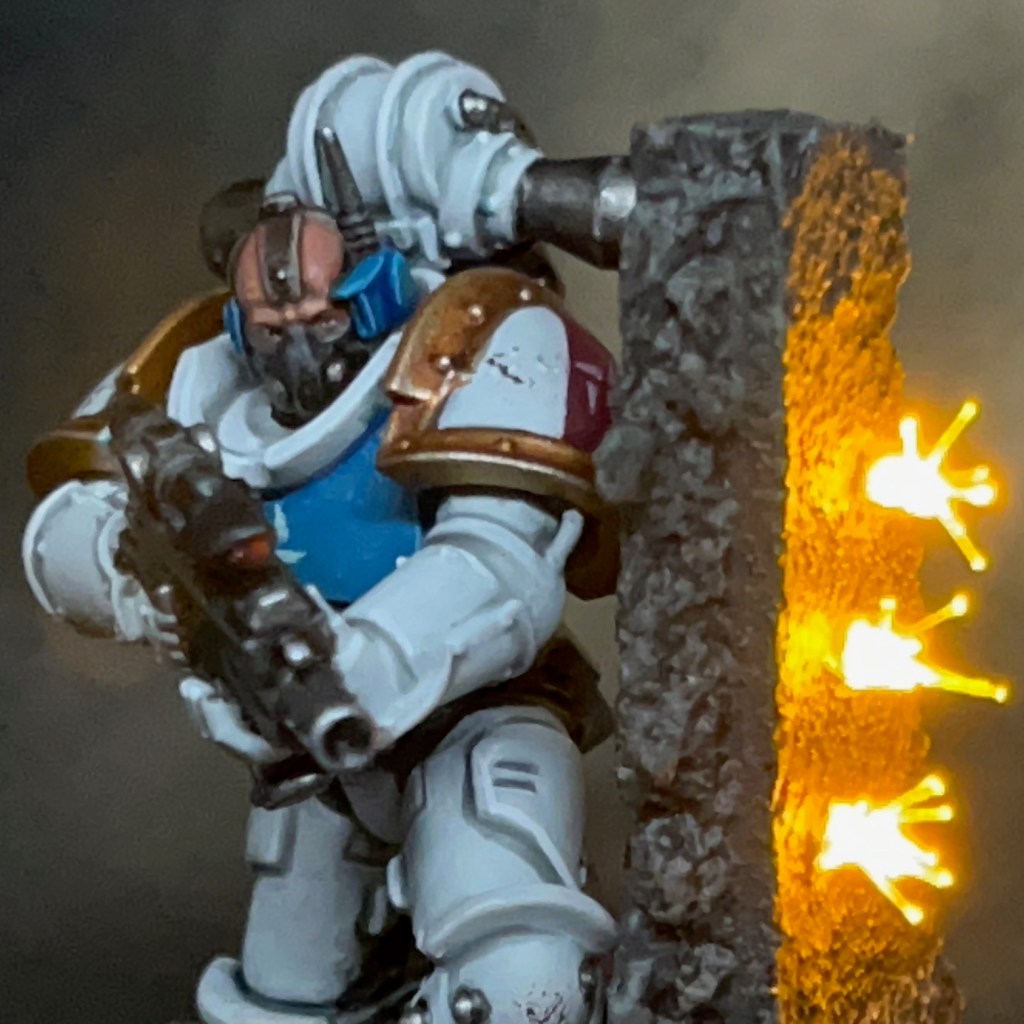
When rebasing this miniature for game use, I thought it might be fun if he was seeking cover from incoming fire, just to help sell the pose. The LED techniques used here are based on my Simple Muzzle Flare tutorial, only with three LEDs connected in parallel instead of one.

I used a small section of cork tile to represent a broken concrete wall. Cork tile is great for this sort of thing as it is easy to work with and has a great texture when torn.

Normally I run the wires inside my miniatures, but because cork tile is quite soft, it’s difficult to drill through, especially for multiple wires. So in this case I simply concealed the wires under a layer of Milliput and then added some textured paste to help conceal it.

The final stage was to apply Green Stuff World acrylic gel to the LEDs, as per my Simple Muzzle Flare tutorial. To give the impression of additional debris, I also added some very small lengths of fibre optic cable to the gel before it hardened. If you don’t want to purchase a full reel of fibre optic cable for this, you can simple cut small sections from a child’s toy using a sharp hobby knife.

Painting

I used the same paint recipe for this Silver Star as detailed in this post, plus this post which expands on painting Silver Stars insignia. As you can see, this Marksman is another member of Squad Antimony.

The graffiti on the broken wall was influenced by this classic 40K diorama shown in the Rogue Trader rulebook.

That’s all for today, I hope you’ve enjoyed this insight into the latest member of my Silver Stars Kill Team. As ever, thanks very much for reading, and please remember you can also find me sharing my work on InstagramThreadsBlueskyMastodon, and Twitter/X.

Brother Garrett, Flesh Eater Assault Intercessor

A dagger in the dark is worth a thousand swords at dawn.

Imperial Proverb

It’s more Armies on Parade aftermath from me this week. Last week I was finishing up a Silver Stars Vox Operator who missed the deadline. This week I’m converting Brother Garrett – last seen sneaking through a pipe in my 2024 Armies on Parade entry to gut an enemy sniper – into a properly based and game-ready member of my Assault Intercessors.

Modelling & Painting

Although I’m lucky enough to have a dedicated hobby space, I don’t have space to permanently store all my various display boards. Even before ‘Ambush at Pipeline 13’ was finished, I knew that I would be taking it apart and reusing the components elsewhere. Brother Garrett was easy to repurpose, and fairly simple as my LED miniatures go. He uses the techniques set out in my LED Eye Lens tutorial. The helmet eye lens effects are built around a Tru Opto Green 1.8mm LED with a 10 ohm resistor.

The servo skull was also originally spotted buzzing around Pipeline 13. It was built around a plastic servo skull and using the same techniques I used with Brother Nikko and Inquisitor Kant. I drilled out the eye and fed the wires of a 3V green 0603 nano SMD chip LED in through the eye hole and out of the bottom of the skull, then gently pushed the LED into the hole with fine tweezers. The wires then formed the “tail” of the servo skull. Then I applied a small blob of Water Splash Effect Gel, available from Green Stuff World, to fill in the hole over the LED. When adding the servo skull to Brother Garrett’s base, I simply wired it in parallel with Brother Garrett’s helmet LED. Both LEDs are controlled by a single switch in the base next to the battery.

The helmet eye lenses and the eye on the servo skull both received a glaze of Citadel Biel-Tan Green. This is to give the eyes some colour when the LED is off, as you can see in the image below (right).

Brother Garrett’s pose made the most sense in his original context when he was ‘mid sneak‘, but hopefully even out of that context he still looks like he is preparing to deliver a stealthy kill. The knife sheath strapped to his shoulder is from the Primaris Intercessors kit. I had to cut off around a quarter of its length to prevent it overhanging the shoulder pad, and it’s still large enough to obscure his vision to the left. Ah well, ‘rule of cool’ always wins!

I don’t really have anything new to say on the paint scheme. I used my standard Flesh Eaters paint recipes detailed here. The only difference was using additional glazes of Nuln Oil and Gryph-Charger Grey applied to the blade of the combat knife to add reflection points to the true metallic metal, as you can see in the image above (left).

That’s all for today, I hope you’ve enjoyed this insight into my latest Flesh Eaters marine. There will be even more Armies on Parade aftermath next week, so stay tuned! As always, thanks very much for reading, and please remember you can also find me sharing my work on InstagramThreadsBluesky, Mastodon, and Twitter/X.