Hive Fleet Cerberus & New Year, New Army

Hive Fleet Cerberus

We’re in ‘New Year, New Army’ season, so now is the perfect time to introduce my next big project – the Tyranids of Hive Fleet Cerberus! I already have a Tyranid army that has been plaguing the galaxy for decades. In fact, they’re the only army I own that has – in some form or another – consistently seen the tabletop in every single edition of Warhammer 40,000. They took part in the global Ichar IV campaign back in the 1990s, so it has always been my ‘headcanon’ that Hive Fleet Cerberus was a splinter of Hive Fleet Kraken, skulking off to terrorise the Eastern Fringe in the aftermath of that epic conflict. The name Cerberus is intended to allude to the “multi headed” threat of the splinter fleets.
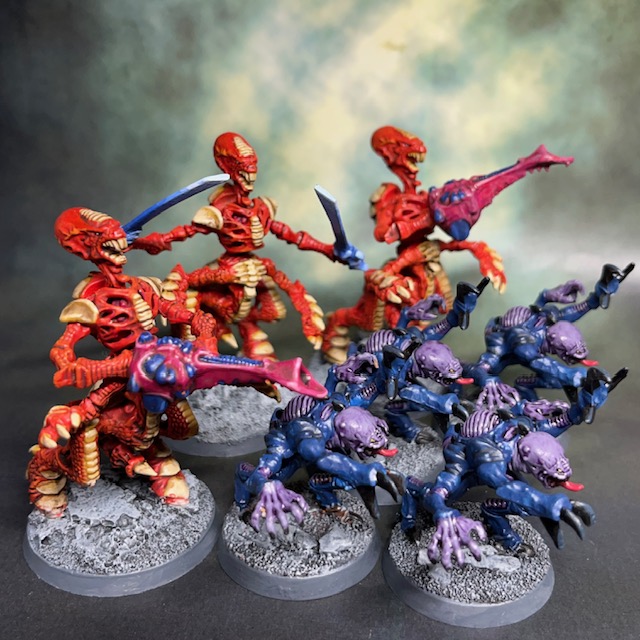
This army has soldiered on with many of the original Tyranid models for many years now, as shown above. These were among the first xenos models I ever purchased, and they will always hold a special place in my nostalgic gamer’s heart. But the arrival of the Leviathan boxed set last summer convinced me that it was time for a long-overdue revamp of this force. I will be adding the Hive Fleet Cerberus tag to my blog, if you want to follow search for any posts relating to this project as it progresses.

If you’re a regular reader, you may also recall I made a ‘soft start’ to this project back in July 2023 with my Leviathan Screamer Killer.

Paint Palette

When it came to picking the colours for this revamp project I wanted to stick fairly close to my original Hive Fleet Cerberus scheme, which was also the “official” Games Workshop scheme back in the day. So this meant red for flesh and bone for carapace. After some thought on what colour bioweapons should be I eventually settled on blue. This forms a triadic colour harmony with the red and the yellowish tint of the bone. I find this free Colour Wheel website a useful reference for choosing complementary colours schemes for painting projects.

You can see some examples below of the classic Tyranid colour scheme from the 1990s. This is my main source of inspiration for the colours of Hive Fleet Cerberus.

When I list my painting recipes on this blog, I’m not only recording them for those of you who are interested in using them, but also as a reminder for myself. Below are the paint recipes for Hive Fleet Cerberus, and I’m sure I’ll be referring to this post frequently throughout the project. All paints listed are from the Citadel range and are applied over an undercoat of Citadel Wraithbone spray.

  • Red Flesh
  • Contrast Blood Angels Red
  • Wild Rider Red highlight
  • Troll Slayer orange dot highlight on sharp points
  • Bone Carapace
  • Contrast Skeleton Horde
  • Screaming Skull highlight
  • Skull White dot highlight on sharp points
  • Blue Bioweapons
  • Contrast Talassar Blue
  • Lothern Blue highlight
  • Blue Horror dot highlight on sharp points
  • Black Claws
  • Contrast Black Templar
  • Eshin Grey highlight
  • Dawnstone dot highlight on sharp points
  • Head Mottling
  • Naggaroth Night irregular dot
  • Genestealer Purple layer inside dot
  • Yellow Eyes
  • Averland Sunset base coat
  • Agrax Earthshade shade
  • Yriel Yellow layer
  • Abaddon Black pupils
  • Urban Ruins Base
  • Mechanicus Standard Grey base coat on rocks
  • Warplock Bronze base coat on metal debris
  • Contrast Skeleton Horde on skulls
  • Nuln Oil shade over rocks and metal
  • Dawnstone drybrush on rocks
  • Administratum Grey drybrush on rocks
  • White Scar drybrush on rocks
  • Retributor Armour highlight on metal debris
  • Screaming Skull highlight on skulls
  • Skull White dot highlight on skulls
  • Citadel Middenland Tufts (used sparingly)
  • Abaddon Black rim

When I’m painting a display miniature or a small model count army, then I prefer the traditional painting methods of base coat, shade, multiple highlights and glazes. But if I was to try and apply that to the Tyranids I don’t think my sanity would hold out (although that would be fitting)! So I’ve decided that Contrast paints and one or two highlights are the best compromise between speed and acceptable quality. You can see the first test Termagant above, and I’m pleased with the results.

LED Palette

Since my Crimson Fists project I tend to specify a limited LED colour palette for new armies. This is to ensure they don’t look like multi-coloured Christmas decorations when the force is fully assembled on the tabletop. Hive Fleet Cerberus will use the following limited LED colour palette:

  • Blue for bio plasma, psychic weapons and psychic abilities.
  • Yellow for bullet impacts and fire.

I expect to use less LEDs in this project than in my space marine armies. My first rule of LED miniature design philosophy is “follow the art”. What this means is that I won’t put effects like LED muzzle flares on bio weapons that launch their projectiles through muscle spasms rather than gunpowder, as that wouldn’t make sense. Pyrovores on the other hand…
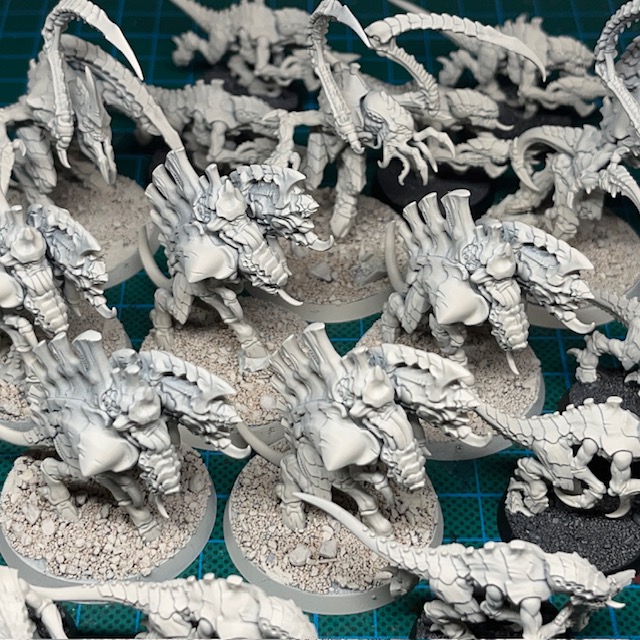
My painting desk is swarming with Tyranids!

Army List

Below is the initial 1000 point army list that I’m aiming for. I hope to have this done by the summer so I can start playing some small games with this force. This list uses the ‘Invasion Fleet’ detachment.

  • Hive Tyrant
    • Heavy venom cannon
    • Monstrous bonesword and lash whip
    • Warlord
    • Enchancement: Perfectly adapted
  • Termagants x 10
  • Termagants x 10
  • Termagants x 10
  • Barbgaunts x 5
  • Neurolictor
  • Screamer Killer
  • Tyranid Warriors x 3
    • Melee bio-weapons
  • Von Ryan’s Leapers x 3
  • Zoanthropes x 3

Once the initial 1000 points are finished, what will be next? Tyrant Guard and a Biovore will be high priority, as I think they are awesome models. I’ll probably also need more fire power in the form of either Hive Guard, Exocrine or a Tyrannofex. A second Screamer Killer would be great too, as would some Lictors! My army list choice is always based on what I think looks cool, not what makes any tactical sense. I just can’t bring myself to paint miniature I’m not enthused about.

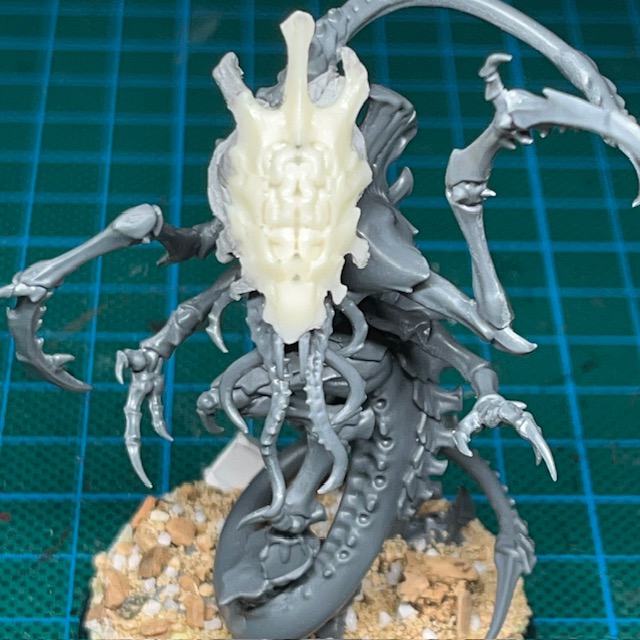
Like all my armies, I’m sure Hive Fleet Cerberus will be a slow-burn project. The Crimson Fists took about three years to complete, and the Flesh Eaters are also coming into their third year. So don’t expect to see a new unit of Tyranids every week! Having said that, here’s a preview of a another Tyranid miniature that is currently on my workbench…
What Else This Year?

It won’t just be Tyranids all the way down in 2024, I’ll also be continuing to expand my Flesh Eaters, painting a small Age of Sigmar force, plus working on a couple of one-off display projects.

That’s all for today, I hope you’ve enjoyed this introduction to my Tyranid project. Thanks very much for reading, and please remember you can also find me sharing my work on InstagramThreadsTwitter/XBluesky and Mastodon.
My Red Gobbo on WarhammerTV

Yesterday I was fortunate enough to have one of my models make it onto Warhammer TV Twitch channel again!

My Red Gobbo’s Surprise featured alongside the work of other hobbyists on this Thursday’s ‘Hang Out and Paint Christmas Special’ episode on Warhammer TV (Thursday 22nd December episode, at around the 1 hour 23 minute mark, if anyone would like to see it).

It’s always an honour to have had my work exhibited in this way, and a big thank you to Em, Lewis, Ollie and the rest of the Warhammer Community Team for their kind words about this miniature!

Da Red Gobbo’s Surprise

Silent night? Nah, let’s make it a holey night!

Red Gobbo

There’s still time to fit in a bit more hobby before the end of the year, so here’s Games Workshop’s 2023 Christmas model, Da Red Gobbo’s Surprise! The majority of my LED miniature projects are intended as gaming pieces, but this one is definitely more for display.

Modelling

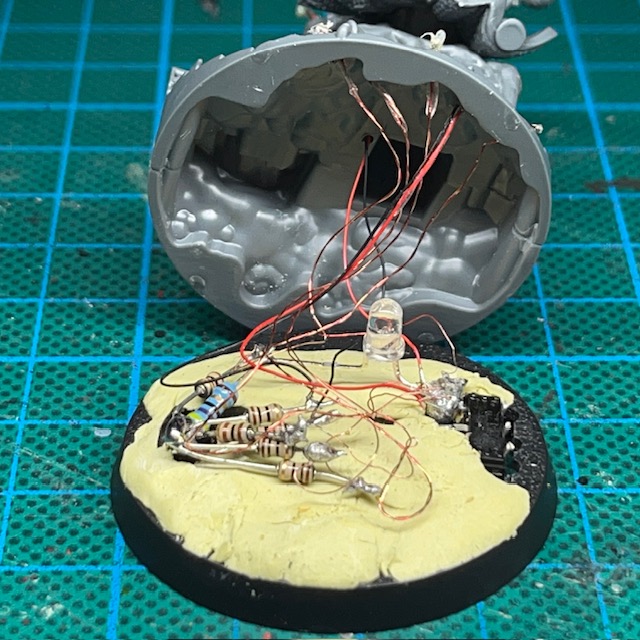
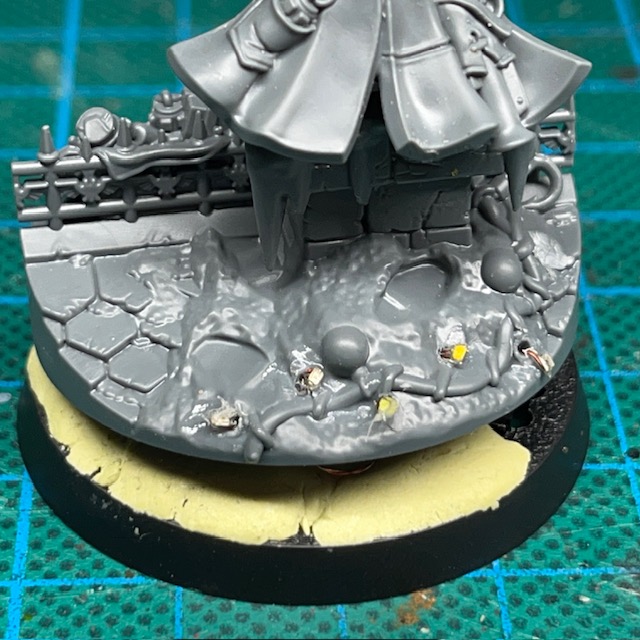
This model was an absolute gift to illuminate, as most of the scenic base is hollow, including the chimney. You can see this in the ‘work in progress’ images below. The techniques I used to achieve this were similar to those in my Nighthaunt LED Candle short-form tutorial, with each LED and resistor pair repeated in parallel.

The dynamite fuse and the fairy lights are made with individual 3V ultra nano SMD chip LEDs, with Water Splash Effect Gel used to create the sparks and fairy light bulbs respectively. I enhanced the sparking fuse effect with tiny 2-3mm lengths of fibre optic cable that I cut and inserted into the acrylic gel at different angles while it was still curing.

I must admit I did think about skipping the fairy lights on the grappling hook wire, since they’re on the back of the model and may not be seen. But in the end I knew that I I would feel I hadn’t done a proper job on the miniature if I didn’t include them. I went for red, yellow, green, blue, and then back to red again to give the impression of a repeating pattern that was part of a much longer string of lights. The 3V ultra nano SMD chip LEDs I used were not available in yellow or green from my normal supplier, so I simply used white LEDs and then applied a glaze of paint to the acrylic gel ‘bulbs’ in the required colour to tint the white light. The flickering chimney fire is made from a 3mm candle effect LED (and 47 ohm resistor) directly under the hollow chimney.

When planning this miniature, I did also consider illuminating the Red Gobbo’s eyes, to make it look like he was wearing night vision goggles similar to my Grot Kommando. But in the end, I decided against it. The Red Gobbo is pictured with simple flying goggles in the artwork and animations, so I applied Rule 1 of my LED Miniature Design Philosophy and just painted the goggles as blue glass.

Painting

When painting this miniature I mostly followed my own Ork-related paint recipes found in this article and the suggestions for Da Red Gobbo in the Citadel Colour App. I did consider using snow flock again, as I had previously with Red Gobbo & Bounca, but I was concerned it might obscure some of the detail on the base, like the presents and fairy lights. In the end I decided to simply hand paint the snow.

As an aside, if you ever find you need to paint miniature baubles(!), then my tip is to paint the bauble in a light silver like Runefang Steel, and then apply two coats of either Spiritstone Red, Soulstone Blue or Waystone Green. This gives a lovely shiny festive finish!

That’s it for today. I hope you’ve enjoyed this bit of festive fun! Thanks very much for reading, and please remember you can also find me sharing my work on InstagramThreadsTwitter/XBluesky or Mastodon.

Fabius Bile, the Clonefather

If a man dedicates his life to good deeds and the welfare of others, he will die unthanked and unremembered. If he exercises his genius bringing misery and death to billions, his name will echo down through the millennia for a hundred lifetimes. Infamy is always more preferable to ignominy.

Fabius Bile

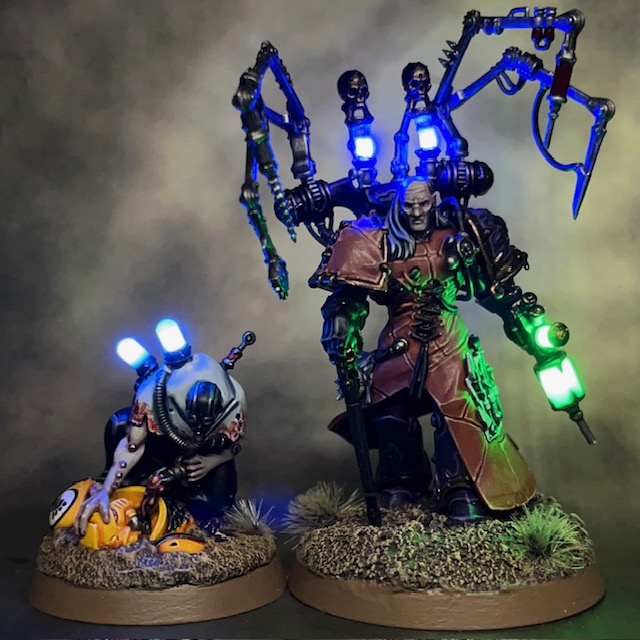
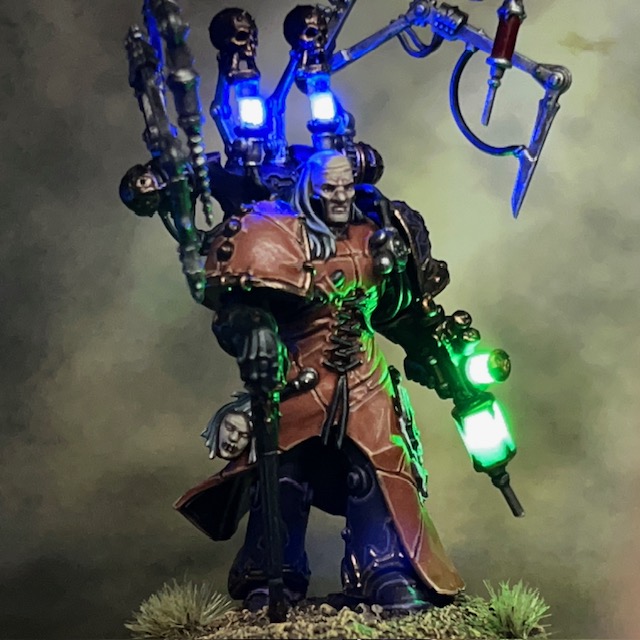
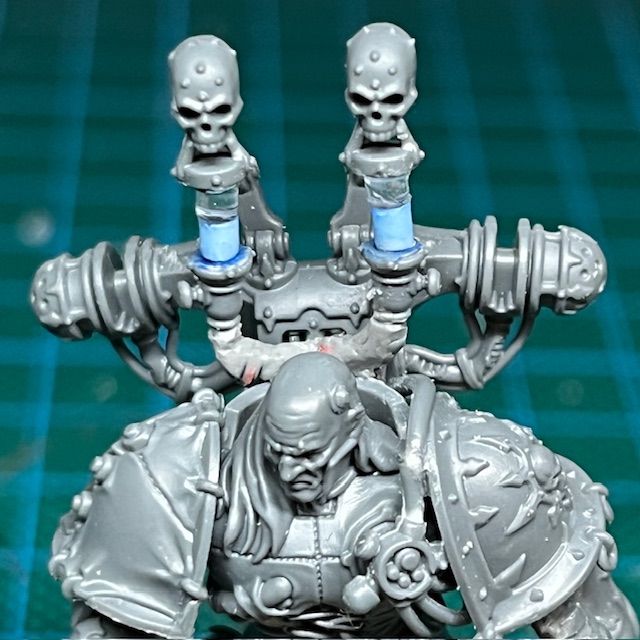
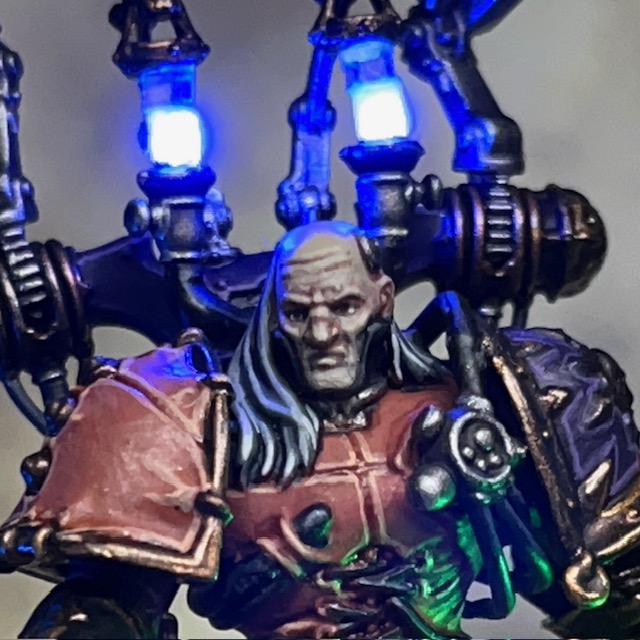
This week I’ve finally finished Fabius Bile, a project that I started in March this year! This is the second part of a (now very overdue) birthday gift ‘commission’ for a friend. The first part was the Surgeon Acolyte, that you can see in an earlier post. Rather than helmet eye lenses, or weapon muzzle flares, the LEDs in these miniatures are being used to represent ominous glowing vials of daemonic ichor and the potent poisons of the Xyclos Needler. My friend, who will shortly be the owner of this miniature, specifically chose the colours for the LEDs.

Modelling

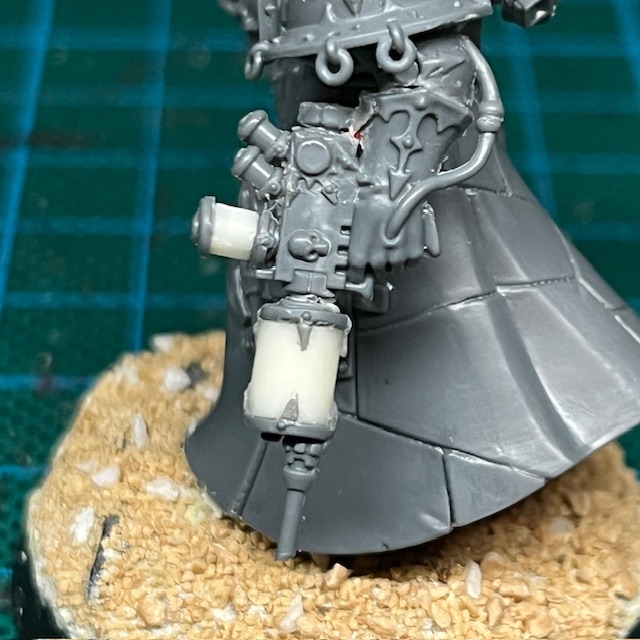
As with many of my LED techniques, I was looking for a uniform glow from the point of interest – in this case the various vials and cylinders. I’ve written a short-form tutorial for how I achieved the glowing vials in my previous post on the Surgeon Acolyte, and I used the same technique for the Needler. The only specific difference worth noting is the shoulder-mounted ichor vials on Bile. The lower halves are made of 2mm resin rod that I cast myself, which conceal the LEDs. The top halves are made from 2mm transparent acrylic rod, to give the effect that the vials are only half full. All the LEDs are 3V 0603 SMD chip LEDs powered by a single coin cell battery and switch in the base of the miniature, as described in my Simple LED Muzzle Flare tutorial.

Painting

When it came to painting the miniature, I largely stuck to the official colour scheme and the specific paints recommended by the Citadel Colour app, as I didn’t have any good inspiration for an alternative. The only real difference was that I made Bile’s face look quite pale (using Flayed One Flesh and Pallid Wych Flesh), and then made his hair grey rather than white to better frame the face.

So there we go, Fabius Bile is complete and off to his new home. I hope you’ve enjoyed this slightly different project. Thanks very much for reading today’s post, and please remember if you’re on InstagramThreadsTwitter/XBluesky or Mastodon you can also find me posting my work there.

Retro Relics Games Cafe

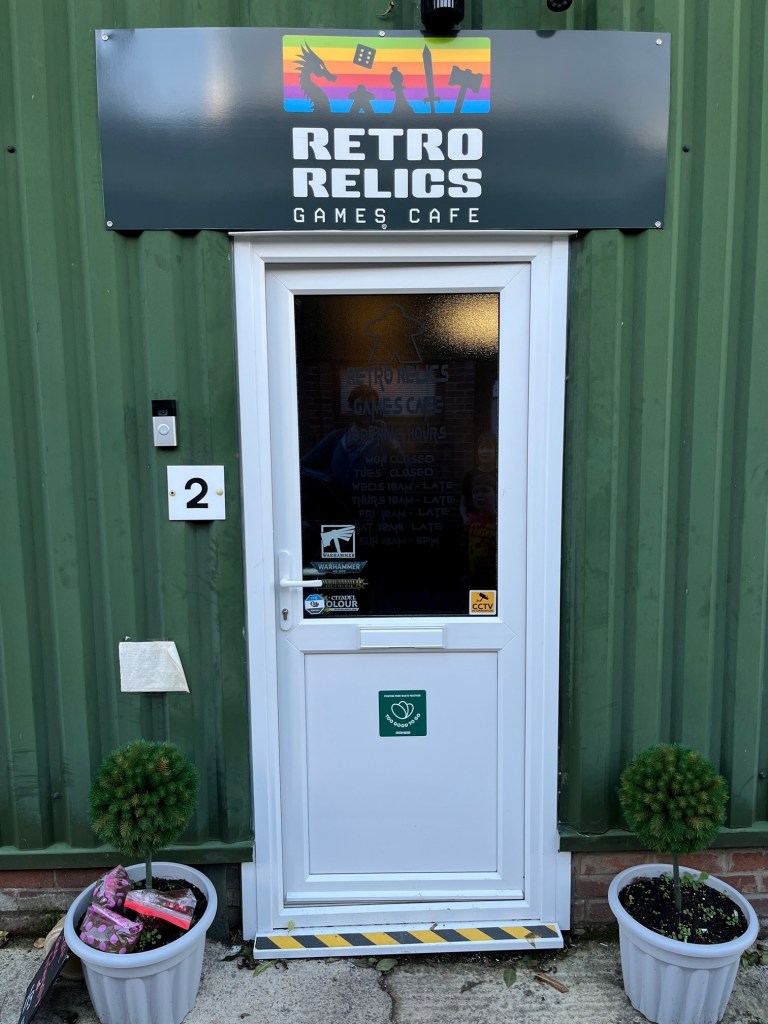
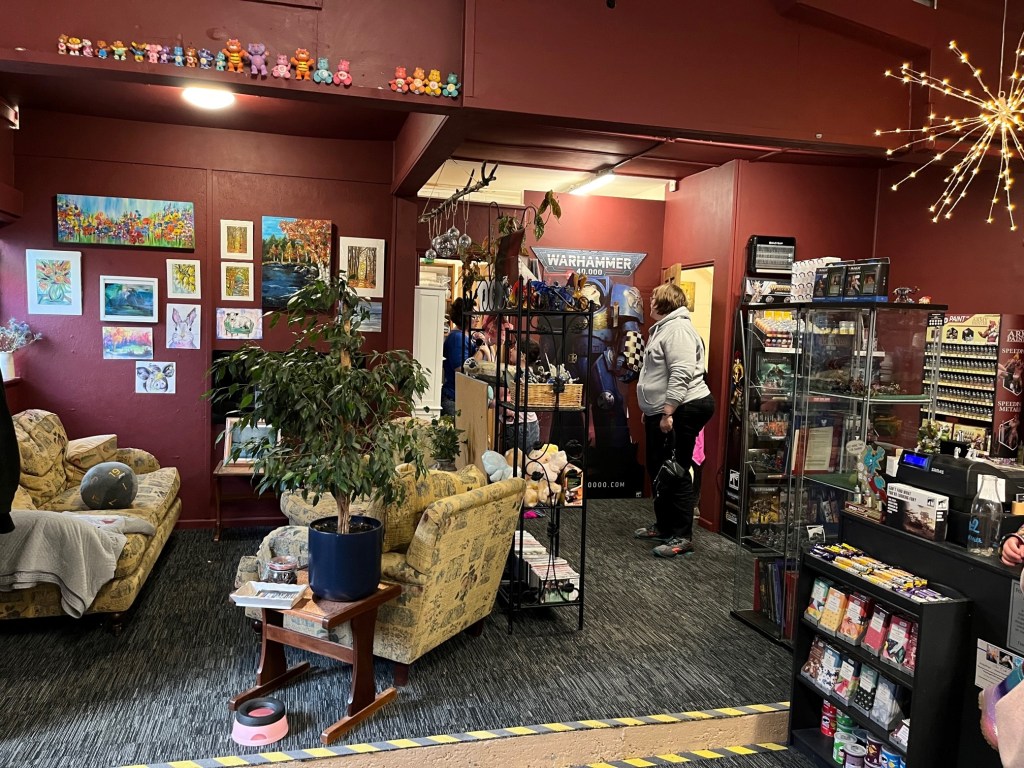
I recently visited the Retro Relics Gaming Cafe in Market Lavington, near Devizes, Wiltshire, which has just been opened this October by a good friend of mine. It’s always important to support your friendly local game store – doubly so if you know the owner – so please check out my review below.

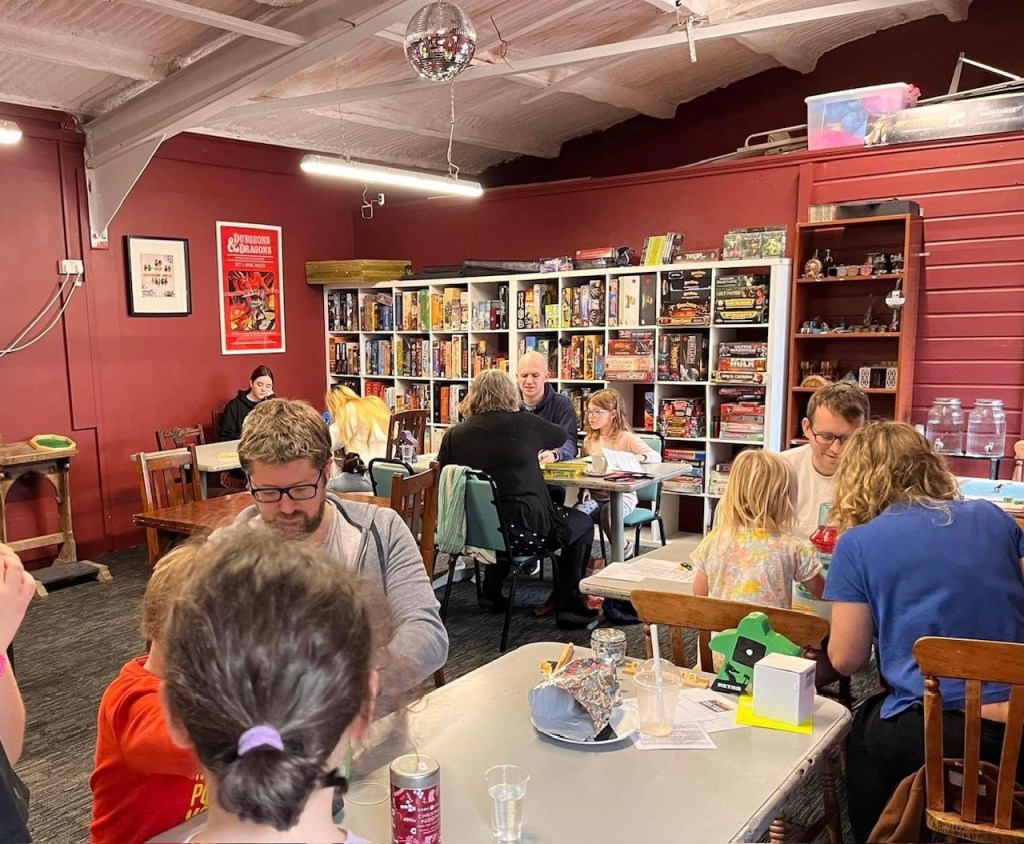
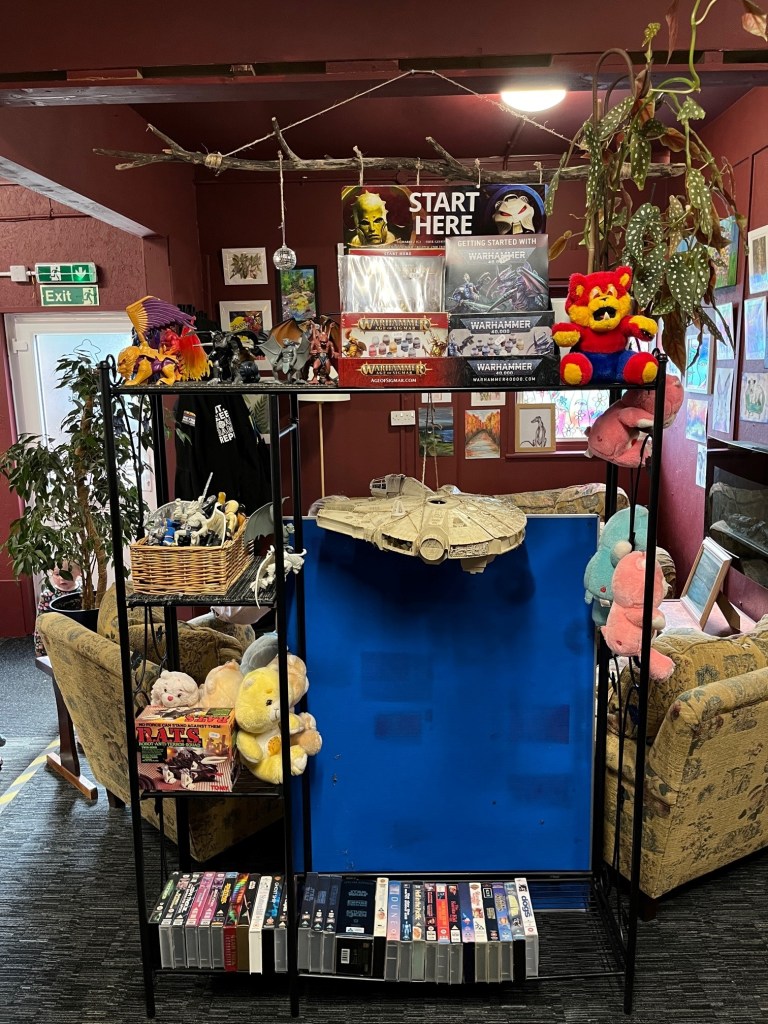
The newly renovated cafe has a friendly and relaxed atmosphere, with a range of teas, coffees, locally made cakes and snacks available. I’d also highly recommend the hot chocolate! Retro Relics also stock a range of Games Workshop, Magic the Gathering and Army Painter products, as well as other gaming supplies.

It’s worth dropping by for the food and drink alone, but if you want to get some gaming in then there are board games available for all ages, from kids to gaming veterans. This includes some true classics such as Hero Quest, Space Crusade and Space Hulk! As well as the general games for all visitors, Retro Relics also have a membership package that offers access to an expanded range of board games. There’s also plenty of room to play card games like Magic and Pokémon, and tabletop wargames like Warhammer and Blood Bowl.

You can find Retro Relics Gaming Cafe in Woodland Yard, Market Lavington, Devizes, SN10 4AG, and also on Facebook and Instagram if you want more information or to book a table. They are open Wednesday – Sundays, 10am – 8pm, (with a 6pm close on Sundays). Parking is available outside the cafe.

Thanks very much for reading today’s post, and do check out Retro Relics if you’re in the area, or give this family-run business a like or follow on Instagram or Facebook. That’s all for today, but I’ll be back again soon with more hobby progress updates.