Kruleboyz Pot-Grot

Hubble, bubble, toil and…hey boss, do we have any, erm….rubble?

Stirit, Pot-Grot

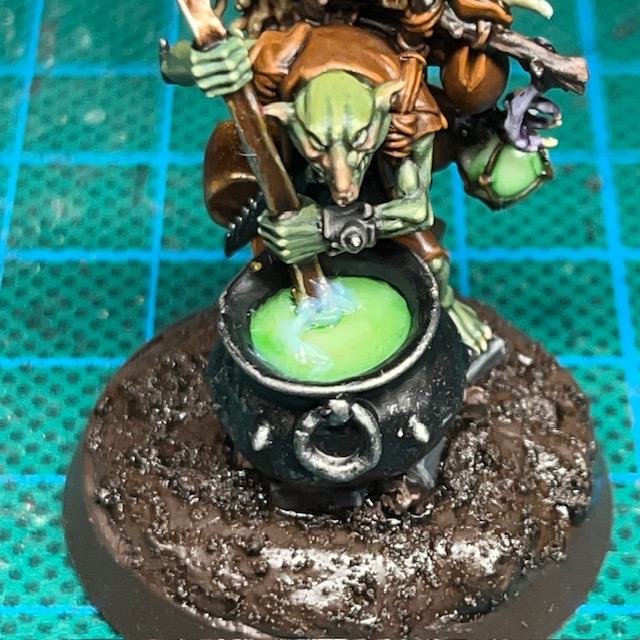
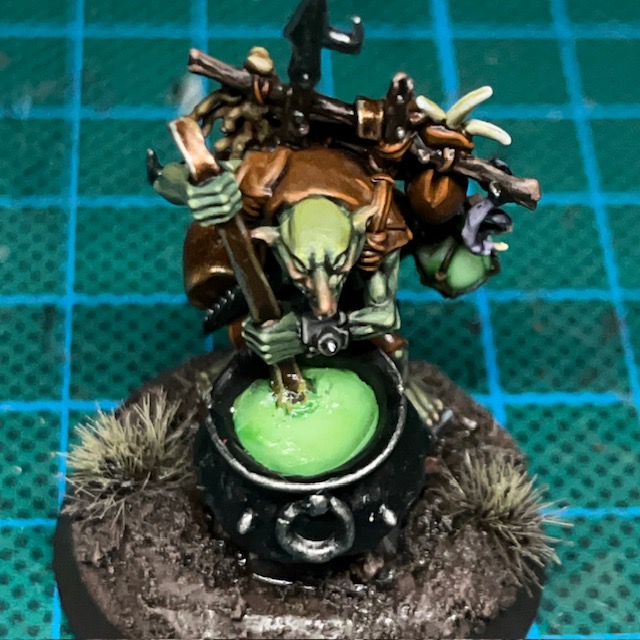
Here’s something a bit different for today’s blog post, an Orruk Kruleboyz Pot-Grot from Warhammer Age of Sigmar. This is the first miniature in a new Kruleboyz side project.

Seriously, another side project!?

Yes, another side project! My young son recently expressed an interest in having a go at the Warhammer hobby, particularly the painting, so we had a look at the starter sets. My son is more into fantasy than sci-fi at the moment, and the Stormcast leapt out at him as something he wanted to paint. I’m a fan of greenskins (as you may recall), so I thought painting some Kruleboyz might be fun. We bought a Age of Sigmar Warrior Edition Starter Set to split. I couldn’t resist picking up a couple of other Kruleboyz bits too!

Modelling

The Pot-Grot miniature comes with a plastic cauldron, and my initial plan was simply to recast the plastic liquid surface of the cauldron in resin to allow the light through. But the component was quite thin and after several miscasts I decided to take a different approach, which I’ve detailed below in a short-form tutorial.

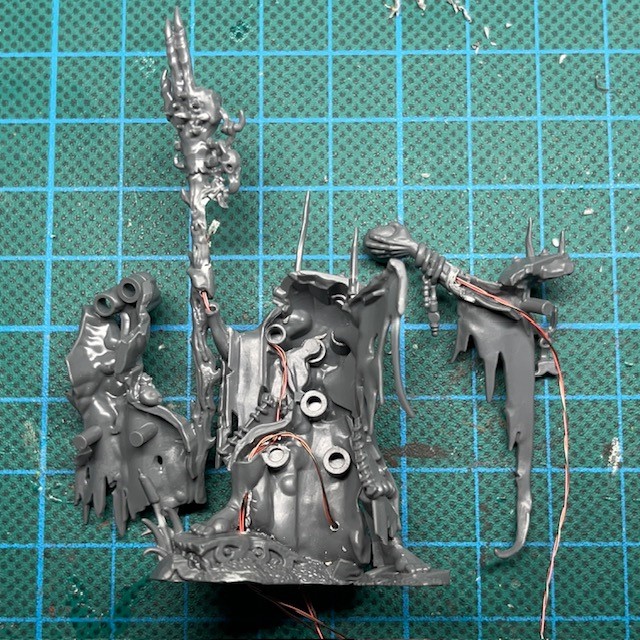
1. Began by preparing the base, battery holder and switch using the method described in Step 1 – 6 of my LED Eye Lens Tutorial. Next insert the LED into the bottom of the cauldron, facing up. I used a Tru Opto Green 1.8mm LED with a 10 ohm resistor. Drill two holes in the bottom of the cauldron to allow the legs of the LED to pass through. Solder the LED and resistor in series with the battery and switch. Then make sure any gaps in the sides and bottom of the cauldron are filled with modelling putty, otherwise the resin will leak out during the next stage. At this stage I also carefully removed the plastic potion bottle from the side of the backpack with a sharp craft knife. A 3V Green 0603 SMD chip LED and accompanying resistor from Small Scale Lights was inserted in its place. The wires from this LED ran down through the backpack and legs of the model to connect in parallel with the other LED.

2. Fill the cauldron almost to the top with polyurethane resin. You will find a syringe helpful for this. I also added a polyurethane resin recast of the potions bottle to the side of the backpack, drilling a small hole so the 0603 chip LED could fit inside and illuminate the bottle. Check out my Resin Casting for Special Effects Tutorial if you need more information on working with polyurethane resin for this type of casting.

3. Once the resin has set, check that the LEDs are still functioning and that you have a good visible glow through the resin. Depending on the level of resin in the cauldron, you may need to extend the grot’s ladle so that it touches the surface. This can be done with a plastic rod or spare piece of sprue.

4. The next step is to undercoat and paint the miniature. When undercoating, be careful not to spray the resin cauldron surface or potion bottle. A temporary covering of blu tack or tin foil can help protect the resin. As part of the painting process, I added a thin glaze of Biel-Tan Green to the surface of the cauldron and the potion bottle. This is mainly to make the resin surfaces look more interesting when the LED is switched off.

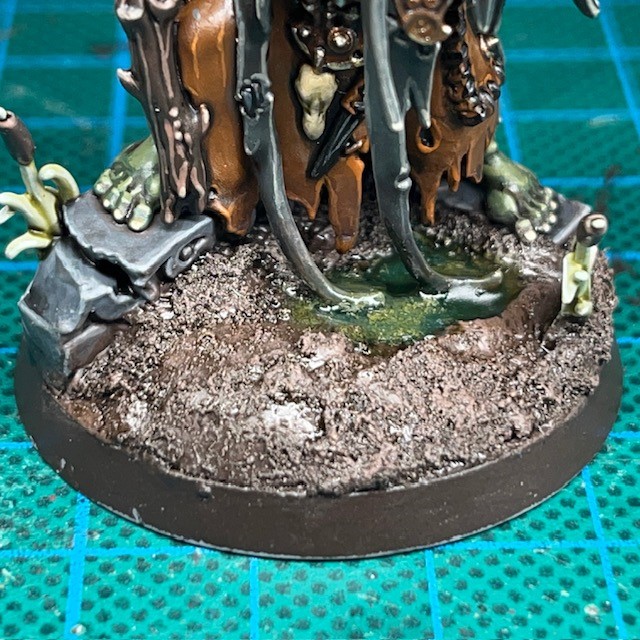
5. Now add a thin layer of transparent UV resin, only 1-2mm deep, over the surface of the cauldron. This helps to give surface of the cauldron a liquid feel and a sense of depth. The UV resin can be cured quickly with a small UV torch or left to cure outside in direct sunlight.
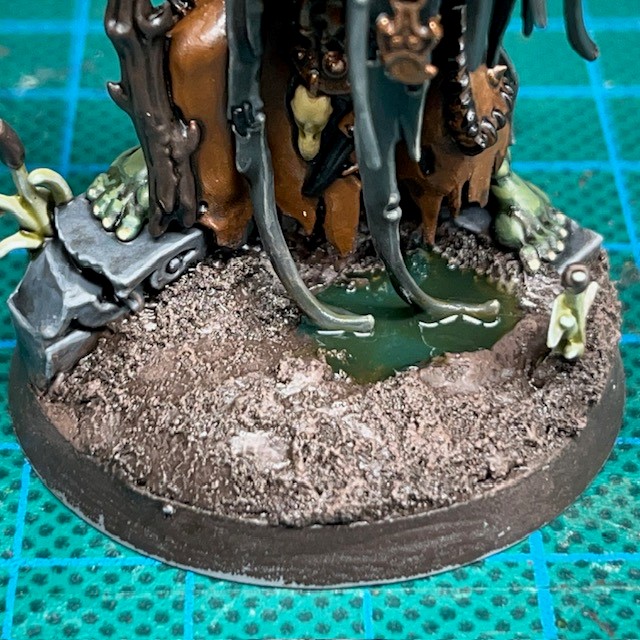
6. Finally sculpt some ripples around the ladle and a trail to imply motion using Splash Effect acrylic gel. The acrylic gel is white when applied but dries transparent over several hours. I didn’t add too many ripples as I wanted to give them impression that the contents of the cauldron were quite viscous and not easily disturbed.

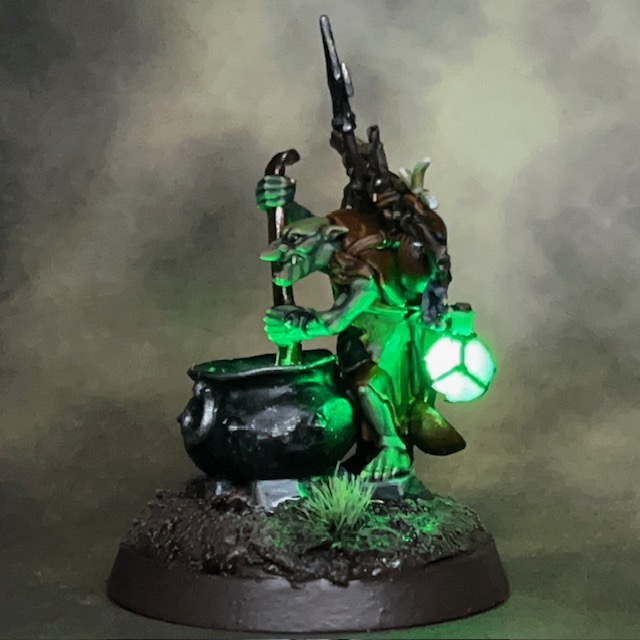
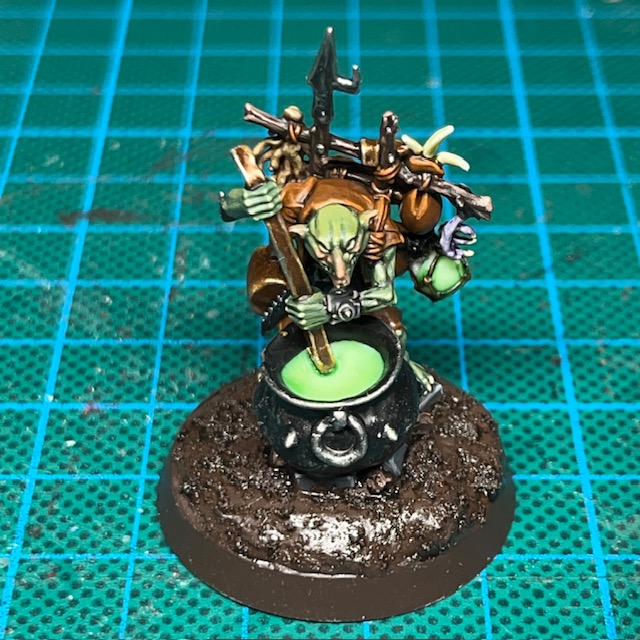
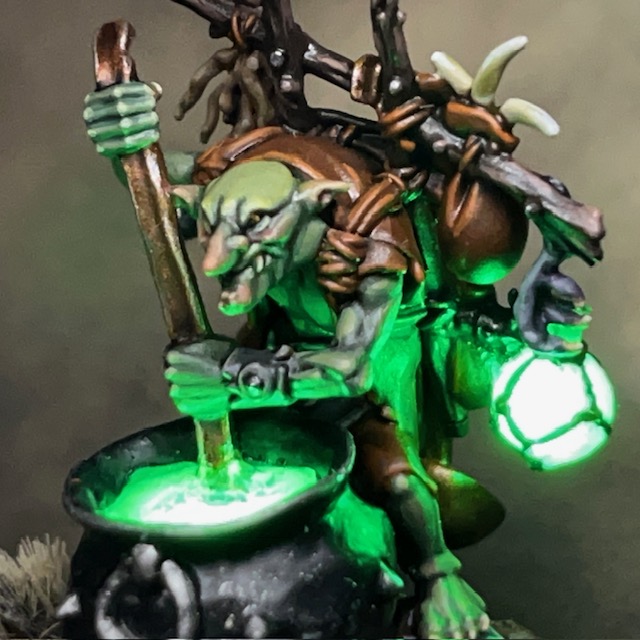
You can see the finished effect in the two images above, both with the LED switched off and on. After I’d built the miniature, it occurred to me that I could have also added an additional yellow LED under the cauldron to simulate the fire. Oh well, maybe next time!

At this point I’d normally discuss paint recipes, but I’m not going to talk about painting this miniature today. I’m planning to discuss Kruleboyz painting recipes, palette selection and LED choice for the whole side project in an upcoming post.

That’s it for today. I’ll be back again soon with more about the Kruleboyz, plus of course even more Flesh Eaters space marines and definitely some Tyranids! Thanks very much for reading, and please remember you can also find me sharing my work on InstagramThreadsTwitter/XBluesky and Mastodon.
Terradon Rider Unit Complete

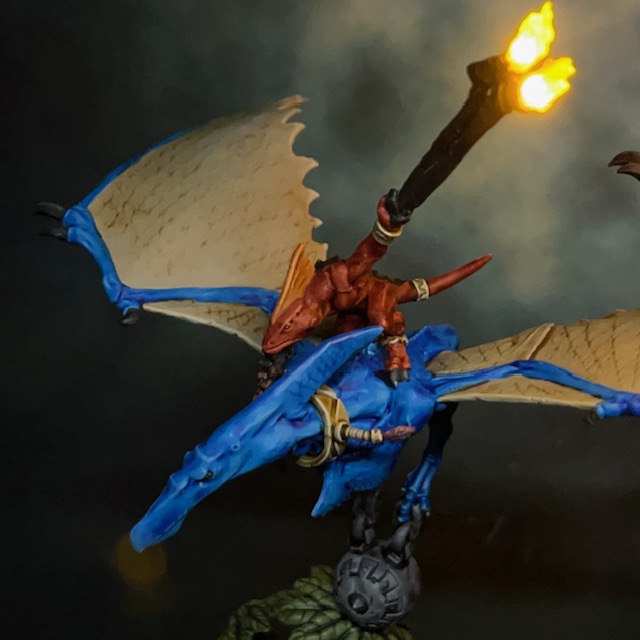
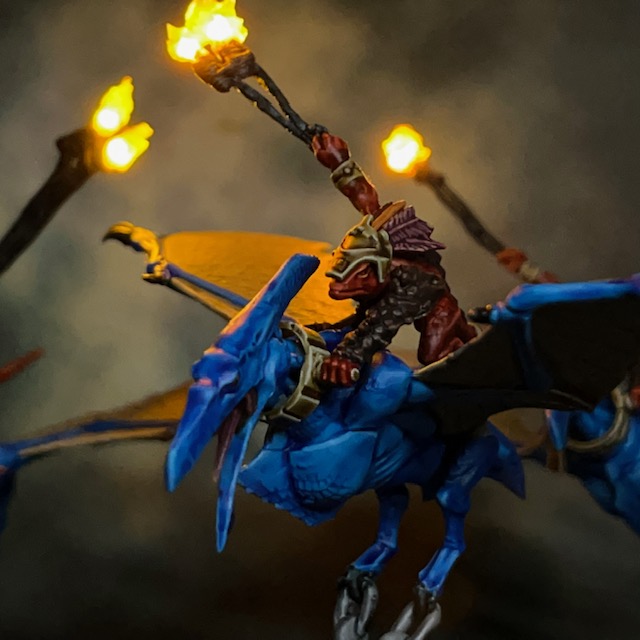
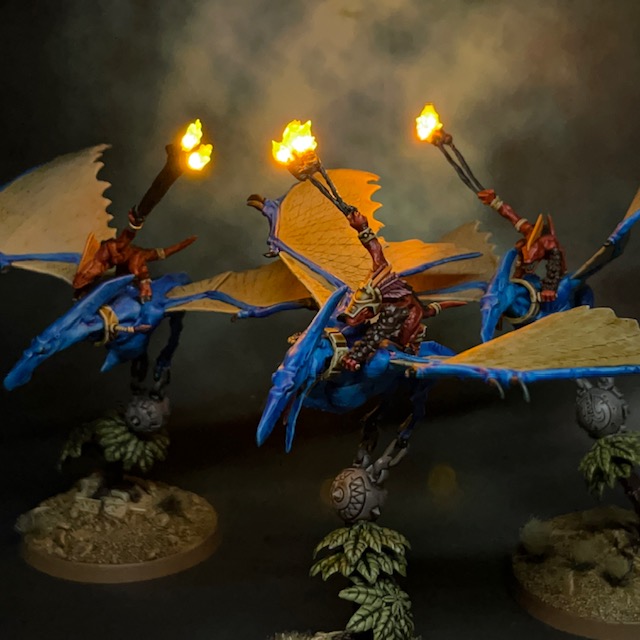
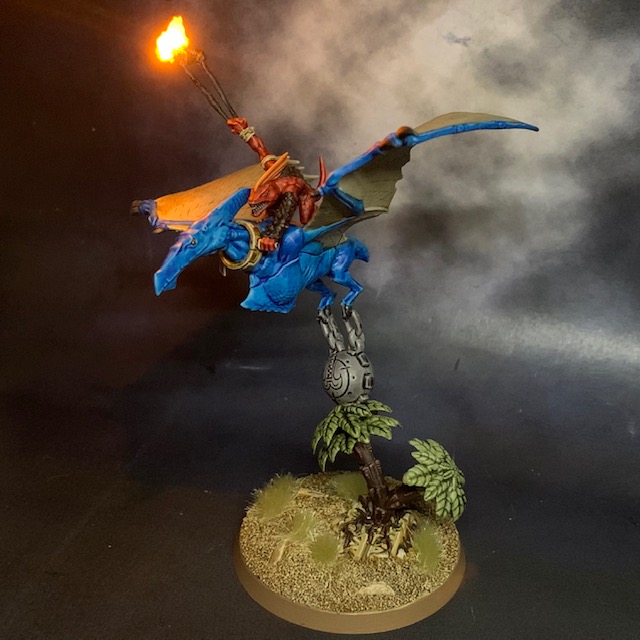
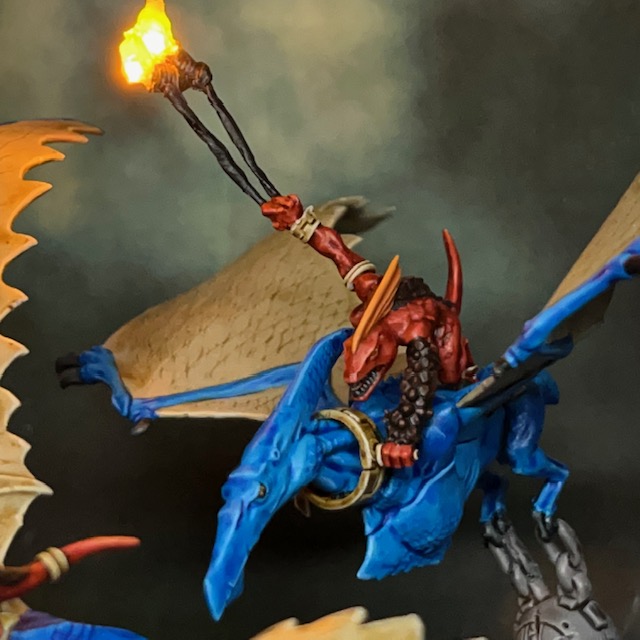
I’m back on the Seraphon this week as I try to clear some room on the ‘Shelf of Shame’ and complete a unit that I started building in – checks notes – May 2021! This week I finished the third and final Terradon rider, shown on the left in the gallery below.

Assembling & Painting

I must admit I don’t have a great deal new to say about this miniature, as I’ve used exactly the same assembling and painting technique that I detailed in my Terradon Rider Alpha post. It’s still the two ‘0805 Chip LED’ 3V yellow LEDs from Small Scale Lights connected in parallel on a single 3V CR2032 battery and covered in the Water Splash Effect Gel from Green Stuff World to create the flame effect. If you’d like to know more details, then please do read the previous post for assembly instructions and paint recipe. 

It’s very satisfying to finally finish this unit after nearly two years, especially as the unit box is weirdly large and taking up loads of room on my shelf. Now that’s done, it’s full-steam ahead on my Golden Demon entries! That’s it for this week. As always, thanks very much for reading, and please don’t forget you can also follow my work on social media at TwitterMastodon and Instagram. Finally, if you’d like to see more of my Seraphon project, you can check out my gallery here.

Zevaboa, Skink Priest

Float like a terradon, sting like a well-crafted simile.

Zevaboa, Skink Priest & Warrior-Poet

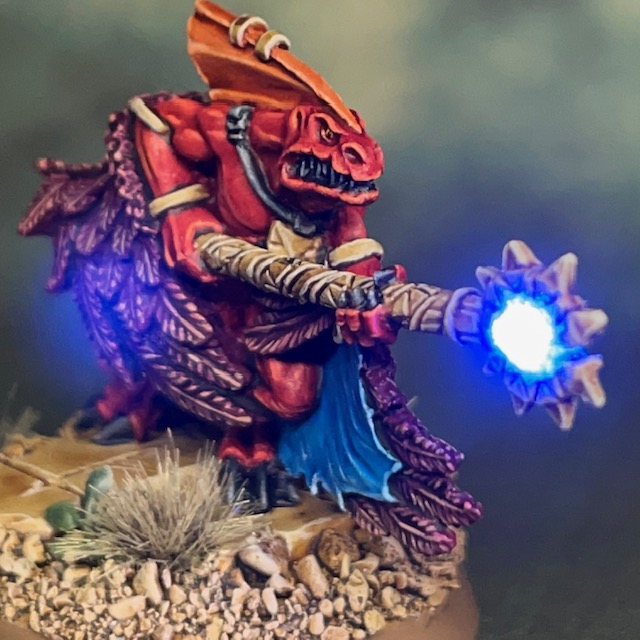
This week I’m returning to my long-running Seraphon project with Zevaboa, skink priest & warrior-poet, equipped with a star-stone staff and mystical cloak of feathers.

Painting & Modelling

This is one of those projects that seemed like a good idea at the time! I spotted this model on the shelves in Warhammer World when I was up there for Golden Demon, and bought it on a whim since it’s ‘Direct Only’ and not normally available in stores. Plus I thought it might be a fun model to enter into the Shattered Brush painting contest. Of course it’s no secret that Finecast can be tricky to work with, but I feel like I got there in the end.

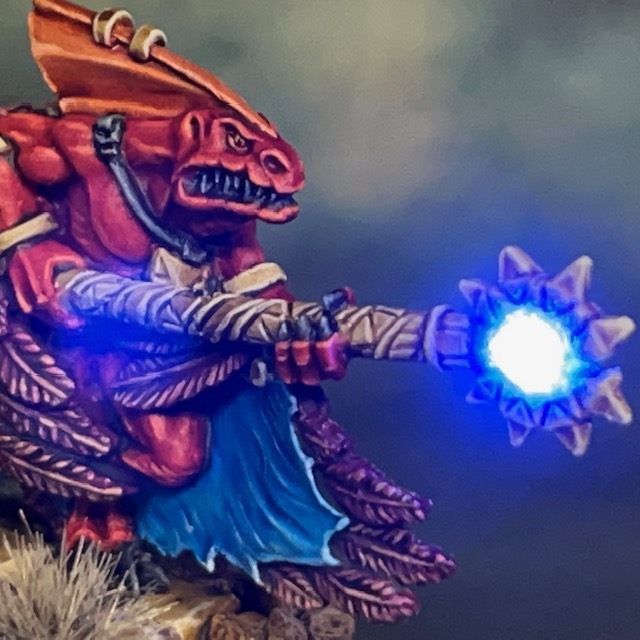
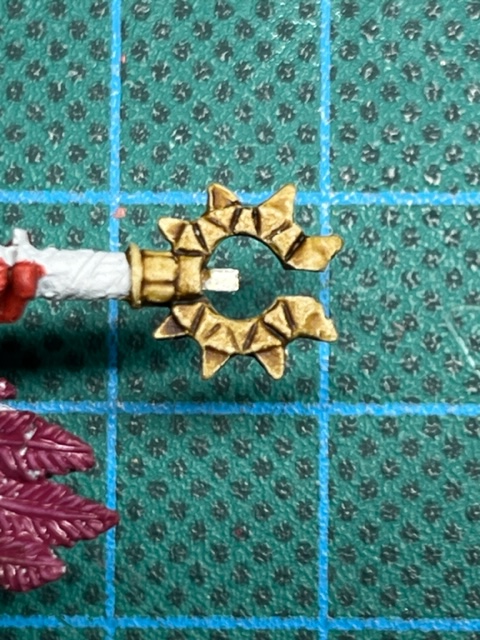
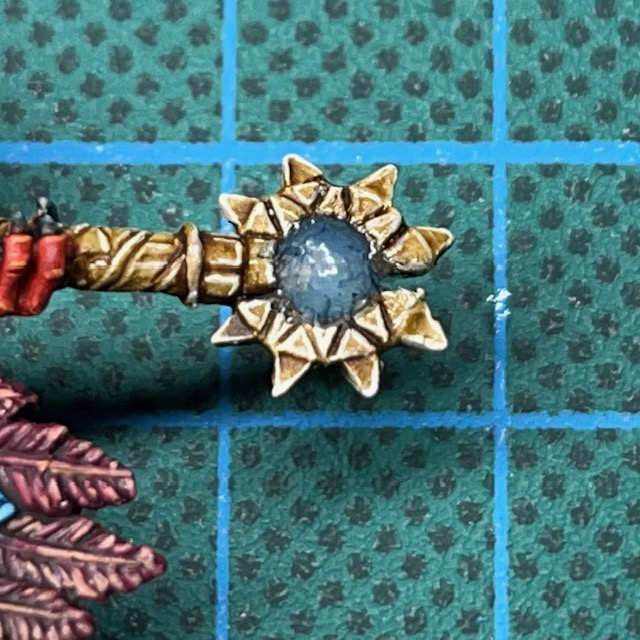
The LED staff follows the basic principles of my Simple LED Muzzle Flare Tutorial, with a few minor difference. The LED used is an ‘Ultra Nano’ 3V blue LED from Small Scale Lights, connected in series with its supplied 10Ω resistor. The circuit is powered by a single 3V CR2032 coin cell battery and switch hidden in the base. As you can see from the ‘work in progress’ pictures above, the LED emerges from the neck of the staff, while the wires run through a 1mm hole that I carefully drilled through the shaft of the staff. The wires then pass down through the torso, right leg, and then into the base.

I carefully drilled and cut the original Finecast ‘star-stone’ out of the head of the staff before inserting the LED. Once the tip of the staff had been undercoated and painted I began replacing the ‘star-stone’ with my own version made from acrylic gel. This gel can take a few hours to dry, so I had to build up the spherical shape in layers over a number of days. When the final application of gel had dried, I applied a shade of Drakenhof Nightshade and then a glaze of (the now discontinued) Guilliman Blue. If you’re interested in a more detailed explanation of working with the gel, then I have a further explanation of how you can achieve similar effects in my Simple LED Muzzle Flare Tutorial.

For the paint scheme, I used my standard Seraphon recipe found in my post about the Terradon Alpha, but with a few more layers of fine highlights, since this is a hero model and I’m entering it into a contest. The only part that gave me pause was the lining of the cloak. On the stock model the lining is red, but I didn’t want to copy that as it would be too similar to the skink’s skin. I did briefly consider a ‘flayed human flesh’ effect, but in the end settled on ‘terradon skin’. This was partially so I didn’t have to extend the purposely limited palette for my Seraphon project, and also because it fit thematically with the flight-granting abilites of the cloak of feathers.

That’s it for this week, I hope you enjoyed revisting my slow-burn Seraphon project. If you’re a fan of the Seraphon then you may like to check out the other models in this army project. As always, thanks very much for reading, and please don’t forget you can also follow my work on social media at Twitter, Mastodon and Instagram.

Another Terradon Rider Complete

I’m back on the Seraphon this weekend as I try to clear some room on the ‘Shelf of Shame’ before the Kill Team: Octarius boxed set is delivered.

Assembling & Painting

I don’t have a great deal new to say about this one, as I’ve used exactly the same assembling and painting technique that I detailed in my Terradon Rider Alpha post. It’s still the two ‘0805 Chip LED’ 3V yellow LEDs from Small Scale Lights connected in parallel on a single 3V CR2032 battery to create the effect. If you’d like to know more details, then please do read the previous post for assembly instructions and paint recipe. The only real difference this time is that the skink’s right hand pinged off into whichever part of the warp dropped model components lurk in, so I had to sculpt a replacement from putty!

Actually, one tip I will add is that I’ve found it easiest to approach this particular build if you assemble the model in the order that the wire runs through, starting with the sunfire bolas, going onto the skink, then the terradon, and finally the base. The instructions tell you to start with the terradon, which would make sense normally, but in this case it leaves you second-guessing where the wires are going to end up. So if you’re trying to replicate this, I strongly recommend starting with the bolas and the skink!

That’s all for today, I’ll be back again soon with some Octarius action – delivery services willing!

Terradon Rider Alpha

This week I took a quick break from the Crimson Fists to make a bit more progress on my Seraphon with this Terradon Rider Alpha. The Seraphon were supposed to be my #NewYearNewArmy for 2021 but I haven’t got as far as I would have liked. Five months in and so far all I have to show for it besides this guy are the Skink Starpriest and the Saurus Oldblood! Still, it’s been a lot of fun to get this far at least.

I said from the beginning that I didn’t want to go overboard with LEDs in my Seraphon. That might be a bit hard to believe when they currently have a 100% rate of LED inclusion, but that’s because I’ve started with the fun stuff. I just had to include the LEDs for the sunfire bolas as I was fairly confident it would look awesome – and hopefully you’ll agree it does!

Assembling

Once again I’ve used the same technique to create the flaming bolas as I used for the Nighthaunt Candles – this technique is just so versatile! The LEDs used are two ‘0805 Chip LED’ 3V yellow LED from Small Scale Lights connected in parallel on a single 3V CR2032 battery. I used the LED wires covered in modelling putty to form the leather straps of the bolas. The wires then run down through the Skink Alpha’s arm, body, leg and then into the Terradon. From there they run down the Terradon’s right leg, through the chain and the ball of meteoric stone, down through the tree and into the base to connect to the battery and the switch. You can see the path of the wire in the pictures below before the putty was applied to hide them.

You’ll notice that I replaced the default flying stand with a plastic tree from my bits box. There were two reasons for this – firstly I don’t really like the aesthetics of the clear plastic stands, and secondly clear plastic isn’t very good at concealing LED wires!

I decided to paint the acrylic splash gel flames just to make them look a bit nicer when the LED is switched off. Once the final layer of the gel was dry I applied a shade of Fuegan Orange to the top half of the flames, then a yellow glaze all over. You can see the ‘on’ and ‘off’ comparison pictures below.

Painting

As I’ve mentioned previously, the colour scheme for my Seraphon is heavily influenced by the 1993 Jurassic Park toy line, in this case specifically the Pteranodon. Whenever I record my painting recipes on this blog, it’s not so much to give out advice on what is a “good” colour scheme, but mainly as a reminder for myself! But I also think it’s nice to share in case anyone is interested how a particular colour was achieved. My updated Seraphon recipes are shown below. All paints referenced are Citadel paints.

  • Undercoat (all areas)
    • Grey Seer contrast undercoat
  • Bright Red Scales
    • Contrast Blood Angels Red
    • Wild Rider highlight
    • Fire Dragon Bright highlight
  • Dark Brown Scales / Jungle Bark
    • Contrast Cygor Brown
    • Doombull Brown highlight
    • Tuskgor Fur highlight
  • Orange Crest
    • Contrast Gryph-Hound Orange
    • Fire Dragon Bright highlight
  • Pink Feathers / Tongues
    • Screamer Pink base
    • Nuln Oil shade
    • Pink Horror highlight
    • Cadian Fleshtone highlight
  • Black Claws / Leather Straps
    • Contrast Black Templar
  • ‘Gold’ Weapons / Jewellery
    • Contrast Aggaros Dunes
    • Screaming Skull highlight
  • Yellow Eyes
    • Averland Sunset base
    • Fuegan Orange shade
    • Yriel Yellow layer
    • Abaddon Black pupil
    • Wild Rider Red veins
  • Terradon Scales
    • Contrast Talassar Blue
    • Lothern Blue highlight
  • Human Skulls / Terradon Wings
    • Contrast Skeleton Horde
    • Ushabti Bone layer
    • Screaming Skull highlight
  • Ancient Stone
    • Contrast Skeleton Horde
    • Screaming Skull highlight
  • Meteoric Rock
    • Contrast Basilicanum Grey
  • Jungle Leaves
    • Contrast Militarum Green
  • Base Texture
    • Sand & PVA Glue (before undercoat)
    • Contrast Snakebite Leather
    • Zamesi Desert drybrush
    • Ushabti Bone drybrush
    • Mordheim Tufts
    • Steel Legion Drab rim

I’m really enjoying Contrast paints; they’re so quick to apply and give pretty good results! I’m particularly in love with Aggaros Dunes – combined with a Screaming Skull highlight it can really give a fast and passable NMM effect. I don’t think I’d use Contrast paints on the smooth surfaces of Space Marine armour, but for Seraphon and their scales they are ideal!

That’s all for this week, I hope you’ve found it interesting. Speaking of interesting, don’t forget that it’s the Warhammer Community preview of the new Age of Sigmar box set this afternoon!